Ford adopts Tesla technique, merging 146 parts into two to reduce costs of electric pickup
Read more
AutoPapo
autopapo.com.br

Ford adopts Tesla technique, merging 146 parts into two to reduce costs of electric pickup

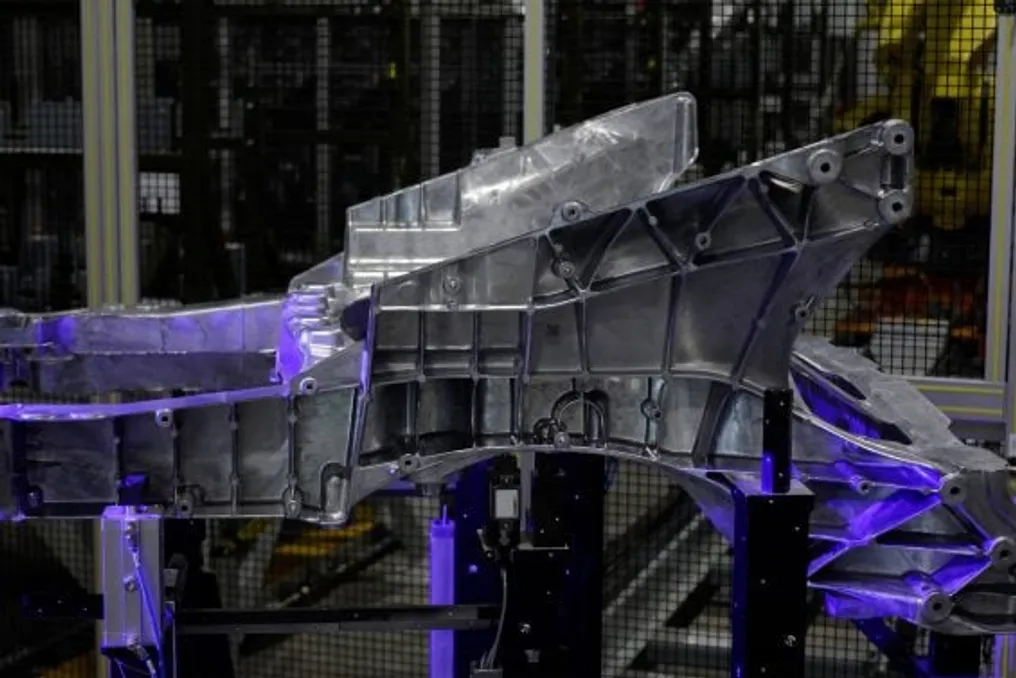
Ford looked to Tesla for inspiration to develop an electric pickup truck with reduced costs. Instead of building the body using dozens of welded sheet panels, the automaker plans to fuse the front and rear parts into two large aluminum components.

This process, called unicasting by Ford, will be applied to the Fathom, a mid-sized electric pickup expected to enter the American market next year at a price of US$ 28,350 (approximately R$ 151 thousand). According to the manufacturer, these two parts will replace 146 structural elements present in the Maverick, a model also sold in Brazil.

The methodology used is identical to the gigacasting utilized by Tesla on the Model Y since 2020.

In a conventional body, each section of the structure is molded from metal sheets and subsequently welded to the others by robots. In the casting method, liquid metal is poured into a mold and emerges as a single piece, resembling the principle of an ice mold, but on an industrial scale.

Ford has already manufactured over 5,000 of these parts, enough to produce 2,500 pickups, at the Shelbyville Technical Center, located in the state of Kentucky. Currently, these parts are only being used in prototypes.

The procedure begins with aluminum ingots heated to about 700°C. After being injected into the mold, the part is removed by a robot, cooled in a tank, trimmed, and subjected to machining processes.

Next, the parts undergo a rigorous battery of tests. In a climate-controlled area, equipment checks dimensions and hole locations. An industrial X-ray is used to detect any internal voids or bubbles in the aluminum, while an optical scanner maps the surface.

Samples from each batch are also evaluated for their chemical composition and strength. Only after approval is the batch sent to the Louisville factory, also located in Kentucky.

The giant components also allow Ford to incorporate an original invention of its founder. In 1913, Henry Ford introduced the moving assembly line for the production of the Model T, known as the Ford Moustache, where the vehicle followed a single conveyor belt receiving components along the way.

In the Fathom, this conveyor belt is replaced by what the company calls the 'assembly tree'. Three lines work simultaneously on assembling the front, the rear, and the battery, which serves as the floor and already receives seats, console, and carpet. These three sets are only joined at the final stage.

According to Ford, this new method has the potential to accelerate assembly by up to 40%. A portion of the saved time will be redirected to automation investments, projecting a final gain of 15%.

Production, confirmed only for the United States, is scheduled to begin in the first quarter of next year.
Similar stories

Volkswagen is preparing an update for the Virtus sedan with improved design and additional safety features
Read more
www.aajtak.in

Volkswagen is preparing an update for the Virtus sedan with improved design and additional safety features

Volkswagen plans to release a new version of its car in the Indian market. The company has published the first teaser of its upcoming Virtus model. This car is the only sedan of the brand available in the Indian market. The updated version, which has received the name facelift, could potentially appear in December, although an official date has not yet been announced.

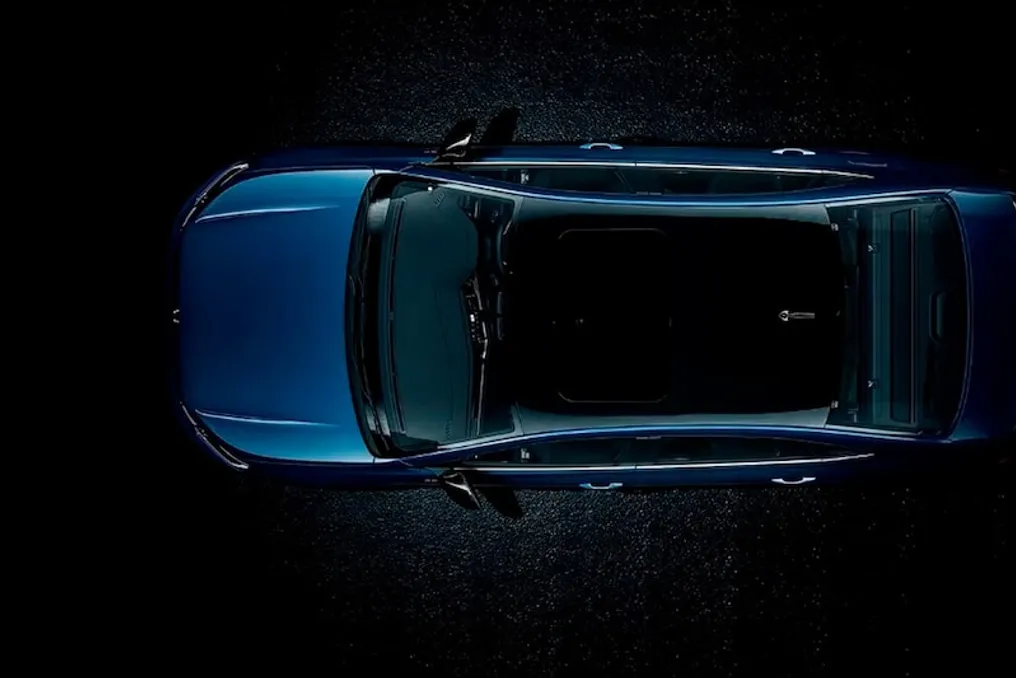
The video released by the brand shows several changes related to the car's exterior. In the first teaser, the company emphasized a dark color palette. Recently, test samples of the Virtus with the update have been spotted.

The most significant changes are expected in the front part of the car. It will retain the thin headlight layout, but the Virtus facelift version will be equipped with LED daytime running lights (LED DRLs). Thin upper radiator grilles with the Volkswagen logo in the center will appear above the headlights, and a GT badge will be placed on the sides. A more aggressive bumper with a wide lower air intake will be installed below, giving the car a sportier look.

The company presented a blue color option that will be equipped with dark alloy wheels and black mirror housings. As for the rear, the car will use a separate taillight assembly extended to the trunk lid. A spoiler attached to the trunk lid is also provided, and the rear bumper will have dark inserts and detailed elements. Parking sensors are also clearly visible in the teaser.

Smaller changes are expected in the interior, but an updated upholstery and interior are planned. The car may be equipped with a 10.25-inch digital instrument cluster, whereas currently, a 10.1-inch touchscreen is offered. Additionally, a 360-degree surround-view camera may be added.

The car will continue to use existing turbocharged gasoline engines of 1.0 and 1.5 liters. Current power figures for the 1.0-liter engine are 115 horsepower and 178 Nm of torque. Meanwhile, the 1.5-liter engine can produce 150 horsepower and 250 Nm of torque.

Audi Quattro receives reimagining based on RS4 and powerful V8 engine
Read more
autopapo.com.br

Audi Quattro receives reimagining based on RS4 and powerful V8 engine

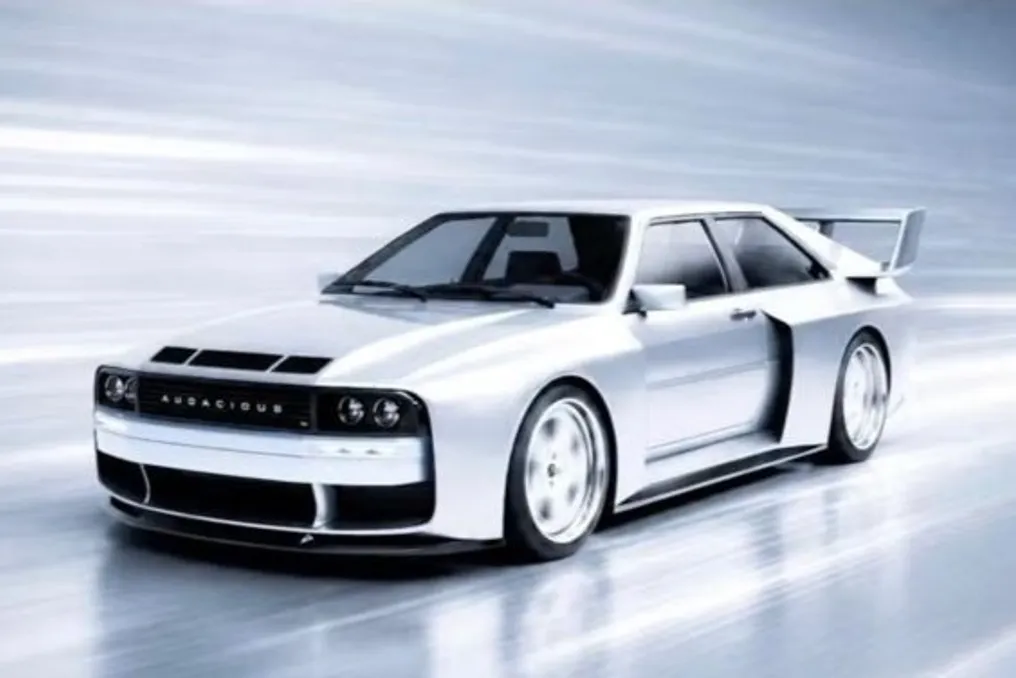
The iconic Audi Quattro, known for popularizing all-wheel drive in both tracks and rally competitions during the 1980s, has been reformulated with a V8 engine capable of generating up to 760 horsepower.

This new project, named Audacious IV, is developed by Audacious Automotive, a Scottish company planning to manufacture a total of 50 units. The estimated initial cost for acquisition is approximately R$ 2.58 million (equivalent to 350 thousand pounds), excluding taxes and accessories.

It is a restomod, a type of classic vehicle that is mechanically modernized while maintaining its original appearance. Although it preserves the square silhouette of the original model, it replaces the five-cylinder engine and the entire mechanical assembly.

The structure of the Audacious IV uses the chassis of the B7 generation Audi RS4, produced between 2006 and 2008. From this base, the car inherits components such as the chassis, suspension, brakes, and part of the electrical system.

Aesthetically, the vehicle features wheel arch flares and large exhaust outlets reminiscent of Group B cars, famous for their extreme models in the 80s World Rally Championship. The customer has the option to choose between a body built from steel and aluminum, incorporating parts from an original Quattro, or a body made entirely of carbon fiber; 40 of the 50 units will be in carbon.

In the interior, the RS4 panels are replaced by analog gauges and physical buttons.

Under the hood, there is the RS4's 4.2L V8 engine, coupled with the Torsen all-wheel-drive system and a six-speed manual gearbox. The entry version comes with a compressor and delivers 608 hp. The second version, which also has a compressor, receives internal reinforcements and an improved cooling system to reach 760 hp.

Two other configurations, still under development with the tuner LAA Performance, a specialist in Audi engines, can spin up to 10,000 revolutions per minute. One of these options is naturally aspirated, and the other is turbocharged.

According to the company, the car can accelerate from 0 to 96 km/h in just 3.4 seconds and reach a top speed close to 320 km/h. The carbon version should weigh 1,200 kg, while the metal version weighs between 1,400 kg and 1,450 kg.

Each unit is assembled manually, and the manufacturing process takes about three years. The first deliveries are scheduled for the end of 2027.

Toyota plans to generate billions in revenue by selling combustion and hybrid engines to other automakers
Read more
autopapo.com.br

Toyota plans to generate billions in revenue by selling combustion and hybrid engines to other automakers

While much of the automotive industry is reducing investments in internal combustion engines, Toyota has chosen to transform this technology into a new and significant source of revenue. The Japanese manufacturer intends to commercialize its engines and hybrid systems to other automakers, aiming to generate approximately R$ 9 billion annually from this venture by 2032, according to Automotive News.

This goal represents a threefold increase over the estimated revenue of R$ 3 billion that third-party supply should generate in 2026. The first deliveries of this new engine line are scheduled for 2027.

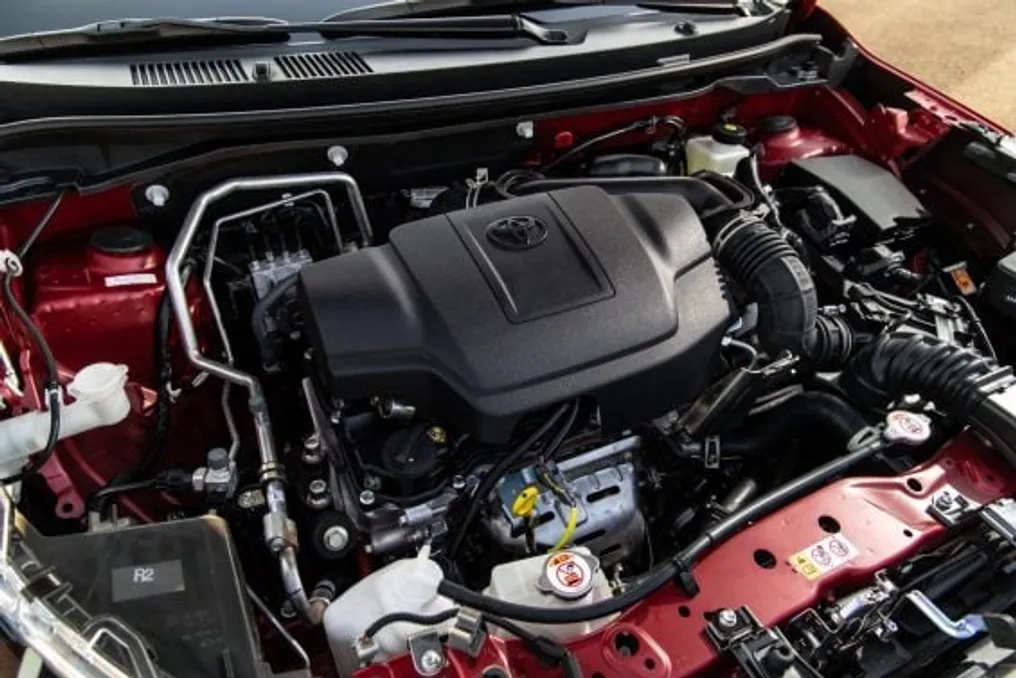
The new engine family consists of three alternatives, all with four cylinders: a 1.5 naturally aspirated model, a 1.5 turbo, and a 2.0 turbo, all of which have the capability to operate integrated with hybrid systems. The 1.5 engine will be used to replace the units currently installed in models such as the Yaris and Corolla. The 1.5 turbo offers power equivalent to an existing 2.5 naturally aspirated engine, and the 2.0 turbo promises to surpass the performance of the 2.4 turbo that equips large SUVs and trucks of the brand in the United States.

Developed already considering electrification, these engines present physical advantages, being 10% smaller in volume and height. This dimensional reduction allows for a lower hood height, which contributes positively to aerodynamics and gives designers greater flexibility.

According to Toyota itself, the adoption of the new 1.5 engine results in a 12% fuel economy saving in a sedan.

The first expected buyers are traditional partners of the company, including Mazda, Subaru, and Suzuki, in addition to Daihatsu, which is a Toyota subsidiary. These five brands together move about 16 million vehicles annually.

It is important to note that this partnership does not imply abandoning the internal projects of these automakers; for example, Mazda continues to develop the Skyactiv-Z engine and a hybrid system for the CX-5, while Subaru maintains its focus on boxer engines, characterized by opposed horizontal cylinders.

For Toyota, this strategy serves to distribute development costs across a larger number of units and make its engines more competitive against competition from China. In turn, the other manufacturers benefit by gaining access to innovative mechanics without having to bear the full cost of creating them from scratch. Additionally, Toyota has also developed the 4.0 V8 engine, but for now, it is not part of the sales plans for other brands.

Popular