Review of Seven Places for Rock Climbing Descents in South Africa
Read more
Getaway
getaway.co.za

Review of Seven Places for Rock Climbing Descents in South Africa

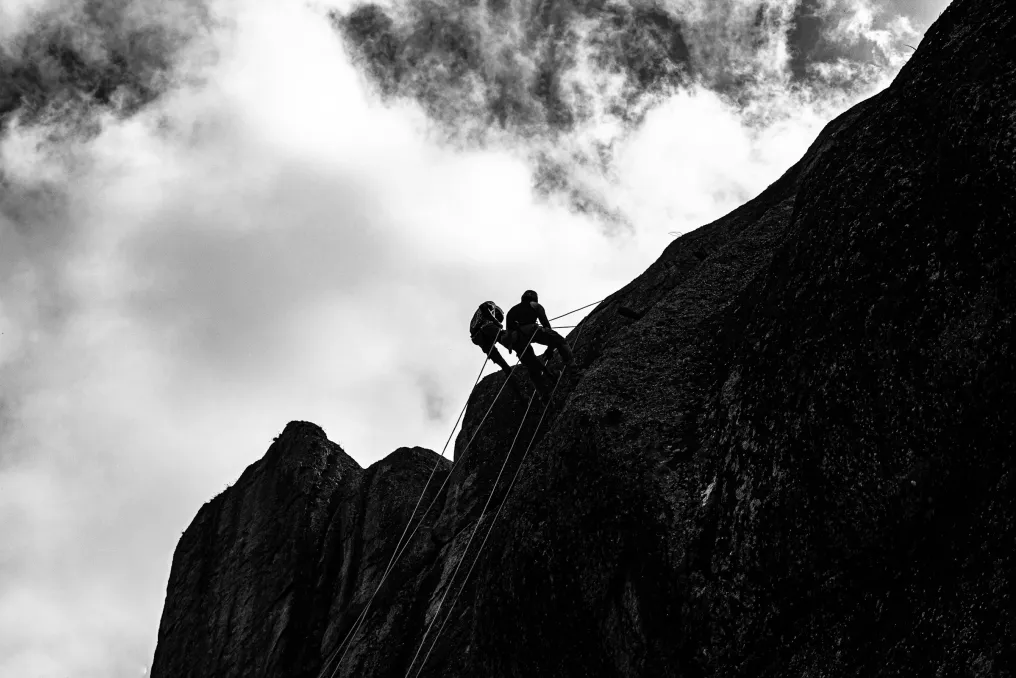
The rocky cliffs, deep gorges, and rugged mountain ranges of South Africa offer numerous opportunities to view the landscape from a new perspective. For those willing to take a risk, rock descending is an adventure that combines breathtaking views with a necessary dose of excitement.

Rock descending, also known as rappelling, involves going down a steep rock face using a rope and specialized equipment. With a qualified guide, proper protective gear, and a suitable location, it can be an accessible introduction to extreme sports.

It cannot compare to the view from Table Mountain. Standing at the summit, overlooking Cape Town, the Atlantic Ocean, and the Twelve Apostles, one can descend 112 meters down a sheer rock face. This service is offered by Cape Town Abseil and is suitable for beginners, requiring no prior experience. The activity includes safety instruction, provision of equipment, and guidance from instructors. After completing the descent, participants hike back up.

Operations may depend on weather conditions, especially if rain or strong winds make the experience unsafe. Allow about an hour for the activity itself, and a cable car ticket is an extra charge if you decide to ascend the mountain via cable car. Location: Table Mountain, Cape Town. Booking: Cape Town Abseil.

Paarl Rock is an attractive option for those who want to combine active recreation with a trip to the Winelands. Massive granite formations rising above Paarl create an impressive setting for the descent, offering views of the surrounding mountains and countryside. Abseil Africa offers organized tours that include safety briefing, use of the harness system, the descent itself, and a walk in the surroundings. No previous descent experience is required for suitable beginner sessions, but participants should check the operator's current requirements regarding age, fitness, and other conditions before booking. You can spend the day visiting Paarl wineries, staying at local establishments, or taking a tour of the Winelands. Location: Paarl, Western Cape. Booking: Abseil Africa.

For a descent along a waterfall and into a deep forested gorge, head to Oribi Gorge on the South Coast of KwaZulu-Natal. This reserve is known for its dramatic sandstone cliffs, rich avifauna, and extensive views of the uMzimkulwana river valley. The signature Wild Abseil tour, organized by Wild 5 Adventures, takes participants down a 110-meter cliff near Lehr’s Falls. The descent is divided into two parts: the first 45 meters are along the cliff, and the remaining 65 meters are a freefall, leaving the person suspended away from the rock. Beginners receive instructions before the descent, and guides monitor the process. Other attractions are also available nearby, such as a canyon suspension bridge, zip line, and rope bridge, while the reserve's viewpoints and hiking trails offer calmer ways to enjoy the scenery. Location: Oribi Gorge, approximately 25 km from Port Shepstone. Booking: Wild 5 Adventures.

You do not have to travel far from Johannesburg or Pretoria to find a worthy cliff for descending. The Hartbeespoort and Magaliesberg area offers several outdoor activities, making it a convenient choice for a day trip or weekend. Mountain Adventures offers a 50-meter descent near the upper station of the Harties cableway. The descent takes place on a cliff located approximately 300 meters above the valley floor, giving participants a strong sense of height and openness. The same operator also offers rock climbing and kloofing, which involves climbing and traversing through a natural gorge. These activities can be combined for a more eventful day in the mountains. Afterwards, you can visit the Hartbeespoort Dam, stroll through local markets, or have lunch with a view of the water. Location: Hartbeespoort, Northwest. Booking: Mountain Adventures.

If you prefer a more immersive experience than a single rock descent, consider Kamikaze Canyon in the Kougaberg Biosphere. This organized canyoning and kloofing tour combines rock descending with climbing, natural rock pools, and other obstacles encountered while moving through a rugged gorge. The landscape is characterized by steep rock walls and the typical mountain scenery of the Kougaberg area. Abseil Africa has included Kamikaze Canyon in its list of adventure activities. Since canyoning involves movement in a natural environment, conditions and route difficulty can change. It is recommended to check with the operator before booking regarding the current route, water level, required fitness and experience. This is worth considering if you want to spend the day outdoors rather than just arriving at a viewpoint, doing a descent, and going home. Location: Kougaberg Biosphere, Western Cape. Booking: Abseil Africa.

Forested gorges around Storms River are ideal for adventure activities. Located in the Tsitsikamma region along the Garden Route, this area is known for its indigenous forests, dramatic river scenery, and rugged coastline. Rock descending was offered as part of organized adventures in the Storms River area, sometimes combined with kloofing. Depending on the activity, the trip may include descending into a ravine, moving along the river, overcoming natural obstacles, and exiting through the surrounding landscape. This combination is interesting for travelers who wish to see the Garden Route beyond beaches and well-known hiking trails. However, one cannot assume that all historical activities are currently available; it is necessary to confirm the availability of a suitable organized descent or canyoning tour for the intended dates and check whether it takes place inside or outside the national park. Location: Storms River and the adjacent Tsitsikamma region, Eastern Cape.

The Karkloof area, near Hoewey in the Midlands of KwaZulu-Natal, offers a different backdrop for a rock descending adventure, where forested landscapes and waterfalls replace the open mountain cliffs found elsewhere. Rock descending is associated with the Karkloof waterfall area, where the surrounding environment makes the landscape as important as the activity itself. Nevertheless, access and commercial operations can change, so before planning a trip specifically dedicated to this sport, confirm the availability of an organized rock descent. The wider Midlands region is well-suited for a weekend, offering country roads, farm stalls, craft shops, and places to stop for lunch. If you are traveling with someone who prefers to stay on the ground, the region has many alternative ways to enjoy the area.

A little preparation is very important when your plans involve ropes, steep descents, and open cliffs. It is necessary to book services with a reputable operator, choosing a company that uses trained guides, appropriate equipment, and clear safety procedures. You should request information about qualifications and how the equipment is checked and maintained. It is important to check the weather forecast, as wind, rain, thunderstorms, and slippery surfaces can make the descent dangerous, and events may be canceled on short notice, especially in open mountainous areas. Clothing should be appropriate: closed shoes with good grip, comfortable activewear, and a warm layer are reasonable choices. Avoid loose items that could snag on equipment. Required conditions, such as minimum age, weight restrictions, fitness level, and medical limitations, vary depending on the operator and activity, so they must be confirmed before payment. Sufficient time must be allocated: the descent itself may not take long, but safety briefings, gearing up, arrival at the site, and return to the starting point can increase the duration of the outing. Never attempt an unfamiliar descent alone; commercial rock descending differs from setting up a rope system independently. Technical solutions and safety checks should be left to properly trained personnel.
Similar stories

Unusual staircases that have become independent attractions
Read more
getaway.co.za

Unusual staircases that have become independent attractions

There are staircases that lead to an observation deck, and there are others that are the destination in themselves. Eight such examples demonstrate how an ordinary set of steps can transform into an outstanding architectural, historical, or engineering structure—from ancient wells in India to a sculptural staircase inside a former grain silo in Cape Town.

In the village of Abhaneri, located about 95 km from Jaipur, thousands of stone steps descend into one of India's most remarkable historical structures—the Chand Baori well. This well dates back to the ninth century and was built for collecting and storing water in a region where water was vital. It consists of approximately 3,500 steps distributed across 13 levels and forms a precise geometric pattern that becomes increasingly astonishing when viewed from above. A steep pavilion runs along one side. Although the wells were originally utilitarian structures, they also served as gathering places for local communities. Today, Chand Baori is one of Rajasthan's most characteristic architectural monuments and is worth deviating from the route from Jaipur.

Reasons to visit:

It is worth visiting to see how a practical solution to the water shortage problem has turned into an exceptional example of design.

The Spanish Steps connects the Plaza de España with the Trinità dei Monti church above. This 18th-century staircase was built between 1723 and 1726 by Francesco de Santis and is distinguished by its curved flights and landings, which give it a unique shape. It is one of Rome's most famous attractions, but its appeal goes beyond architecture. The staircase is located in the center of a bustling part of the city, surrounded by historic streets, shops, and cafes. To appreciate the design before the crowds arrive, it is recommended to come early. It should be noted that according to local rules, sitting on the steps is prohibited to protect the monument.

Reasons to visit:

A visit allows you to see a part of Rome's history that remains an integral part of daily urban life.

Climbing up Sigiriya means following a staircase through the ruins of a 5th-century royal fortress. This site was built by King Kashyapa and rises above the surrounding forest; the final ascent passes between huge carved lion paws. Along the way, visitors discover ancient gardens, water features, and frescoes. At the top, the ruins of the former royal complex offer views of the surrounding countryside. The climb can be tiring in the heat, so you should bring water, wear comfortable shoes, and allocate several hours for exploration.

Reasons to visit:

It is an opportunity to experience an ancient fortress where the ascent itself is part of the history.

The Potemkin Stairs connects the historical center of Odessa with its port. Built in the 19th century, this staircase is known for the optical illusion created by its design: from above, the flights and landings seem to merge into one continuous descent. This attraction gained international fame thanks to Sergei Eisenstein's 1925 film 'Battleship Potemkin,' which featured a memorable scene on these steps. Today, the staircase remains one of Odessa's defining landmarks. A funicular is nearby, offering an alternative to climbing, while the stairs themselves provide a direct route between the city and the embankment.

Reasons to visit:

The staircase is valuable for its unusual design and place in film history.

On Mount Tianmen, 999 steps lead to a vast natural arch known as the Gate of Heaven. The staircase ascends to this opening in the mountain, making the climb the main highlight of the visit. There are other ways to view the area, including the cable car from Zhangjiajie and a winding mountain road. However, for those who enjoy physical challenges, the staircase offers a closer encounter with the mountain. Before traveling, check local access rules, as conditions and restrictions for visitors may change.

Reasons to visit:

It is a chance to ascend to one of China's most recognizable natural landmarks.

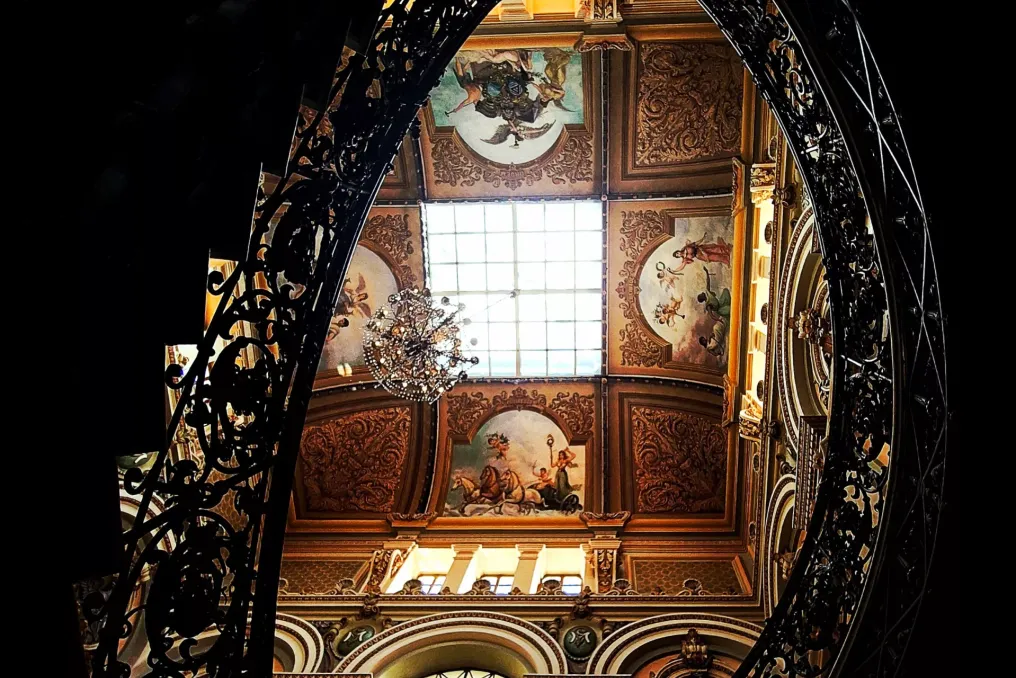
Inside the Loreto chapel, there is a wooden spiral staircase that has attracted visitors for generations. Built around 1878, it rises approximately 6 meters to the choir, twisting upwards without a central supporting column. Its unusual construction inspired the name 'Miraculous Staircase.' According to local religious legend, a mysterious carpenter appeared after the Sisters of Loreto prayed for a way to reach the choir, built the staircase, and disappeared. This story remains part of the chapel's appeal, although the identity of the carpenter and the details of the construction remain subjects of debate. Regardless of the truth of this legend, the staircase is an impressive example of craftsmanship.

Reasons to visit:

A visit allows you to see an unusual wooden artifact and learn the history behind its enduring fame.

Inside the former grain silo in Cape Town, on Wale and Andries Street, a sculptural staircase winds through the concrete structure of the Zeitz MOCAA museum. The design group Heatherwick Studio designed the museum, which opened in 2017 after converting the industrial building into a contemporary art museum. Instead of demolishing the silos, the architects preserved much of the original structure and carved out a dramatic central atrium. The staircase is part of this transformation, fitting into one of the narrow cylindrical spaces of the silo. It is also worth exploring the museum's galleries, which feature contemporary works of art from Africa and its diaspora.

Reasons to visit:

It is an opportunity to see how a former industrial building has been transformed into one of Cape Town's most distinctive cultural spaces.

These staircases were built for various reasons: from water storage and connecting cities to reaching mountain peaks and renovating old buildings. The appeal of each lies in the history behind it. Some require some effort to reach the top, while others invite you to slow down and examine the details more closely. In any case, they prove that sometimes the journey between two places can be as interesting as the destination itself.

Architectural Landmarks of Africa: From Rock Churches to Modernist Cities
Read more
getaway.co.za

Architectural Landmarks of Africa: From Rock Churches to Modernist Cities

African architecture tells stories of faith, trade, and cultural exchange, demonstrating diversity from churches carved into rock to cities filled with modernist buildings. These destinations invite travelers to look deeper than at ordinary sights to uncover the history embedded in the streets.

The capital of Eritrea, Asmara, is known for its impressive collection of modernist structures, most of which date back to the Italian colonial rule of the early 20th century. Among these stands the Fiat Tagliero car service, completed in 1938, with wide concrete wings resembling an airplane. The Impero cinema showcases Art Deco styling.

The city's architectural appearance earned it World Heritage status in 2017, although its history is inextricably linked to Italian colonialism and the segregation that shaped its development.

Lalibela hosts eleven medieval churches carved directly into volcanic rock, creating sacred spaces connected by trenches and passages. These churches, dating mainly from the 12th and 13th centuries, are traditionally associated with King Lalibela, who sought to create a holy city akin to Jerusalem.

The Church of St. George, or Bete Giyorgis, is particularly noteworthy: its cruciform roof is situated below ground level and surrounded by a deep trench. Lalibela remains an important pilgrimage site for Ethiopian Orthodox Christians.

On the southern side of the Atlas Mountains, Morocco features Ait Benhaddou, with its ochre walls and tall towers. This fortified village, known as a ksour, consists of densely packed earthen structures enclosed by defensive walls. Local materials and thick walls helped residents adapt to the harsh climate, while decorative patterns give the towers a distinctive look.

The settlement was part of historical trade routes connecting the Sahara with Marrakech through the Draa Valley and the Tizi n'Tilet pass. Its earthen buildings are a vivid example of traditional Moroccan architecture.

The narrow alleys of the Old City, carved wooden doors, and shaded inner courtyards reflect centuries of Indian Ocean trade. Here, influences from Swahili, Arab, Indian, and European cultures are combined in the buildings. Among the attractions are the Old Fortress and the Old Dispensary, although many of the city's best details are found in the traditional doors and courtyards.

The history of Zanzibar also includes its participation in the East African slave trade—a complex legacy that remains central to understanding this city.

Off the coast of the Namuha province in northern Mozambique, Mozambique Island lies in the Indian Ocean and is connected to the mainland by a bridge. It preserves the architectural heritage of centuries of Indian Ocean trade. The island became a Portuguese port in 1507 and later served as the capital of Portuguese East Africa.

In the Old Town, stone buildings made of stone and lime include former administrative, religious, and military structures. Further south, the Makuti district is known for traditional Swahili houses, historically thatched with palm leaves. The contrast between these two areas reflects the different communities and building traditions that have shaped the island.

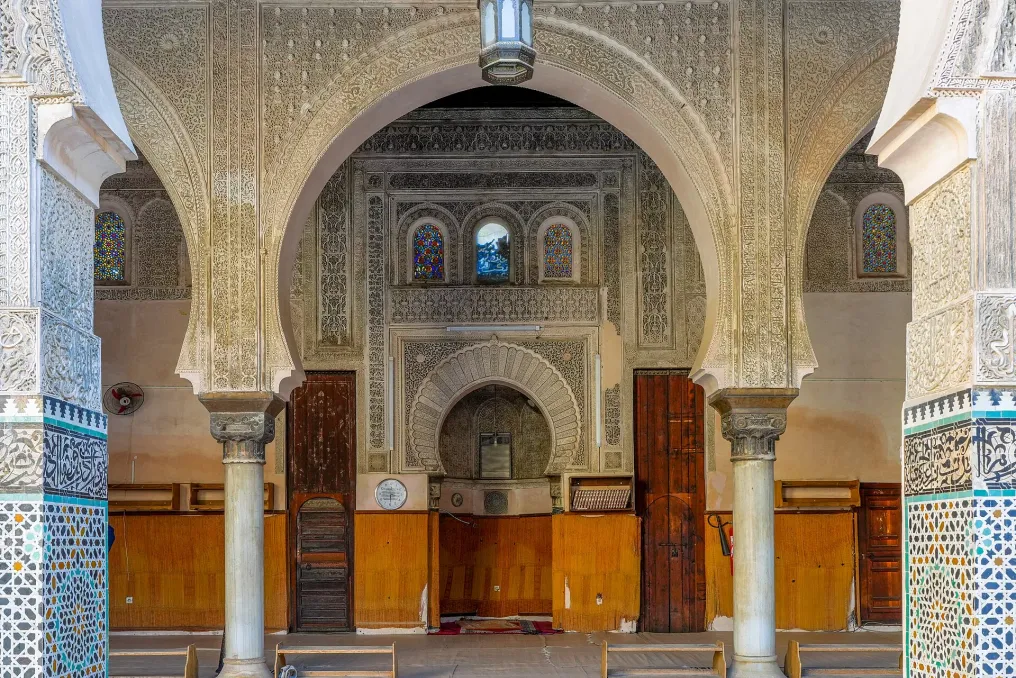
In Fez, some of the most exquisite architectural details are hidden behind simple exterior walls. Traditional inner courtyards reveal carved cedarwood, geometric mosaics, and intricate stucco work. The city, founded between 789 and 808 AD, has become an important cultural and spiritual center. Its historic medina contains mosques, madrasas, markets, and traditional homes.

The Bou Inania Madrasa stands out for its detailed tilework and carved wood, while the surrounding alleyways show how age-old crafts remain part of daily life.

Gondar offers a glimpse into Ethiopia's imperial past. In 1636, it became the permanent royal capital under Emperor Fasilides, whose successors expanded the fortified complex known as Fasil Ghebbi. The complex includes castles and palaces that blend Ethiopian traditions with Arab, Indian, and Baroque influences. Nearby, historical churches and a bathhouse associated with Fasilides complement the city's architectural heritage.

It is recommended to explore the historic districts on foot and consider hiring a local guide to explain the architectural details and history. It is important to respect local customs, especially at religious sites, and ask permission before photographing people.

Traveler's Note: The information in this article is current as of publication, but entry requirements, transportation access, and safety conditions may change. Before booking or planning a trip, check information with relevant official bodies and consult current travel advisories. This is especially important for destinations affected by conflicts or other security issues.

From the earthen villages of Morocco to the carved doors of Zanzibar—Africa's architecture shows how people lived, worshipped, and exchanged ideas across generations. One must look beyond famous landmarks, as the buildings themselves become a way to understand the history of each place.

Popular