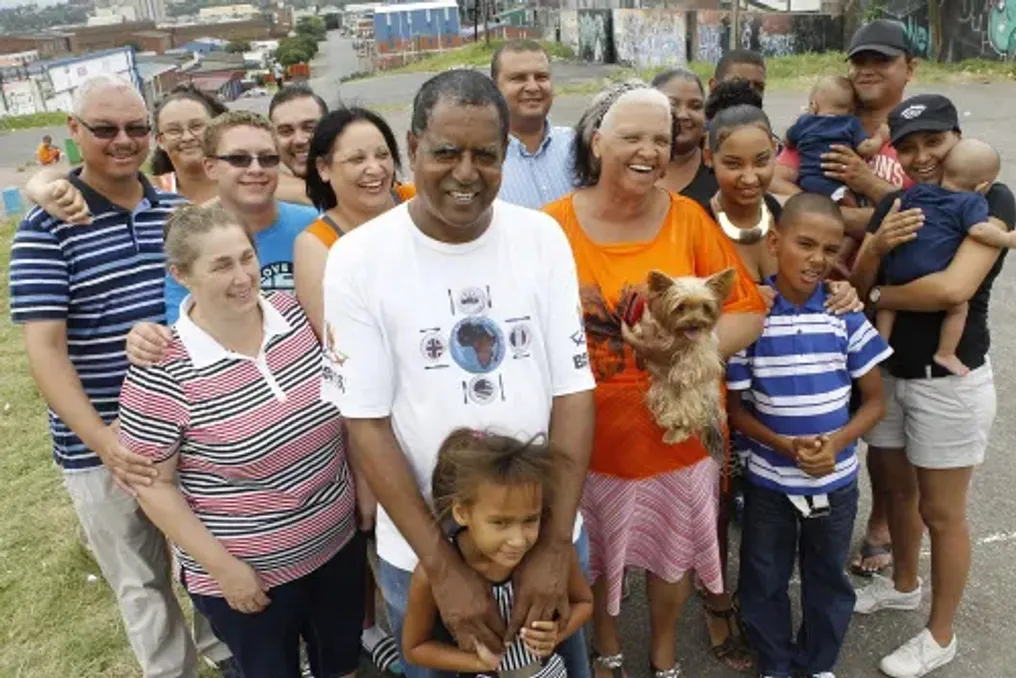
Desmond D’Sa, founder of the South Durban Community Environmental Alliance (SDCEA), along with his son Rodney D’Sa and daughter-in-law, died in a road traffic accident early in the morning. According to Bongani Mthembu from SDCEA, they were traveling from Desmond’s home to Umzinto when the incident occurred around 6 am. Desmond was heading to the SDCEA office at the time of the crash.
Mthembu reported that after D’Sa had his leg amputated, he moved from his home in Wentworth and settled in Umzinto. He expressed shock and grief over the loss of the leader and founder of the organization, wishing him peace.
D’Sa was known for his fearless fight against environmental problems, confronting large industrial giants that violated environmental legislation, endangering the lives of local residents.
Life and Work of D'Sa
After being fired for public statements, having his home set on fire, and receiving death threats, Desmond D'Sa spent over three decades fighting environmental injustice in the polluted South Durban basin. His story demonstrates how one person's refusal to remain silent sparked a powerful social movement that continues to demand accountability from corporate polluters.
D’Sa, who was 69 years old at the time of the tragedy, began his fight for responsibility and environmental protection in 1968 when he was 'forcibly evicted' from his home in Cato Manor under the Group Areas Act and moved to Wentworth. His efforts intensified in the early 1990s when he began campaigning against pollution and its impact on the health of workers and residents of the South Durban basin.
Early Years
D’Sa was born on June 13, 1956, and was the eleventh of thirteen children of his parents, Constance D’Sa and Matthew Hardy. He grew up in Cato Manor, where the community actively engaged in growing fruits and vegetables, protecting the environment. He recalled that the air was clean then, and there was much greenery around, and they grew their own produce in the yard.
He noted that life in Cato Manor was very refreshing compared to the harsh reality they faced after being forcibly relocated to Wentworth due to the Group Areas Act, where he witnessed the destruction of crops, trees, and homes. This experience awakened in him a desire to protect people and the environment from greedy developers and companies that prioritized profit over human interests.
In 1968, D’Sa first moved to Chatsworth to live with his sister in Montford, and then in 1974, he moved to Wentworth. He recounted that the forced relocation happened while he was in high school, and people were classified by hair and skin color. He finished school in Sydenham as a 13-year-old student and lived in Chatsworth with his sister until 1974, when he moved to Him Street in Wentworth.
He compared moving to Wentworth to living in a concrete jungle, where there were no trees or green spaces, as the area was industrialized and polluted. Over time, residents had to create six parks and playgrounds with equipment, football fields, and green areas themselves, as they had to build a community.
The Activist's Rise
At about 18 years old, he started working for a textile company in New Germania, earning 12 rand a week. After that, he worked for an asbestos manufacturing company and performed several other jobs before starting work at Sasol Fibre in 1993. He worked at Sasol in Durban from 1993 to 1998. In 1994, he began his first fight against pollution, which was triggered by a spill of toxic chemicals from a chemical plant onto a nearby playground on Him Street.
Several children aged five to seven who were in the unprotected zone became ill from toxins, suffered seizures, and had to be hospitalized for many weeks. The Indian chemical recycling company refused to accept responsibility. D’Sa began advocating for the closure of this company. In 1994, while fighting the chemical company and demanding it admit guilt for the children's condition, he founded the Wentworth Development Forum. The company never provided a report or aid to the children and families. When it was shut down in 1995 following significant outcry from activists, they promised to allocate part of the money from the sold land to an educational fund for the area's schools.
It was at this point that D’Sa realized the need to do more to fight for environmental justice and demands to stop pollution, as well as to hold companies accountable for the consequences of their actions.
Formation of the Alliance
In 1995, D’Sa established SDCEA, which was dedicated to fighting for environmental justice. By 1998, he was fired from Sasol Fibres after speaking out against pollution from the global chemical and energy company, which directly affected the health of the residents of the South Durban. He explained that people were suffering from hip problems, heart defects, and other diseases due to the aggressive chemicals they handled, and Sasol deemed him a 'troublemaker.'
Working with the Wentworth Development Forum, he established contacts with residents of Mirebank, Bluff, Isipingo, and Umlazi, learning that these areas were also heavily polluted by companies. Initially, he fought against these abuses with only a few volunteers, using space in an office building on Clinic Road in Osterville.
In the South Durban basin, there were about 150 chemical companies, two refineries, a paper mill, and two sugar mills operating at the time. Their first major project in 1998 was an assessment of the environmental and health status in the area. This assessment revealed the impact of pollution on the community. The population was about 38,000 people, and hundreds of people suffered from pollution-related illnesses. It became clear after the meeting that there was a more serious problem—a high incidence of asthma, chronic asthma, and cancer.
After identifying the health hazards and pollution-induced diseases, SDCEA began holding mass public meetings and events to address their problems. Halls filled with people who were sick and suffering from the consequences of pollution, while companies made huge profits, ignoring the damage to the residents. They used the power of the united people to fight injustice, conducting awareness campaigns and educating people on collecting air samples in special containers for testing and proving the impact of aggressive chemicals on residents. They raised funds to send air samples to California, which cost about $8000, until they found a laboratory in Pretoria for analysis.
D’Sa noted that although the organization started with one person, he is proud that it now has 14 staff members and 22 alliance partners, and an office in Richards Bay.
Indomitable
D’Sa evaded many attempts to silence him. In 2001, a local company allegedly paid people to kill him. Activists reported that the sent individuals were intercepted and stopped by the community, which realized they could not harm him while an entire community stood behind him. In 2008, he faced another attack: while participating in a government meeting in Pretoria, his home was bombed with a petrol bomb in the middle of the night. By the time emergency services arrived, everything was destroyed. It was a message for him to give up, but he refused to back down. The community rallied, providing him with food and helping to rebuild his home. He had to start life from scratch, but he did it, and they knew he would not give up.
Legacy
D’Sa emphasized that the residents of Wentworth and Mirebank continue to suffer from the effects of pollution from Engen and Sapref, facing long-term effects. They continue to participate in the fight for site cleanup and compensation for the community for years of environmental and health destruction.
D’Sa sits on five committees in Engen, Beyer, Sappi, UPL, and Sapref to ensure their accountability for the companies' impact on the environment and residents' health. He is also involved in training successors so that the work of SDCEA continues. He strives to ensure that the organization continues to fight injustice after his departure. He mentioned that they invested a lot of time, resources, and energy into creating a globally recognized organization. They have a community-owned office so that the work can continue for generations to come.
He added that they never sought money; his family and he made many sacrifices for the fight against environmental injustice, and their work was always aimed at serving people. Despite still living in his mother's house on Him Street, which is a known crime and shooting area, he benefits from community protection because of his work. His public activity is not limited to environmental issues; they also help youth and children in the community, work in schools, and provide assistance to troubled children through counseling and programs. He concluded that all children are their children.