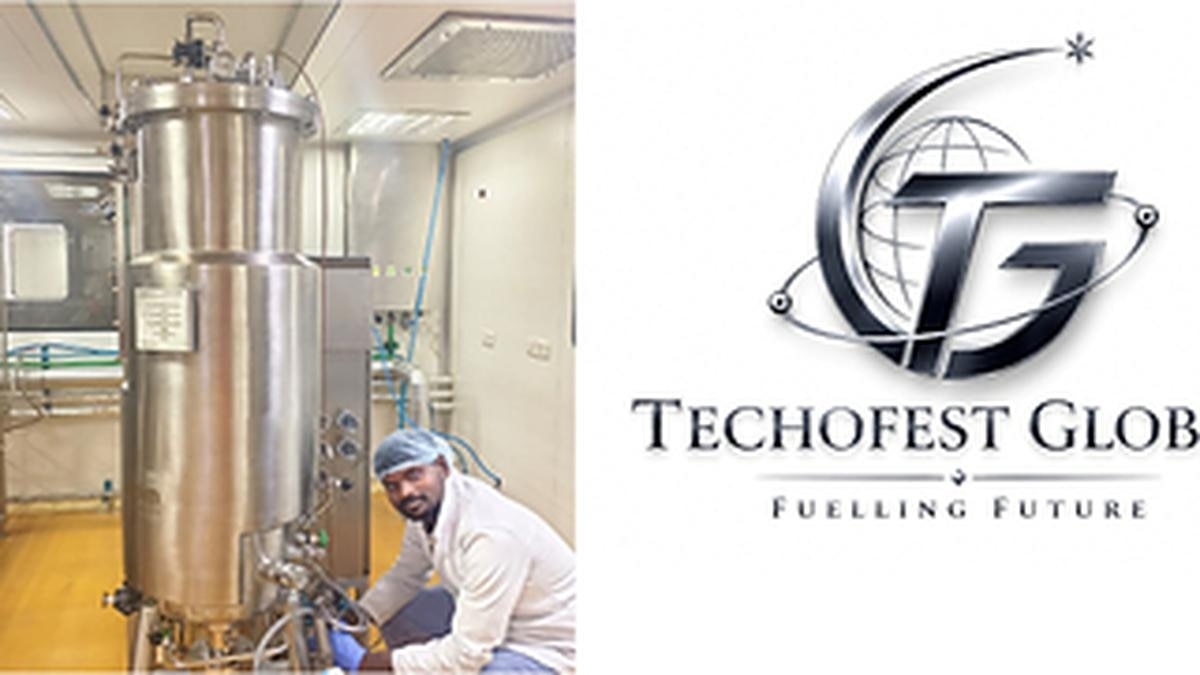
Human hair has traditionally been used as an ornament and was discarded in the trash after cutting. However, a startup from Gujarat claims to have developed a technology that potentially allows these waste materials to be converted into fuel, such as ethanol.
Currently, sugarcane and grain crops are required for ethanol production in India. This raises the question of how completely hair can meet this need, as well as what volume of ethanol will be obtained, at what price, and whether it can reach industrial capacity. At present, these questions remain open, and the claimed progress still requires verification.
The company from Gujarat, Techofest Global, asserts that they have created this technology jointly with Biomakerz. The process is named 5G SAFE. Tests were conducted in a research laboratory with a capacity of about 100 liters. The company described one stage of the process, which involves treating the raw material followed by a fermentation process.
The startup states that 85–90 percent of the biocatalyst can be recovered within this process. A biocatalyst is a substance that facilitates chemical and biological reactions. Furthermore, the company reported working on projects related to using cooking oil and obtaining biomethane from discarded sanitary napkins.
Although the company calls this technology fifth generation, this is its own claim, and it does not yet have a certified classification related to fuel quality. The critical issue remains whether the resulting ethanol meets the purity standards required for blending with gasoline.
Techofest Global named its method for obtaining alcohol (ethanol) from hair IMPHA (In-Vitro Metabolic-Engineered Pathway for Hair to Alcohol). According to the company, the goal of this technology is to obtain alcohol from waste such as hair through a biological process. The chemical formula for ethanol is C₂H₆O, which means there are two carbon atoms, six hydrogen atoms, and one oxygen atom in one molecule.
However, the purity of ethanol is crucial for its use as fuel, meeting established standards. The company claims that its patented 5G SAFE technology does not require pre-treatment of organic raw materials rich in cellulose, as is common in conventional methods. Moreover, instead of adding a mixture of enzymes, a special biocatalyst is used to help convert the organic matter into sugar during the saccharification process. The company emphasizes that most of this biocatalyst can be recovered after the process is complete.
It is important to understand the essence of the company's claim regarding the recovery of the biocatalyst at 85–90 percent. This does not mean that 850–900 grams of ethanol will be obtained from one kilogram of hair; these are two different metrics. The company has not yet specified what volume of ethanol is obtained from one kilogram of hair. Information regarding the purity of the finished fuel, energy consumed in production, and laboratory certification is also missing. Furthermore, it has not been reported whether any oil distribution company has shown interest in purchasing this ethanol.
Therefore, to assess the real usefulness of this technology, simply successfully completing initial tests is insufficient. It is necessary to find out what volume of ethanol is produced in the process and how economically viable large-scale production might be.
Obtaining ethanol from human hair is more complex compared to conventional methods. Hair primarily contains a protein called keratin, whose structure is very strong. In contrast, traditional ethanol production methods use carbohydrate-rich raw materials, such as sugarcane and corn. The sugar obtained from these materials is then converted into ethanol through fermentation.
When keratin, contained in hair, is broken down, substances similar to amino acids are usually formed. These compounds are not as easily converted into fuel through fermentation as sugar used in standard ethanol production. Nevertheless, there are possibilities for converting the carbon contained in these substances into fuel through other methods.
