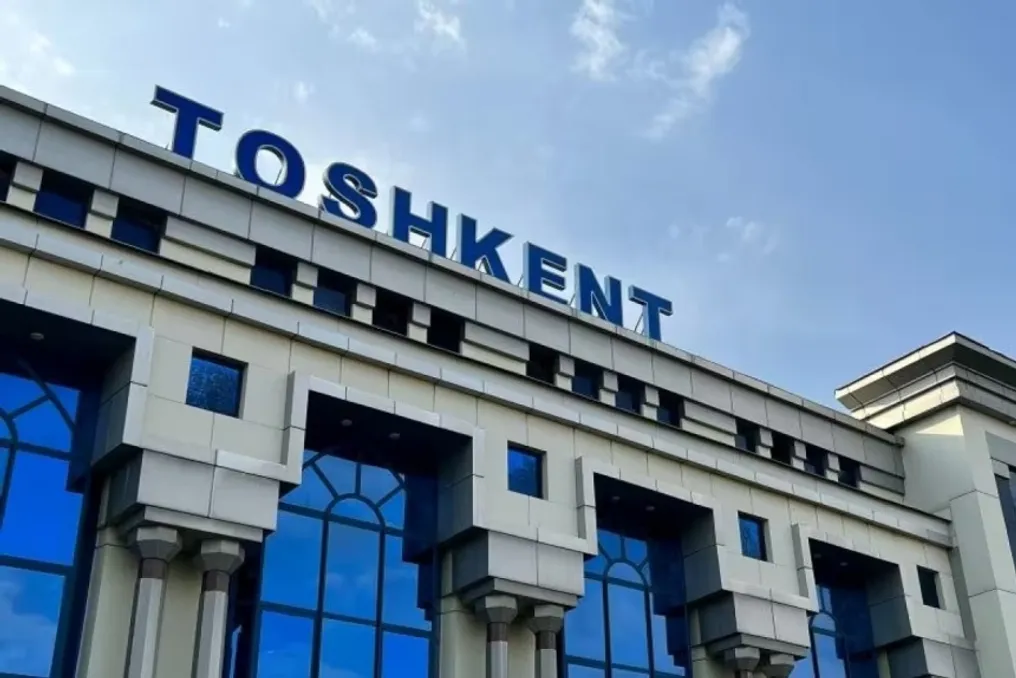
Plans to connect Tashkent's new airport with the Northern Railway Station
Read more
Podrobno.uz [uz]
podrobno.uz

Plans to connect Tashkent's new airport with the Northern Railway Station

As part of the passenger transport development strategy until 2030, which is currently under discussion, it is planned to connect Tashkent's new airport to the 'Tashkent-Severny' railway station with a rail line.

According to this document, Uzbekistan plans to build three railway lines by 2030 to connect airports with stations. These routes are planned not only for Tashkent but also for Bukhara and Urgench. The project also includes the Parkent—New Tashkent section.

The construction of the first line is scheduled for 2026, and the remaining two for 2029, with all three projects expected to be completed by 2030. To secure funding for the lines in Tashkent and Bukhara, the possibility of attracting loans from commercial banks is being considered. Preliminary allocations for the projects in Tashkent and Bukhara amount to about $30.6 million in 2029 and $37.4 million in 2030, although the exact cost of each facility has not been determined.

Furthermore, a unified transport system is planned for implementation in the Tashkent agglomeration starting in July 2027. This system should integrate the 'Tashkent-Severny' and 'Tashkent-Yuzhny' stations, Tashkent International Airport, and the central bus terminal.

Within these plans, there is an intention to increase the number of electric trains from Chirchik, Yangiyul, Angren, and Almalyk by one and a half times. Direct transfers to the metro are also provided for passengers. Another initiative is the creation of a unified electronic platform called 'Bir yo'l', which will allow purchasing tickets for trains, airplanes, and buses. Additionally, twenty bus routes are planned to connect airports, railway stations, and bus terminals, with the transfer time between different modes of transport to be reduced from twenty to ten minutes.

It is worth noting that the construction of the new Tashkent International Airport was approved by a presidential decree dated November 25, 2025, and will occupy an area of 1,310 hectares. In the initial phase, two runways, each four kilometers long, a passenger terminal covering 208 thousand square meters, 98 aircraft parking spots, a refueling complex, and a control tower will be built.

Under the terms of the agreement, a private consortium will take on the tasks of constructing and operating the station forecourt and passenger terminal, while the state side is responsible for the construction and operation of the aerodrome complex. After the airport becomes operational, which is planned for the end of 2030, it will be able to accommodate up to 20 million passengers and handle up to 300 thousand tons of cargo annually, becoming an important element of the country's logistics and transport infrastructure.
Similar stories

Deadlines set in Tashkent for completion of new lanes for high-speed public transport construction
Read more
podrobno.uz

Deadlines set in Tashkent for completion of new lanes for high-speed public transport construction

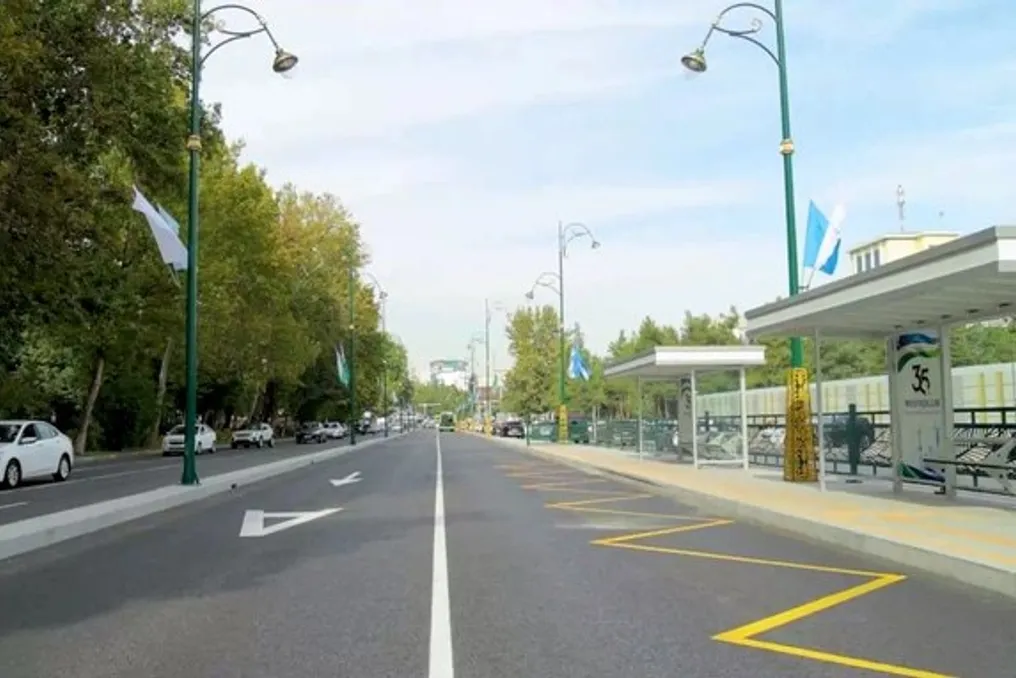
The project to create dedicated lanes for public transport (BRT) on Shahrisabz, Amir Temur, and Yangi Sergeli streets continues in Tashkent. It is planned that all work will be completed by the end of November or the first decade of December 2026. The total length of the new sections will exceed five kilometers.

Work is underway on Shahrisabz street between Amir Temur Avenue and Makhtumkuli Street, where a one-kilometer section is being developed. Completion of construction work on this section is scheduled for December 1.

On Amir Temur Avenue, dedicated lanes are being built on the section from Yunusabad metro station to Bogishamol Street. This section, with a total length of 2.73 kilometers, is divided into two stages. The first stage, which is 1.43 kilometers long, is planned to be finished by December 10, and the second stage, 1.3 kilometers long, is also scheduled for completion by the same date.

Work on Yangi Sergeli Street is taking place on the section from the intersection with Shota Rustaveli Street to the interchange towards Sergeliuly. Here, a road surface of 1.36 kilometers is being renovated, and the deadline for this stage is set for November 30.

Drivers are advised to take into account possible traffic restrictions and strictly observe posted road signs during the repair works. Previously, a new BRT section about one kilometer long was commissioned in Tashkent, bringing the total length of the dedicated line on Shota Rustaveli and Shahrisabz streets to nearly eight kilometers.

New bus routes will be launched in Tashkent region connecting Nazarbek and other districts with the capital
Read more
podrobno.uz

New bus routes will be launched in Tashkent region connecting Nazarbek and other districts with the capital

Residents of Nazarbek and adjacent territories will find it easier to travel to Tashkent thanks to the planned launch of new bus routes. These routes will provide connections between the Tashkent and Zangiati districts with the capital.

According to information provided by the Main Directorate of Transport and Road Transport Infrastructure Development of Tashkent, the new lines will operate based on a gross contract system that takes into account the actual number of passengers.

New routes and their directions

The following routes have been introduced: Route No. 162, which will run between Kushkundi mahalla and the Chorsu trade center bus station; Route No. 163, connecting Tekstilschiki mahalla with the Chorsu trade center bus station; and Route No. 167, linking the 'Tashkent' collective farm with the Chorsu trade center bus station.

Special emphasis is placed on Route No. 163. It will pass through Tekstilschiki mahalla, Nazarbek, and the Tarnov territory, as well as along Shifobakhsh Suvlar and Beruni streets.

Representatives of the department believe that the introduction of these routes will improve transport accessibility for residents of the Tashkent and Zangiati districts when traveling to the capital. Furthermore, this should contribute to reducing bus waiting times and achieving a more balanced distribution of passenger flow.

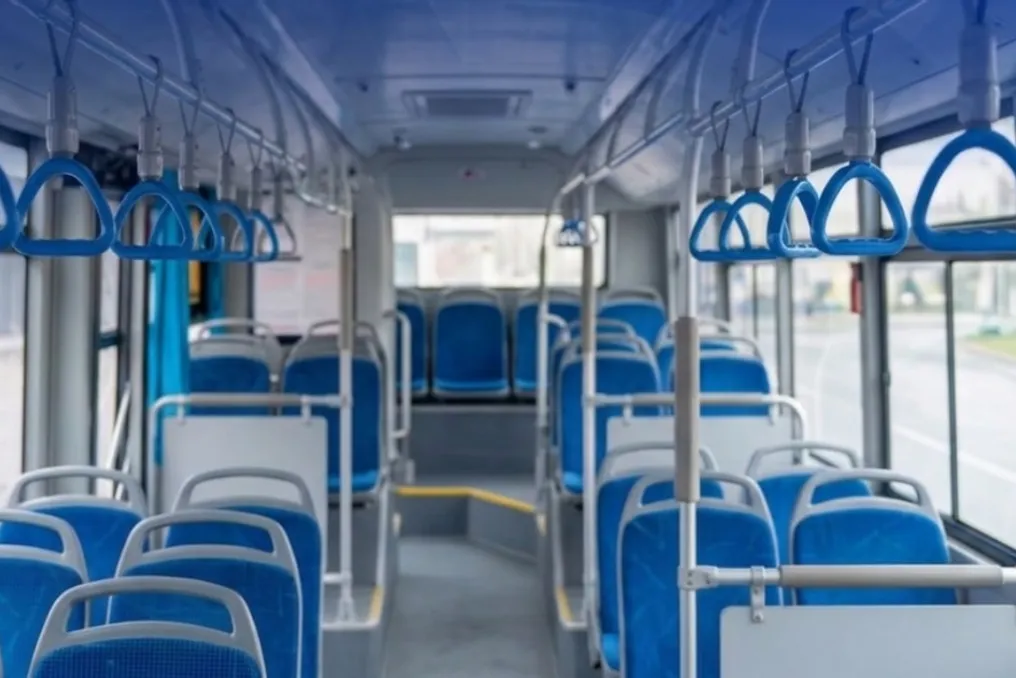
To ensure the operation of the new lines, 54 buses manufactured in China by ZHONGTONG are planned for use. These buses are expected to arrive by the end of November 2026. It was previously noted that the coverage rate of mahallas by public transport in Uzbekistan has reached 98.8%.

Popular