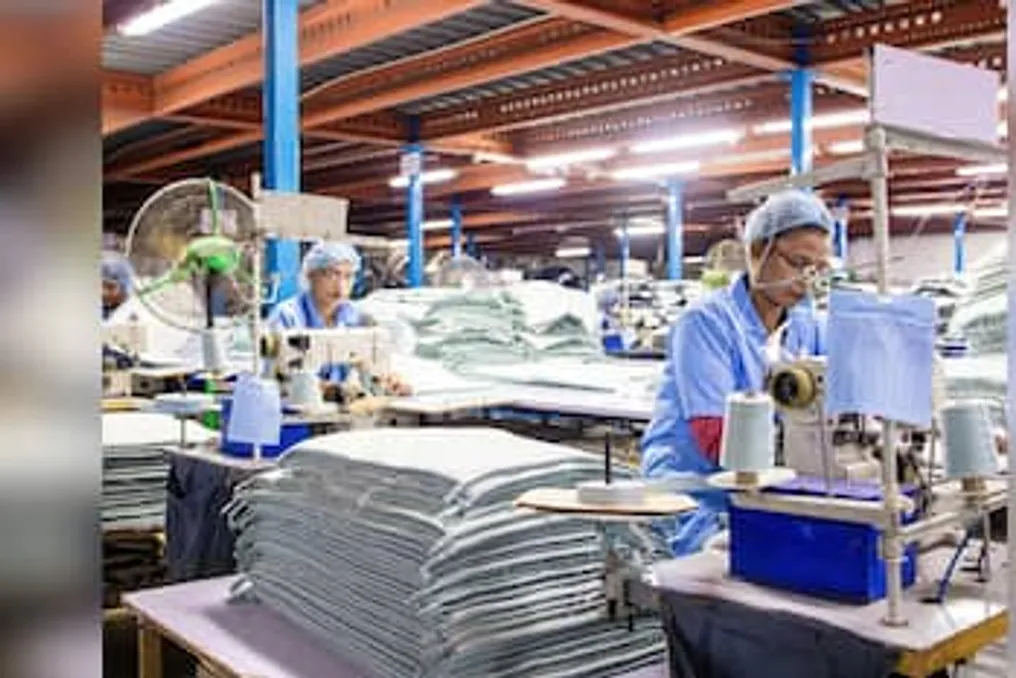
Textile Ministry resumes PLI scheme with reduced turnover threshold to 100 crore rupees
Read more
Business Standard
business-standard.com

Textile Ministry resumes PLI scheme with reduced turnover threshold to 100 crore rupees

The Ministry of Textiles has announced the resumption of applications for the Production Linked Incentive (PLI) Scheme for the textile industry. The application portal will be open from November 1st to December 31st. Furthermore, the minimum turnover requirement has been lowered to 100 crore rupees.

This change is aimed at ensuring broader participation from micro, small, and medium enterprises (MSMEs), as well as medium-sized manufacturing units. New applications are being accepted under Round 4 of the scheme.

The objective of this program is to incentivize the production of man-made fiber (MMF) apparel, MMF fabrics, and technical textiles. The program aims to strengthen domestic manufacturing capabilities, attract investment, create jobs, and enhance India's position in global textile value chains.

Reduction in Minimum Turnover Criterion:

The minimum turnover requirement has been reduced from 200 crore to 100 crore rupees for Category 2. This allows MSMEs and medium producers to participate more actively in the scheme. For applicants approved in Round 4, the scheme's validity period has been extended until the financial year 2033-34.

The extended period is intended to give these applicants a longer horizon for investment and operational activities during the creation and expansion of manufacturing capacities.

Ashwin Chandran, Chairman of the Confederation of Indian Textile Industry (CITI), noted that this measure by the Ministry of Textiles is a significant boost of confidence and a major impetus for companies, especially amid the global difficulties facing the industry as it strives to achieve the ambitious goal of $350 billion for the textile and apparel sector by 2030.

He added that 'the liberal terms announced for Round 4—especially the reduction in the turnover threshold and the longer horizon—will provide more opportunities to participate in the scheme, leading to increased investment and job creation, and enhancing the sector's international competitiveness.'

Chandran also emphasized that Round 4 PLI, combined with the proposed implementation of the National Fibre Scheme announced in the latest Union budget statement, represents exactly the policy support that the MMF sector was waiting for.

Although MMF dominates the global textile market, the reduction of GST on MMF fiber and yarn to 5 percent has already eliminated the backward structure of tariffs in the MMF value chain, starting from the fiber stage. However, the backward structure persists at the upstream stage, as PTA and MEG—key raw materials for MMF fiber—continue to be taxed at 18 percent GST.

India's textile and apparel exports grew by 17.51 percent year-on-year in September 2026, according to USD data. Nevertheless, the growth from April to September 2026 was a modest 2.38 percent year-on-year, as apparel exports declined compared to the same period in 2025.

Similar stories

Ashwini Vaishnaw calls PLI scheme successful: 12 million jobs and ₹3.25 lakh revenue
Read more
www.aajtak.in

Ashwini Vaishnaw calls PLI scheme successful: 12 million jobs and ₹3.25 lakh revenue

The discussion about iPhone production in India goes beyond simply manufacturing one type of phone; it tests the country's ability to scale up new factories, jobs, and exports with the support of government incentives. The central government provided financial support to mobile companies through the Production Linked Incentive (PLI) scheme to increase production volumes.

According to Electronics and IT Minister Ashwini Vaishnaw, the government has allocated ₹19,000 crore in incentives for mobile manufacturing. As a result, this sector has generated ₹25,000 crore in direct taxes and ₹3 lakh crore in GST collection. He also noted that 25 lakh people are employed in electronics manufacturing, of whom 12 lakh work directly in mobile manufacturing.

However, there is another side to this story: the question is whether India imports components for assembling phones or is gradually starting to produce the parts and technologies that constitute the true value of the device. This debate is important for understanding the progress of the 'Make in India' and 'Made in India' concepts.

PLI stands for Production Linked Incentive. Simply put, it is a program that provides financial incentives to eligible companies for increasing domestic production. The goal of this scheme is to help companies set up factories in India, increase output, invest capital, and make India a more attractive manufacturing hub compared to other countries.

For example, if a company manufactures mobile phones in India and meets the program's criteria, it can receive incentives according to established rules. This increases the economic benefit for the company when expanding production in India. The government expects that in return, investments will come in, jobs will be created, production will rise, and exports will be stimulated. Thus, the state does not directly cover the cost of every phone but encourages companies that increase production according to specific conditions.

A few years ago, most of India's mobile phone needs were met through imports. Now, the situation has changed significantly. According to government data, in 2014–15, about 75 percent of the country's demand for mobile phones was covered by imports, whereas in the fiscal year 2024–25, this figure dropped to approximately 0.02 percent.

Mobile phone production has also accelerated. Government data shows that in 2014–15, the country produced about ₹18,000 crore worth of mobile phones, while in 2024–25, this volume grew to approximately ₹5.5 lakh crore. Over the same period, the total production of electronic goods increased from ₹1.9 lakh crore to ₹11.3 lakh crore.

The PLI scheme played a key role in this transformation. Thanks to it, companies received incentives for large-scale mobile device manufacturing in India. Furthermore, existing factories in the country have expanded, and foreign companies' supply chains have begun shifting towards India.

The most discussed example of these changes is the iPhone from Apple. The company and its manufacturing partners are increasing production in India. This allows India to increase its share in the global electronics supply chain. According to a recent Bloomberg report, about one in four iPhones produced globally is now manufactured in India. This indicates that India is not only producing phones for the domestic market but is also becoming part of the production system that meets global demand.

One factor driving Apple to increase production in India is the desire to reduce dependence on China. Companies refer to this strategy as 'China plus one,' which means establishing factories and supply chains in other countries alongside those already in China to lessen reliance on any single nation. For India, this can translate into opportunities such as investment, job creation, acquisition of technical expertise, and export growth.

Official data is crucial for assessing the results of the PLI scheme. According to information presented to parliament in July 2025, by June 2025, investments under the PLI scheme for large-scale electronics manufacturing reached ₹12,390 crore. During this period, total production reached ₹8.44 lakh crore, and exports under this scheme amounted to ₹4.65 lakh crore.

Furthermore, according to government data provided as of March 2026, the total investment under the scheme reached ₹20,587 crore, and production reached ₹11.61 lakh crore, with exports totaling ₹6.43 lakh crore. These figures reflect the overall achievements over the entire period of the scheme, not just the results for one year. Export growth means that phones manufactured in India are sold in other countries, allowing the country to secure its place in global markets and encouraging companies toward large-scale production.

What benefit does the PLI scheme bring to India? Debates regarding government support for mobile manufacturing have recently intensified. A Bloomberg video report asked how India can benefit if many expensive and critical iPhone components come from abroad.

Anant Raj receives RERA certification for Gurugram project and plans to expand data center capacity to 357 MW
Read more
business-standard.com

Anant Raj receives RERA certification for Gurugram project and plans to expand data center capacity to 357 MW

The Delhi-based real estate firm Anant Raj Ltd has received certification from the Haryana Real Estate Regulatory Authority (RERA) for its luxury residential project in Gurugram. The company announced this in an exchange filing on Wednesday.

The residential complex in Gurugram, named The Estate One, has a potential built-up area of approximately 1.22 million square feet. The company stated that the project is in the launch phase and is likely to be introduced soon.

The company's board of directors, which held a meeting to discuss and approve the results for the September quarter, also announced plans to reach a data center capacity of 357 megawatts (MW) across North and South India by the financial year 2032.

Currently, the company operates 28 MW of IT load at its campuses in Manesar and Panchkula and continues to increase its data center presence in Haryana.

Earlier this month, a subsidiary of Anant Raj Ltd, Anant Raj Cloud Singapore Pte Ltd, along with Singapore-based Orange Business Services, signed a Memorandum of Understanding (MoU) with the Haryana government to facilitate the hosting of foreign data in the state.

In July, the developer announced its intention to spin off its cloud services and data center business into a separate public company named Ashok Cloud.

For the second quarter of the financial year (Q2FY27), the developer recorded a 13.25% year-on-year growth in net profit, reaching ₹156.49 crore. This compared to a Profit After Tax (PAT) of ₹138.16 crore in the corresponding quarter last year.

This growth occurred despite an increase in the firm's total expenses by more than 3% year-on-year, reaching ₹491.17 crore compared to ₹476.46 crore in Q2FY26. The company's operating income was ₹661.53 crore, showing a year-on-year increase of 4.87% compared to ₹630.79 crore in the same quarter last year.

Earnings Before Interest, Taxes, Depreciation, and Amortization (EBITDA) increased by 17.3% year-on-year, reaching ₹197 crore versus ₹168 crore in Q2FY26. Quarterly net profit and operating income grew by 4.89% and 4.77%, respectively.

Popular