
Apex Intelligence releases Apex-35B-V1.0 model based on Qwen3.6, developed with AI agents
Read more
Pandaily
pandaily.com

Apex Intelligence releases Apex-35B-V1.0 model based on Qwen3.6, developed with AI agents

The Chinese startup Apex Intelligence, founded in June 2026, unveiled its first model, Apex-35B-V1.0, on October 28. The model weights are available on the Hugging Face platform. The model is based on Alibaba's Qwen3.6-35B-A3B and was further refined through intermediate and subsequent training focused on coding tasks, agent workflows, general tasks, as well as research in artificial intelligence, computational science, and robotics simulation.

The company's main focus is not so much on the model's size as it is on its creation methods. Apex Intelligence asserts that its automated research system, named Apex Research, participated in generating training data, conducting experiments, developing the training plan, and optimizing GPU cores and the inference system.

As an example, the company cited a case where Apex Research discovered a weakness in the model's computational fluid dynamics tasks. The system analyzed the reasons for the model's shortcomings in reasoning, then generated and verified new training data, which was used in subsequent training. According to the company's internal testing, this cycle increased the model's CFD-Bench score by 32.1 points. Furthermore, Apex Intelligence reports that AI-driven optimization increased training throughput by 45% to 60% and accelerated decoding by 1.6–1.8 times.

All benchmarking results published with the release were obtained through the company's own evaluation. Based on this data, Apex Intelligence claims that Apex-35B-V1.0 surpasses both Qwen3.6-35B-A3B and Flint from Recursive SuperIntelligence across all six presented research benchmarks. The model also performs better than GLM-5.3 on FrontierScience and PaperBench tests, outperforms DeepSeek-V4.1-Flash-1017 in the human-difficult BioMysteryBench division, and demonstrates the highest BFCL V4 score among comparable models.

In two robotics tests, RoboRSI and Real2Sim, the model achieved scores of 44.5 and 21.55, respectively, which are close to the performance of the larger GLM-5.3-Flash model (52.4 and 21.4).

The Real2Sim test requires the model to reconstruct a working physical simulation from a single photograph: it must identify objects, select simulation resources with similar visual and physical characteristics, and recreate their arrangement for robot action testing. RoboRSI assesses the model's ability to control simulated robots by writing and correcting code based on visual feedback.

The company was founded by Chen Yunchao, an associate professor at Tsinghua University's AI College. He describes this work as recursive self-improvement—a concept where AI systems help create their successors. In an interview with Tencent Technology, he noted that AI has made clear progress in conducting research, but it still lacks 'research intuition,' meaning the ability to determine which problems are worth pursuing.
Similar stories

Apple's first foldable iPhone model faced issues typical of early products
Read more
iol.co.za

Apple's first foldable iPhone model faced issues typical of early products

There is a widely accepted caution in the world of technology: one should never purchase the first product in a new category. Nevertheless, consumers choosing the Apple brand often ignore this caution, relying on confidence in purchasing a premium item. However, the release of the iPhone Duo casts doubt on this trust.

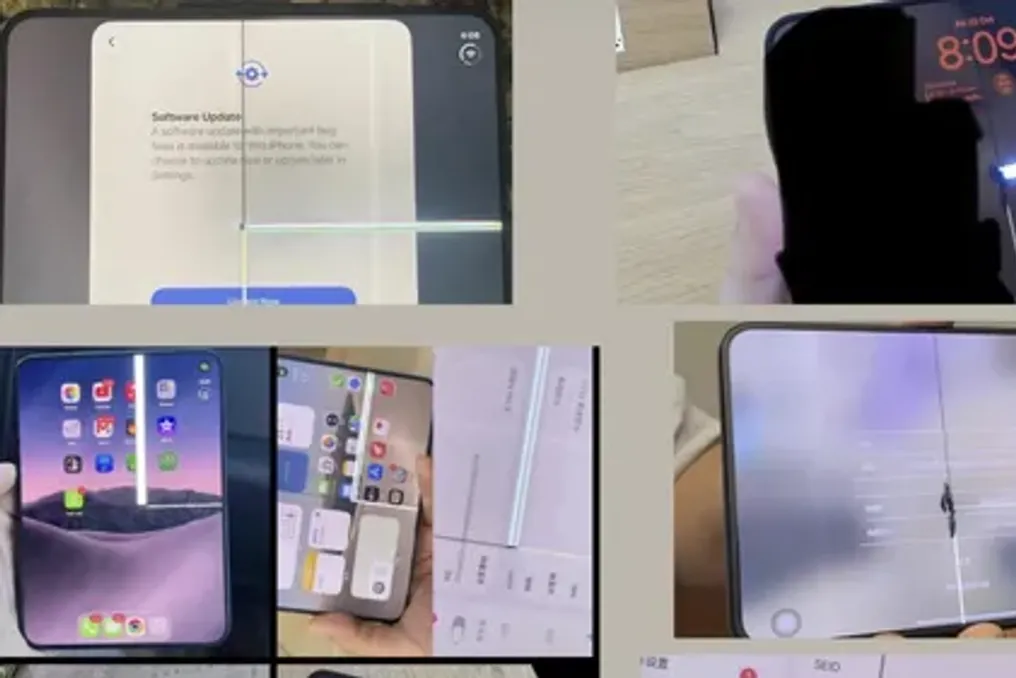
Reports have increased online from users claiming that the display of their iPhone Duo cracked after only one week of normal use. This developing situation bears a strong resemblance to Apple's original MacBook Air released in 2008. At that time, Steve Jobs introduced the ultra-thin laptop from Milanese folders, demonstrating a revolutionary design unmatched by competitors in thinness.

However, the initial MacBook Air model had serious hardware compromises. It was equipped with an insufficiently powerful processor and a slow hard drive taken from the iPod, making it practically unsuitable for demanding tasks. It can be argued that until the MacBook Air switched to Apple Silicon processors in 2020 with the M1 version, this laptop remained an expensive and underpowered device.

The iPhone Duo does not suffer from performance limitations as it is equipped with a powerful A20 processor, but its physical hardware appears vulnerable. Early instances of screen failure suggest that Apple may have launched the foldable model onto the market before achieving perfection in screen durability, leading to a noticeable percentage of defective devices.

Although the vast majority of iPhone Duo owners have functional devices, and online complaints do not reflect every buyer's experience, the frequency of these screen failures is cause for concern. This is especially relevant given the lack of an official statement from Apple on this matter.

It will be particularly interesting to observe how this situation resolves in markets such as South Africa. If local customers encounter damaged screens, Apple's approach to repair, free replacement, or device exchange will set a critically important precedent for consumer trust.

This debate also recalls the launch of the Samsung Galaxy Fold in 2019, which suffered from hinge and screen line issues before the line matured in subsequent generations. For Apple, replacing defective hardware while correcting production processes will be costly, and the ongoing negative reaction threatens to significantly undermine the early sales of this flagship foldable device.

Tencent announces support for visual understanding in future Hy4 and Hy4 flash models
Read more
technode.com

Tencent announces support for visual understanding in future Hy4 and Hy4 flash models

Tencent's Executive Vice President, Dongsong Tang, announced at the Tencent Global Digital Ecosystem Conference on October 29 that the company plans to soon release the Hy4 and Hy4 flash models, adding the function of visual understanding to its lineup of artificial intelligence models.

Compared to the preliminary version of Hy4 presented in August, the full Hy4 model will demonstrate improved performance in tasks requiring extended reasoning and execution, including real productivity workflows. Furthermore, Tencent aims to enhance reasoning efficiency.

The Hy4 flash model will be focused on cost-effectiveness while retaining visual understanding capabilities and AI agent functions. The preliminary Hy4 version has a total of 770 billion parameters, with 49 billion parameters activated during inference, and it supports a context window of one million tokens. Tang noted that Tencent is jointly developing its models and products to improve their efficiency in practical applications.

Indian Patent Office rejects US company's application to patent tuberculosis therapy
Read more
timesofindia.indiatimes.com

Indian Patent Office rejects US company's application to patent tuberculosis therapy

The Indian Patent Office has rejected the patent application submitted by the American company Global Alliance for TB Drug Development concerning the drug BPaL—a vital tuberculosis therapy. The basis for this decision was the lack of novelty and inventive step.

Healthcare experts note that this decision may open up opportunities for local drug manufacturers to bring more affordable generic versions of this drug to the market in India and other countries with a high disease burden.

Popular