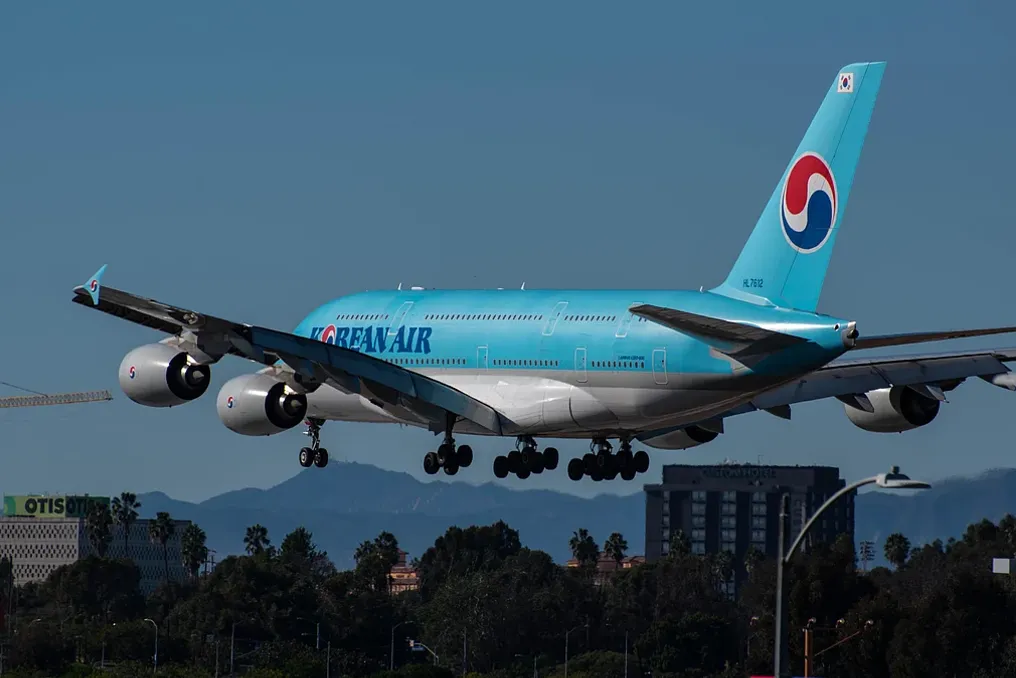
Passengers who have noticed the same city or coastline reappearing in the airplane window might wonder why their flight is circling instead of landing. However, this does not always indicate a problem.
Aircraft sometimes enter holding patterns, following a predetermined route until they receive clearance to approach the airport. This occurs when runways are occupied, bad weather affects arrivals, or air traffic controllers must manage congestion.
Currently, the United Nations aviation agency, the International Civil Aviation Organization (ICAO), is urging countries to cooperate more closely to reduce unnecessary time spent waiting in the air. It is actively promoting the use of a system that could help airlines avoid delays even before takeoff.
Airports can only handle a limited number of arriving and departing aircraft simultaneously. When too many flights approach an airport, controllers may require some pilots to wait in the air until it is safe to proceed.
Furthermore, delays can be caused by weather conditions, emergencies, and airspace restrictions. A disruption at one airport can affect flights in several countries, especially if aircraft pass through busy international routes.
Although holding patterns are a normal part of aviation, they consume extra fuel and can delay passengers and connecting flights.
ICAO aims for more efficient air traffic coordination through a system known as air traffic flow management. Instead of allowing aircraft to take off and then wait over a congested airport, authorities could proactively identify congestion and adjust departure times.
Airlines, airports, air traffic controllers, and weather services should exchange information to help manage the number of aircraft moving across different regions.
ICAO Secretary General Juan Carlos Salazar compared this idea to regulating traffic lights in a city. He stated in UN News: 'If traffic lights operate independently, movement turns into chaos, and there are traffic jams at every corner.'
A similar problem arises in aviation when neighboring countries manage their airspace without exchanging sufficient information.
Preliminary results show that improved coordination can make a significant difference. According to ICAO, joint trials in the Americas in 2026 saved over 265,000 minutes of flight time, equivalent to approximately 4,400 hours.
These trials also resulted in savings of over $38.9 million and about 13,330 tons of fuel. This reduction in fuel consumption helped avoid an estimated 42,160 tons of carbon dioxide emissions.
Europe has also reported improvements. From May to August 2026, the EuroControl program, designed to forecast weather disruptions and congestion, helped avoid delays amounting to about 3.1 million minutes. The organization calculated that these improvements saved approximately $448 million.
For travelers, better coordination can mean fewer unexpected delays and more accurate information about flight disruptions.
If an airport is already experiencing congestion, airlines can be notified earlier instead of discovering the problem when aircraft approach their destination. This can also help airports recover faster after bad weather or other disruptions.
However, this does not mean that flights will never be delayed or that aircraft will completely abandon holding patterns. Controllers must still prioritize safety, and some situations cannot be foreseen in advance.
Some countries already use air traffic flow management systems, but international coordination remains a complex challenge. An aircraft flying between continents may pass through several regions, each with its own procedures and technologies.
Salazar emphasized that countries must exchange information more effectively if they want to reduce disruptions on international routes.
Following five days of discussions in Montreal, governments and aviation industry representatives supported efforts for wider implementation of this system. ICAO plans to hold regional workshops in 2027, and new international rules for air traffic flow management are expected in November 2030.
The need for better coordination is growing as the number of travelers increases. According to ICAO, in 2025, airlines transported nearly five billion passengers on approximately 38 million flights.
The agency forecasts that the annual number of passengers could reach 12.4 billion by 2050. Meanwhile, airspace closures, extreme weather, and new technologies such as drones and air taxis are creating new challenges.
For passengers, the goal is simple: fewer unexpected disruptions, clearer information, and less time spent waiting to arrive at their destination. And even a small improvement can matter to those who have spent an extra half hour circling over an airport.