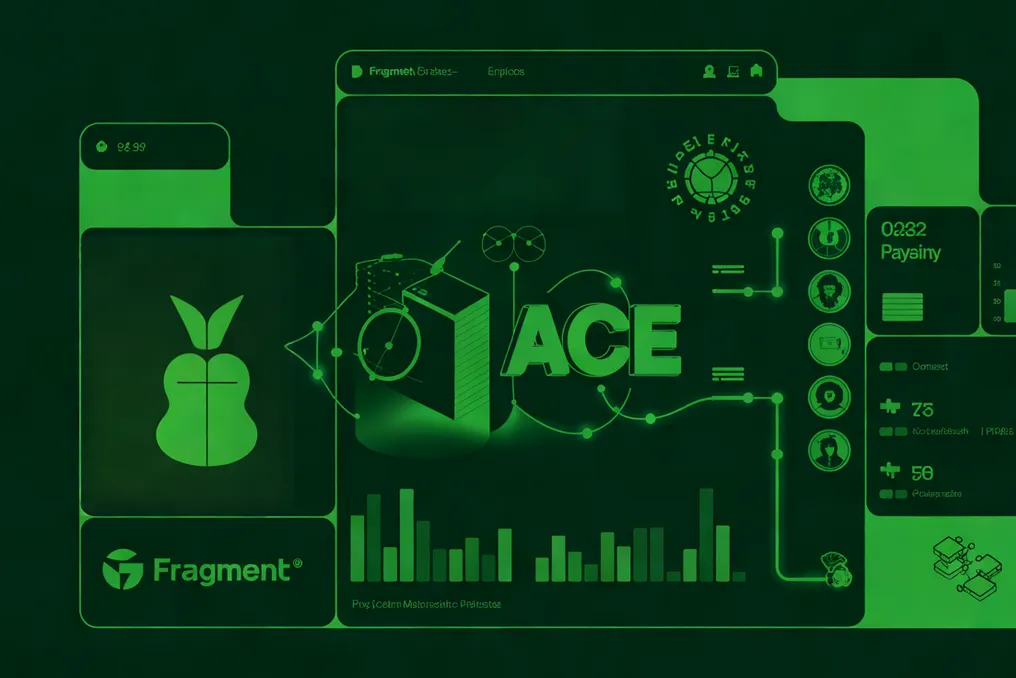
Fragment raised $56 million to develop AI in corporate procurement
Read more
Ventureburn
ventureburn.com

Fragment raised $56 million to develop AI in corporate procurement

Fragment announced it has raised a total of $56 million to achieve its goal of automating complex procurement processes using artificial intelligence. The San Francisco-based company made its public debut on October 28, 2026.

The investment round includes a Series A led by 8VC, as well as a previous seed round overseen by General Catalyst. Additionally, several prominent private investors invested in Fragment, including Roelof Botha, Nikesh Arora, Jeff Wilke, Eric Wu, and Dennis Cinelli.

Fragment was founded in 2025 by co-founders Pranav Mulgund and Naveen Kashyap. The company has not yet disclosed its valuation or the amount raised in each round.

Fragment focuses primarily on corporate buyers within large manufacturing companies and other organizations. These structures often have complex workflows and procurement systems. When issues arise with order processing, invoicing, or deliveries, additional manual verification may be required.

Fragment's technology is built on an Autonomous Context Engine, or ACE. This engine connects data within a company's current business applications and gathers organization-specific policies, relationships, and institutional knowledge.

This scenario allows AI agents to understand how a group of organizations handles exceptions in the purchasing and payment process. For example, if an invoice does not match a purchase order, the agent can clarify this exception, find an approved resolution, and take the necessary actions.

Fragment claims that its technology operates on top of existing infrastructure without requiring data migration. This approach can reduce disruptions for enterprises using complex enterprise software environments, allowing organizations to maintain their established systems.

The company named Graybar and CNX as its clients. It is reported that Graybar processes about three million invoices annually, and approximately 80% of them require some level of approval. Fragment aims to automate part of this exception-related workload.

The new capital is planned to be used for further enhancing ACE. Furthermore, the company intends to expand its scope from supplier sourcing to payment (source-to-pay), covering broader workflows from supplier search to payment.

This method may interest businesses looking to increase efficiency without increasing administrative staff. However, client adoption will depend on the reliability, security, and trust in automated solutions. Actions related to payments require special caution, as errors can lead to financial and contractual consequences.

Investors believe that Fragment's strategy, focused on large enterprises, lays the foundation for future growth. Jack Moskovich, a partner at 8VC, emphasized the complexity of serving large organizations. The funds raised will support additional deployments with major corporate clients.

The company also faces competition from established procurement technology vendors and new AI platforms. Its focus on direct procurement differentiates it from broader spend management solutions. Demonstrating controlled processes and achieving effective results will be critically important.

The funding comes as companies increasingly turn to AI agents to conduct operations. Automotive companies are facing growing pressure to improve efficiency amid fragmented supply chains. Automating routine procurement tasks will allow procurement departments to focus on strategic decisions and supplier relationships.

The company's strength lies in its ability to execute pre-approved actions, setting it apart from systems that only notify about problems. However, clients will have to entrust it with critical procurement processes. Ultimately, Fragment could potentially move beyond direct procurement.

Pranav Mulgund noted that other corporate processes are of interest but declined to specify which ones. In the short term, priorities remain the evolution of ACE, expanding source-to-pay functionality, and deployments in large enterprises.
Similar stories

Rendezvous Robotics raises $20 million to create self-assembling spacecraft
Read more
ventureburn.com

Rendezvous Robotics raises $20 million to create self-assembling spacecraft

Rendezvous Robotics has successfully raised $20 million in a re-priced seed funding round. The leaders of this round were MaC Venture Capital and Toyota Ventures. The company officially announced the funding, and this round was its first priced round.

Participants in the round also included University of Michigan Endowment, Astera, and Industrious Ventures. Existing investors, including Aurelia Foundry, ATX Venture Partners, and Mana Ventures, also participated in the financing. Rendezvous Robotics, based in Golden, Colorado, develops spacecraft capable of self-assembly.

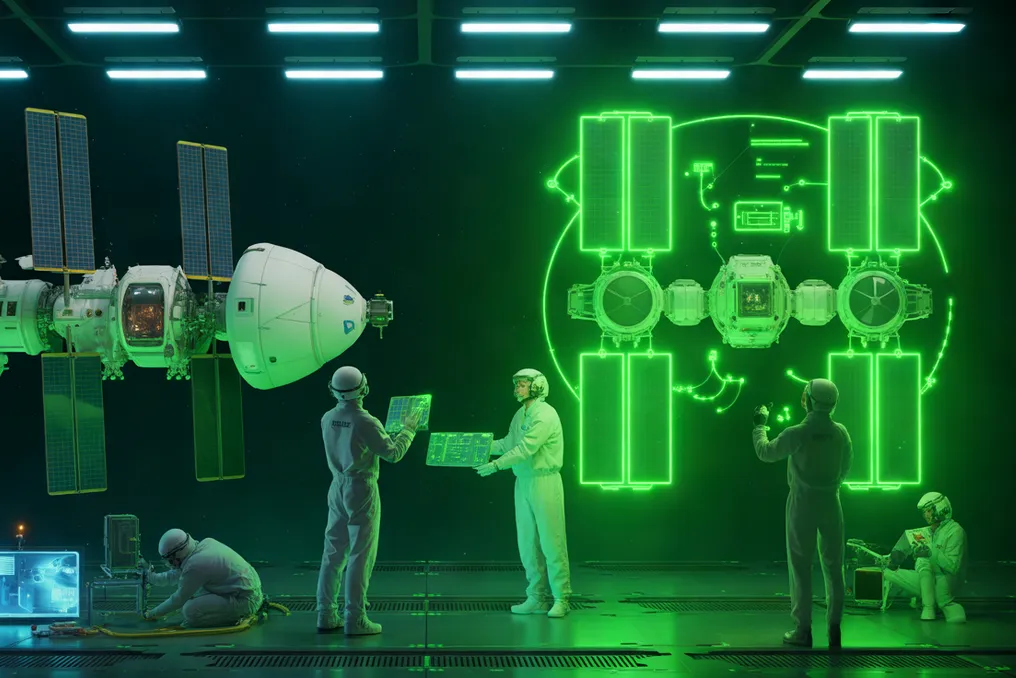
The capital raised will be used for developing next-generation spacecraft, conducting demonstration flights, and hiring additional staff. Instead, the company plans to send elements as small autonomous 'modules.' These modules will be able to reach the rendezvous point independently, assume the required position, and dock in orbit.

Rendezvous aims to create hexagonal tiles about one meter in size, equipped with sensors and onboard processing. The modules will use electromagnetic actuation to ensure movement and self-assembly. After connection, each tile can perform various functions.

Mission operators can add tiles for computing needs, solar energy collection, propulsion systems, communication, and thermal regulation, while having the ability to add or move them as needed. This design can also support future servicing operations. Operators can replace damaged modules or change the satellite's configuration after launch. This could potentially reduce the need to build and launch an entirely new spacecraft if components fail.

This technology is based on nearly ten years of research conducted under the TESSERAE project. The original self-assembly technology was developed by Dr. Ariel Ekblau at the Massachusetts Institute of Technology. The research was subsequently advanced through the Aurelia Institute, which Ekblau founded. Earlier versions of TESSERAE have already flown on a Blue Origin New Shepard rocket and participated in two missions to the International Space Station.

The company has scheduled a campaign of parabolic flights for November 2026. These tests will verify electromagnetic actuation and mobility in microgravity conditions. A separate TESSERAE demonstration is planned for the International Space Station in December 2026. It will involve assembling 32 tiles into a three-dimensional structure in a controlled environment. Rendezvous is also preparing a special low Earth orbit demonstration, scheduled no earlier than April 2028.

During this mission, seven independently deployed space tiles will autonomously connect to form one spacecraft. These modules will then separate and assemble into a different configuration. The goal of the demonstration is to prove that spacecraft can change their physical structure without the aid of external robotic equipment.

Co-founder and CEO Joe Landon believes that this technology can enable spacecraft with more powerful energy generation and larger communication systems. The architecture will ultimately allow for missions that are difficult due to the limitations of traditional launches. MaC Venture Capital and Toyota Ventures believe that robots, modular design, and autonomous control can be a successful combination. This strategy goes against conventional ideas about how to build and launch spacecraft.

The demonstrations have helped solidify the foundations of the technology in microgravity conditions. Toyota Ventures partner Chris Absher emphasized autonomy as a fundamental part of Rendezvous's design. Michael Palank, Managing Partner at MaC Venture Capital, also supported the company's efforts to rethink spacecraft construction. However, a free demonstration is still far off, although its realization should prove the system's ability to successfully and autonomously assemble and reconfigure in real orbit, which could open up new possibilities for building and servicing massive spacecraft.

Startup Mave raises $34 million to expand AI-powered cybersecurity platform
Read more
ventureburn.com

Startup Mave raises $34 million to expand AI-powered cybersecurity platform

The Israeli cybersecurity startup announced the successful raising of $34 million in funding. This round was a Series A of $28 million, led by the fund Red Dot Capital Partners. Representatives from Lumir Growth Partners also participated in the investment.

The company plans for its solutions to enable security teams to respond faster as cyber threats become more complex. Previously, Mave had raised $6 million in seed funding from Dell Technologies Capital and Emerge Ventures.

The funds will be directed towards developing products for the corporate sector and conducting artificial intelligence research, as well as implementing expansion plans. Mave's AI-based tools are designed to reduce the time analysts spend gathering evidence and analyzing alerts.

Mave was founded in 2025 by CEO Raziel Oren and CTO Guy Eshel, who co-founded the company. Both founders previously served in Israel's intelligence unit 'Unit 8200', providing the company with deep expertise in corporate security operations.

Large organizations often use dozens of different security tools. Incident information can be scattered across identity systems, endpoints, and cloud environments. Analysts have to consolidate these disparate data sources before making decisions on further actions.

Traditional Security Information and Event Management (SIEM) systems provide a unified view of collected data, but they may not contain all the necessary information to understand an active incident. This forces analysts to manually check threats across multiple platforms.

Mave's AI agents integrate directly with existing security systems. They query data from each tool, collect relevant information, and consolidate the results within a single investigation. The platform is also designed to filter false positives and detect activity related to potential attacks.

The system is capable of executing approved response actions according to rules set by security teams. These actions can include isolating affected systems, disabling compromised accounts, and blocking malicious activity. Human oversight remains critical when approval or judgment is required.

According to Mave, its platform is already used by 50 companies and global managed security service providers. These implementations help protect hundreds of clients, including organizations operating in regulated financial and medical sectors.

The company reports that its annual recurring revenue has grown by over 400% in the last year and is closing seven-figure deals. These metrics attract commercial attention, even though the absolute revenue volume is not disclosed.

The fundraising comes amid a growing number of AI-driven attacks against organizations. AI-based cyberattacks can develop significantly faster than security teams can conduct manual investigations. Mave believes that agentic systems will help organizations cope with this increasing volume of threats.

The new funding will be used to develop the research platform and strengthen the enterprise platform, as well as for international scaling, as interest in automated security operations continues to grow. The company currently has about 30 employees and plans to double its staff over the next three years, adding specialists in go-to-market and AI research.

The Israeli development center of the company will play a key role in this growth. Like other firms creating AI-based security devices, Mave operates in a competitive environment. The success of Mave's enterprise segment depends on the reliability of investigations, openness of choice, and restraint in response measures.

North.cloud raises $60 million in Series B round to expand AI cost management
Read more
ventureburn.com

North.cloud raises $60 million in Series B round to expand AI cost management

North.cloud has successfully raised $60 million in a Series B funding round. These funds will be used to develop the company's financial operating system, which covers cloud services, artificial intelligence, and data handling.

Investors participating in this round include Peak Span Capital, Liquidity Ventures, Companyon Ventures, Alpaca, Uncommon Denominator, Gaingels, and Mana Ventures. The secured capital will allow for increased investment in product development, as well as ensuring a higher degree of automation and adding new integrations.

North enables enterprises to reduce infrastructure costs across all leading cloud service providers and modern data platforms, including Microsoft Azure, Google Cloud, and AWS. The company aims to replace fragmented processes related to various pricing models, usage requirements, and reporting tools inherent in each system (whether it is cloud infrastructure, a data model, or a service).

Thanks to the North platform, clients have saved over $400 million against total managed cloud spending, which approaches two billion dollars. Among the company's clients are AssemblyAI, Atlan, Tines, SnapLogic, Emplifi, and Imply. The platform addresses a growing problem for finance and engineering departments.

Traditionally, teams often use spreadsheets and separate dashboards to understand infrastructure costs, which consumes significant time without automatically eliminating costly inefficiencies. North combines cost analytics with automated optimization, helping businesses identify waste, manage cloud commitments, and increase computing value. This approach provides finance and engineering teams with a unified view of infrastructure economics.

The latest funding followed the release of North v3, which expanded support to Microsoft Azure, thus completing support for three major hyperscalers. Furthermore, native integrations with OpenAI, Anthropic, and Snowflake were implemented, and the Autobot automatic commitment scaling mechanism was enhanced.

Artificial intelligence is creating new challenges in business financial management. The increasing use of models adds an extra layer of complexity to existing cloud service and data expenditures. North is expanding its platform to help companies manage these interconnected costs.

TokenFlow's offering integrates model usage, attribution, budgeting, and financial control into a single system. Businesses can use these features alongside existing cloud infrastructure management, reflecting the growing overlap between AI and traditional infrastructure costs.

North believes that effective cost management requires more than just dashboards for companies. Automated systems can help teams detect changes, improve resource allocation, and leverage optimization capabilities, which can reduce manual workload as AI adoption accelerates.

AssemblyAI reported an effective savings rate of about 50% through its work with North. The company noted that its coverage expanded in parallel with infrastructure growth, allowing the team to focus on customer-centric development.

North plans to reinvest the Series B funds into increasing the number of integrations and strengthening autonomous optimization. Funds will also be invested in additional AI cost management tools and new personnel hiring. These investments will help North realize its vision of fully automating the infrastructure cost lifecycle.

The company demonstrates a customer retention rate of 98.8% and reports over $400 million saved by its clients. North's current clientele includes several large technology companies, and the company believes its results can be leveraged to target other cost categories. As AI plays an increasingly vital role in software development, infrastructure costs are becoming less separate from the product and the business it supports. North is building a platform designed to help such enterprises manage these expenses without stifling innovation.

Popular