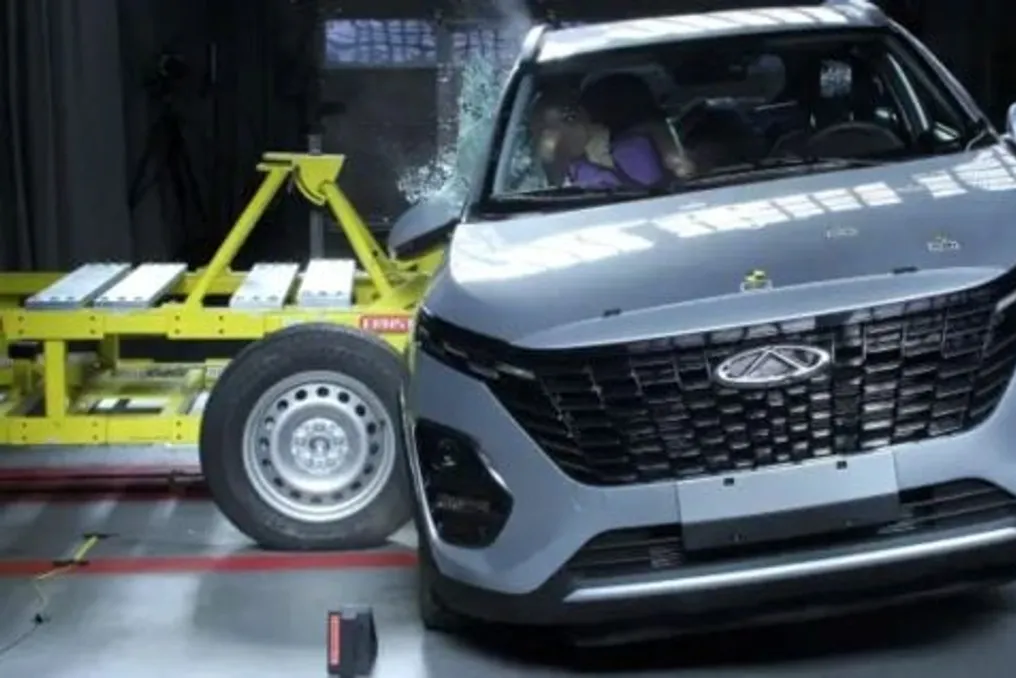
The Chery Tiggo 2, a compact SUV previously sold in Brazil, received zero stars in its first collision test conducted by Latin NCAP. This independent program assesses the safety of new vehicles in the region, following the strictest standards in effect since January.
Manufactured in China and distributed in markets such as Argentina, Chile, and Mexico, the vehicle demonstrated only 0% protection for both adult and child occupants.
In the Brazilian context, the model was produced by Caoa Chery in Jacareí, São Paulo, initially as the Tiggo 2 and later, after an aesthetic redesign, as the Tiggo 3X, until the factory's shutdown in 2022.
Despite being equipped with four airbags and standard electronic stability control, the SUV exhibited an unstable structure during the frontal impact and a fire hazard. According to Latin NCAP, this risk poses a threat to both passengers and first responders.
Regarding the frontal impact, the driver's thorax suffered inadequate protection, and there was deformation in the foot area. Due to the absence of standard side head airbags, the collision test against a pole could not be performed, resulting in point deductions.
In the rear seat, it was found that the seat belts lack pretensioners or load limiters, and the car failed to prove the protection of a short female, simulated by a specific dummy.
Among the tests involving children, the 10-year-old dummy registered high values in the head and neck area, while the 3-year-old presented a risk of ejection in a side impact. Furthermore, the i-Size anchoring systems for car seats did not meet the established requirements.
The Tiggo 2 scored 45% in safety assistance evaluation and 49% in pedestrian protection. It is important to note that the SUV does not have any driving aids, such as autonomous emergency braking detection or blind spot sensors, even as an optional extra.
The new evaluation protocol, valid until 2029, began to include the analysis of adults in the rear seat and older children, in addition to making side impact tests more severe. Weights were also added to autonomous braking capable of identifying pedestrians and cyclists, as well as to the automatic emergency call system.
Stephan Brodziak, president of Latin NCAP, classified the result obtained as inadmissible and a disrespect to consumers in the region.