The director of the public broadcasting group Radio and Television of Serbia (RTS) resigned the day after a formal request was made by the student movement, which won the early legislative elections held on Sunday.
The opposition, represented by the Student List, secured an absolute majority in the Balkan country, removing the former ultra-conservative president, Aleksandar Vučić, from power. The station itself reported that Manja Grcić had stepped down from her position as CEO of RTS, mentioning that her departure was demanded by the RTS workers' union, informal groups of employees at the broadcaster, and the Student List.
Grcić, who had been in office since February of this year and had long been seen as someone close to Vučić, declared her willingness to fully cooperate to ensure an organized transition, guaranteeing the continuity of RTS operations.
On Tuesday, the student movement submitted a letter requesting the resignation of the CEO of RTS, her deputy, the editors responsible for current news coverage, as well as all writers in the information sector.
This movement accused RTS of presenting biased information and failing to exercise critical oversight over political authorities. During the election night, the broadcaster suspended the transmission of events in Belgrade shortly after the nationalist former president Aleksandar Vučić admitted defeat, even though celebrations were taking place in the streets across the entire country.
The Student List also called for the establishment of an interim management for RTS, a suggestion presented jointly with the unions representing the staff of the public station, which was criticized for failing to fulfill its public service obligations. The List stated after the electoral victory that 'citizens have the right to true, complete, and impartial information.'
According to the non-governmental organization CRTA (Center for Research, Transparency, and Accountability), during one week of the electoral campaign examined, RTS allocated 93% of its time to Vučić and other government representatives, while the opposition received only 7% of the time, and mostly in a negative light.
In Serbia, most media outlets, both public and private, have been under the influence of Vučić or people connected to him. In 2025, the former Serbian head of state was listed by the organization Reporters Without Borders (RSF) among the 34 global 'Press Freedom Predators.'
In Novi Sad, in northern Serbia, the regional public station RTV apologized on Monday for not fulfilling its public service function 'for many years,' and its director submitted his resignation.
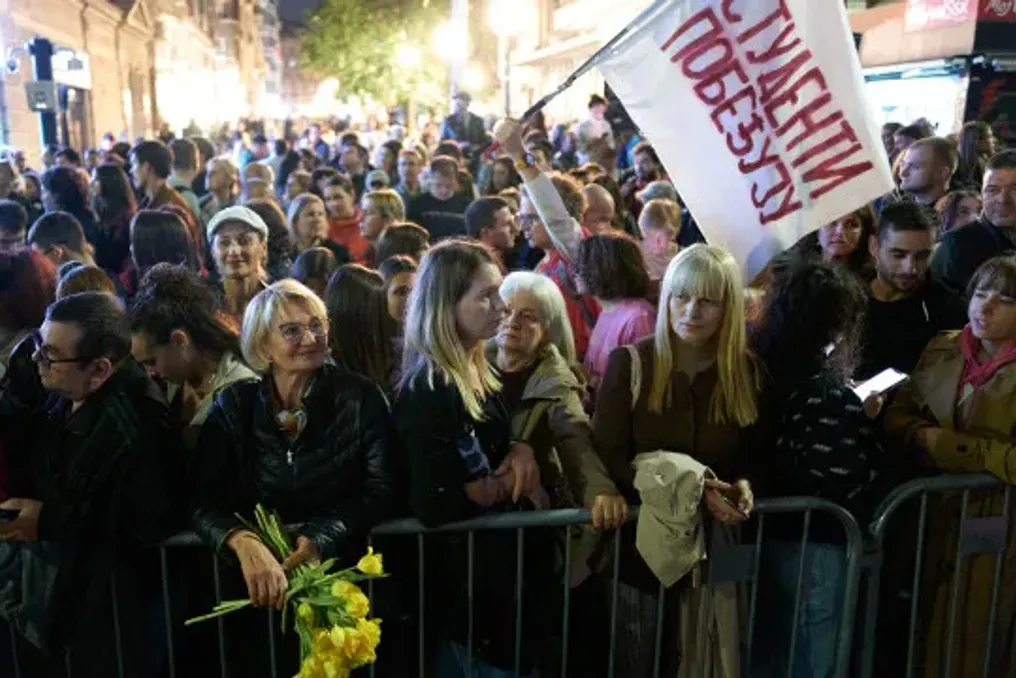
Sunday's early legislative elections in Serbia resulted in a historic victory for a student-backed list against the right-wing nationalist party SNS, led by Aleksandar Vučić, ending a 14-year period of government. This change occurred after two years of protests initiated by the collapse in 2024 of a porch at the Novi Sad railway station, a tragic event that caused 16 deaths.
This catastrophe, widely associated with corruption, triggered some of the largest protest movements in Serbia since the fall of authoritarian leader Slobodan Milošević in 2000. Throughout these protests, students accused RTS of intentionally ignoring protesters and defaming them. Simultaneously, civil society entities and media associations pressured regulatory authorities to revoke the license of Informer TV, a private channel aligned with Vučić, citing repeated violations of press legislation.