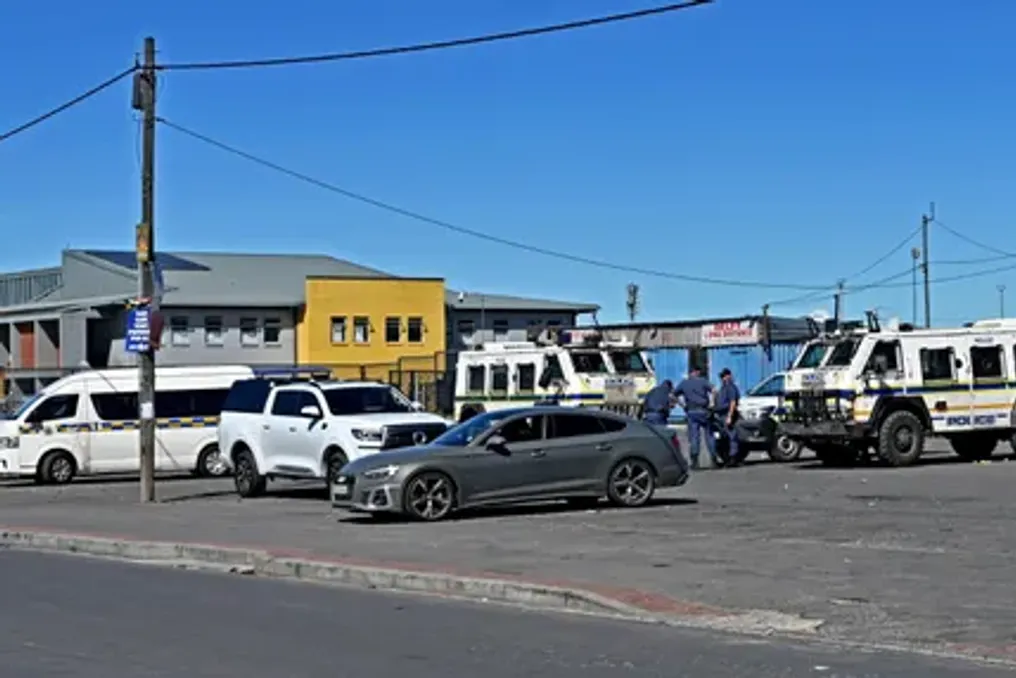
A video recorded this morning among passengers of Delft South showed the problem of violence in taxis, which affects Delft and other areas of Cape Town. This phenomenon must end because too many people have died, too many families have been affected, and passengers are forced to travel in an atmosphere of fear.
The situation where a mother waiting at a taxi rank until dawn has to worry not about how she will safely return to her children, but about how to get to work, is unacceptable. A taxi driver striving to earn a living honestly should not fear that a dispute over a route could cost him his life. For passengers, drivers, and families, this is not a political issue, but one of life, livelihood, and dignity. Proponents condemn all acts of violence, including shooting and intimidation, and demand that those responsible be punished by law. At the same time, they support the police in protecting life and holding violators accountable.
However, according to the authors, this problem cannot be solved solely by increasing police surveillance; it is also a transport management crisis. A number of complex questions arise: who manages the routes? Who issues and controls operating licenses? How is the use of authorized vehicles on designated routes ensured? Who is responsible for the taxi ranks? What happens when too many operators compete for too few passengers?
Understanding the pressure behind the conflict
It is necessary to understand the economic reality of the taxi industry without justifying the violence. Consider a hypothetical example: a 15-seater taxi operating at half capacity can carry seven or eight paying passengers per trip. With an assumed fare of 20 rand, three such trips yield about 450 rand in gross revenue. However, this is not net profit, as expenses for fuel, financing, repairs, insurance, and wages must be covered.
This example serves as an illustration, not a reflection of the average performance of the entire industry. Although some routes operate at much higher occupancy, it demonstrates how intense competition becomes with limited passenger demand, overlapping operating rights, and numerous vehicles chasing the same income. An operating license is not just a piece of paper; it grants access to an economic opportunity and supports a livelihood. When this opportunity is contested, families and businesses face serious pressure. Violence is never justified, but the pressure it generates cannot be ignored.
The Western Cape Mobility Department has acknowledged that excessive activity, illegal operations, and overlapping operating rights contribute to instability. Therefore, a simple question arises: what is being done to correct these conditions? And who benefits from the ongoing suffering in Cape Flats? The answer is obvious: none of the passengers, drivers, families, local businesses, or Cape Town itself. The government, especially municipal and provincial, must act based on facts. The DA party insists on ending 'this devolutionary nonsense' and abandoning the thirst for power, calling for the use of the existing constitutional framework for governance and service.
If authorities cannot or will not step aside, investigations into taxi associations, licenses, and illegal activities on routes are necessary. However, statements are not enough. The province must determine which operators have legal rights, whether licenses are properly controlled, and whether disputed routes can support the number of vehicles in use. The city is obliged to fulfill its functions: maintain accurate information on passenger demand, manage parking appropriately, ensure lighting and safe waiting areas, clarify boarding rules, and identify disputes before they escalate into violence. Furthermore, the city must explain how taxis, buses, and trains can function as a more integrated and accessible public transport network. Why are passengers forced to wait in unsafe places? Why do workers have to spend so much time and money commuting? Why does transport planning remain detached from the daily lives of the people it serves?
Minibuses carry hundreds of thousands of passenger journeys across Cape Town daily. A transport system that moves people must also protect them. The Province and the City must publish facts, determine what needs changing, and explain who will be responsible for implementation. Violence must stop, passengers must be protected, and trust must be restored. Immediate action is required alongside long-term reform. Firstly, a call to CATA, CODETA, SANTACO, taxi owners, drivers, and affected associations to refrain from intimidation and retaliation. Disputes must be resolved through legal procedures and honest dialogue. Secondly, passengers need immediate protection. At affected stops, the City, Province, SAPS, and industry representatives must coordinate safety measures, provide verified service information, and establish practical alternatives during route disruptions. Passengers must know whom to contact in case of threat, where they can travel safely, and how their complaints will be addressed.
Thirdly, a transparent audit of disputed routes and operating licenses is required. How many vehicles are authorized? How many are operating? What is the actual passenger demand? Are licenses legally transferred? Do different operators claim the same rights? Facts, fair solutions, and consistent law enforcement are needed. Fourthly, existing peace mechanisms must be strengthened. There are encouraging signs: an agreement between Southern Suburbs taxi associations, supported by the government, demonstrates the potential for joint regulation and dialogue. SANTACO peace envoys provide another opportunity for early detection of tension, uniting parties, and preventing escalation. MIRA should be given a chance by supporting them with clear reporting channels, authoritative public and religious leadership, and swift responses from responsible bodies. Peace must become a system we support, not a meeting we hold after another tragedy.
Giving passengers a voice
Passengers have too often become objects of others' disputes. Nevertheless, they are the ones who pay for the ride, bear the risks, and suffer when services cease. They deserve to participate in decision-making regarding transport planning and safety. They must have the ability to demand safe stops, affordable fares, reliable services, clear complaint procedures, and accurate information during disruptions.
Civil society organizations, schools, employers, and local businesses must become partners in these efforts. Employers can assist employees during transport disruptions. Schools can assess the impact on students. Civil society organizations can disseminate verified information and help residents contact official reporting channels. The government must make these channels safe, simple, and responsive. Passenger safety must be built into the system from the start, not implemented as an emergency response after someone is killed.
From survival to prosperity: a different Cape Flats is possible. We need to think beyond just preventing the next shooting. Imagine taxi ranks that are clean, safe, well-lit, and properly managed. Operators working under clear rules. Drivers earning a sustainable income. Passengers using reliable services at affordable prices. Imagine taxis effectively connecting people to schools, hospitals, colleges, workplaces, and economic opportunities. Imagine a transport system that reduces commuting costs and returns precious hours to families. This is not an unattainable dream, but something that good planning, fair regulation, and decisive leadership must achieve. A well-managed taxi industry can support mechanics, repair shops, traders, cleaners, vehicle service centers, and other small businesses throughout Cape Flats. The industry must become a partner in local economic development. A fair scheme must be created where legal operators can earn a living, passengers receive safe and affordable transport, and the government provides efficient services. The solution cannot be for taxi owners to lose money for the sake of passenger victory, nor for passengers to pay more so that operators survive. We need a system that creates more value, distributes opportunities fairly, and rewards responsible behavior. This is how Cape Flats begins its journey from survival to prosperity.
A call for collective leadership. Now is the time for governmental courage, not mutual accusations. We do not need more blame-shifting or fear. We need the courage to face the truth, compassion for those affected, and the political will to put people first. Ahead of local elections, every resident must have the freedom to travel, work, participate in community life, and vote without intimidation. The author appeals to all Cape Town residents to reject violence, refuse unverified rumors, support affected families, and strengthen commitment to peace. Even those who do not use taxis suffer. When public transport fails, workers miss shifts, children miss school, and businesses lose income, and the whole city suffers. Our fates are interconnected.
Therefore, there is a demand for the urgent creation of a 'Cape Town Transport Peace and Stability Agreement,' bringing together the Province, the City, SAPS, taxi associations, passenger representatives, peace envoys, and community leaders. Within seven days, a coordinated plan for passenger safety must be seen, specific disputed routes identified, clear responsibilities defined, and a functioning conflict resolution process established. In the following months, oversight of licensing, stop management, transport integration, and the economic sustainability of legal operators should be improved. Progress should be measured by safer stops, fewer violent incidents, reliable services, resolved disputes, and growing public trust. Our people deserve more than just protection after violence. They deserve a transport system managed well enough to help prevent it. We have institutions. We have experience. We have responsible people in the taxi industry. We have communities desiring peace. We need the collective will to unite these strengths. We cannot build a prosperous Cape Flats on fear. Let us replace fear with safety, conflict with cooperation, uncertainty with opportunity, and survival with dignity. Let us choose peace. Let us build courage and compassion. Let us put the residents of Cape Town first. Let us move together from survival to prosperity.