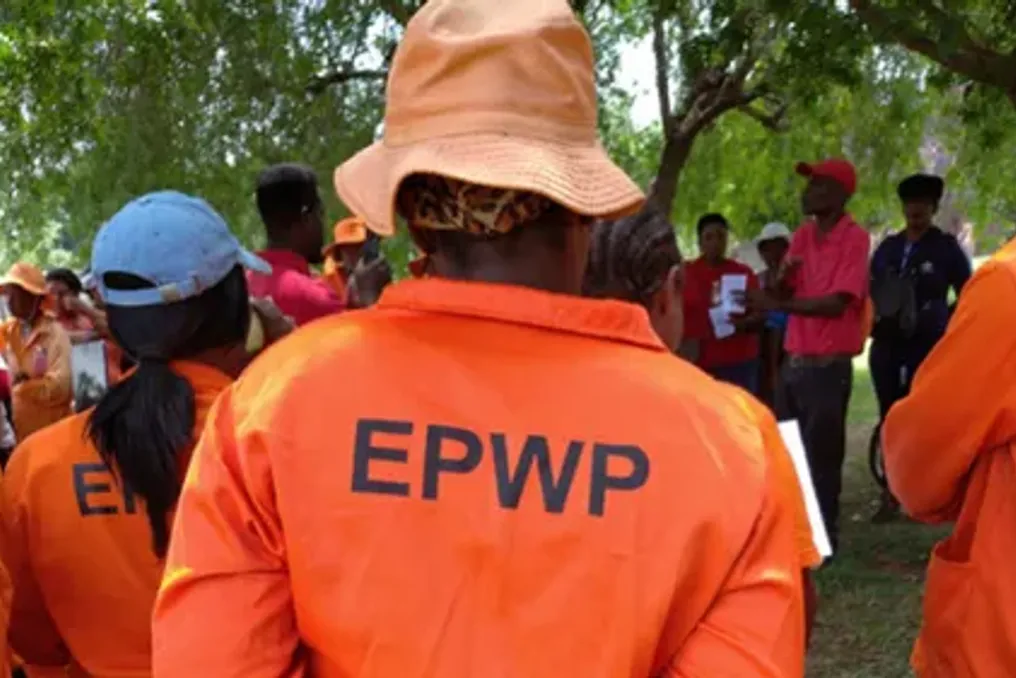
EPWP program workers in Cape Town allegedly not receiving salaries for six weeks
Read more
IOL
iol.co.za

EPWP program workers in Cape Town allegedly not receiving salaries for six weeks

Discontent and despair are growing among workers of the Expanded Public Works Programme (EPWP) in the Hanover Park, Mitchells Plain, and Manenberg areas due to alleged non-payment of wages for six weeks. This forces families already struggling to borrow money to afford food.

Community activist Yumna Alexander expressed serious concern over the supposed payment delay, accusing the City of Cape Town's Parks and Recreation Department of neglecting the needs of vulnerable workers who continue to show up for work despite financial hardship.

Workers allegedly haven't received salaries for six weeks

According to Alexander, workers earn only 145 rand per day, an amount that is difficult for many households to make ends meet on. With the alleged six-week delay in payments, families have found themselves in an even more difficult financial situation.

Alexander noted that people live from paycheck to paycheck, describing the devastating impact of missed payments on households where every rand matters. She added that workers have had to take out loans for necessities and then face the need to repay these debts when their salary finally arrives.

The consequences of this situation extend beyond the workers themselves.

Unpaid wages push families into debt traps

Married individuals wait for their husbands to bring money home, mothers rely on children to buy bread and milk, and young families struggle to afford basic necessities like diapers. Alexander warned that the financial pressure causes tension within families, leaving providers feeling helpless despite fulfilling their job duties.

What she finds particularly alarming is that the workers maintain an unwavering commitment to their jobs. Alexander emphasized that these workers continue to show up for work every day, with some arriving before the scheduled start time and staying after the shift ends.

Workers continue to show up for work

Despite their dedication, she claims that workers fear becoming victims of reprisal for publicly discussing the payment delays. It is reported that affected workers have received repeated assurances over the past three weeks that their arrears would be settled.

In an update on October 26, Alexander stated that workers were promised the money by Saturday morning, October 31. However, this stated commitment has not been independently confirmed by the City. Alexander also claims that correspondence sent to relevant municipal departments and political offices has gone unanswered.

She stated: 'We must push the City to a point where we can hold them accountable.'

City urged to explain payment delays

These accusations come against the backdrop of the City's recent announcement of creating over 203,000 temporary jobs under the EPWP program over five fiscal years. The City describes this program as a vital source of income and work experience for unemployed residents.

However, Alexander questions how a poverty-alleviation program can achieve its goal if workers allegedly cannot receive their earned wages. The City is now under pressure to confirm the number of affected workers, explain the reason for the alleged six-week delay, and clarify whether the necessary financial support has been allocated. The publication Cape Argus contacted the City, but the City of Cape Town responded that it had received the request and was reviewing the details.

Similar stories

Center approved a 3% increase in the wage index coefficient for employees and pensioners
Read more
timesofindia.indiatimes.com

Center approved a 3% increase in the wage index coefficient for employees and pensioners

Before the celebration of Diwali, the Cabinet of Ministers approved a 3% increase in the wage index coefficient (DA) for central government employees, and also provided a cost of living compensation allowance (DR) for pensioners.

This decision will positively affect more than 10 million employees and pensioners and will be effective from July to December 2026.

As a result of this increase, the DA and DR coefficients will rise from the previous 60% to 63% of the basic salary.

The total financial impact of this increase on the state treasury will amount to 10,016 crore rupees annually. The government noted that this increase aligns with the adopted formula based on the recommendations of the seventh Central Payments Commission.

Train Drivers' Union maintains strike at Renfe demanding improvements in railway safety
Read more
noticiasaominuto.com

Train Drivers' Union maintains strike at Renfe demanding improvements in railway safety

The Spanish Railway Drivers' Union (Semaf) has decided to maintain the strike scheduled for Thursday at Renfe. The stoppage aims to defend track safety and ensure compliance with agreements made to promote structural changes in the sector.

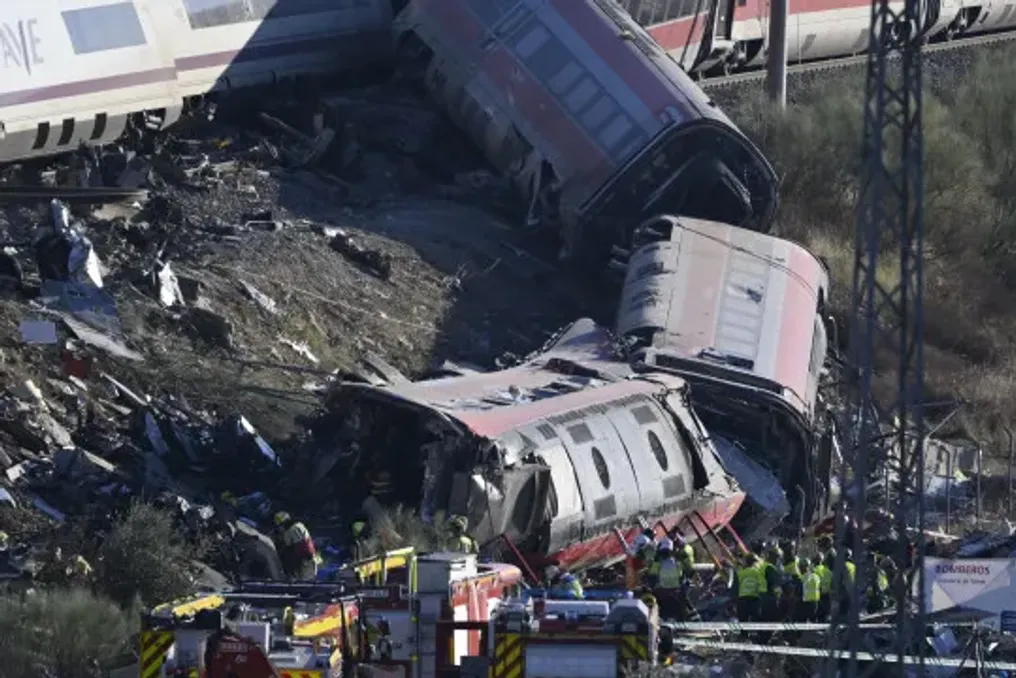
This decision was reinforced by the recent and serious accident that occurred at Urda station in Toledo. In the collision between two high-speed trains, there were an official count of at least 68 fatalities.

The union reported that it is evaluating new initiatives and measures to protect railway safety, in addition to the Thursday strike, and advised all drivers to increase their attention while performing their duties.

Semaf expressed deep dismay over the morning incident on the high-speed line connecting Madrid and Seville. The accident involved a train from Renfe, a public company, and another from the private carrier Iryo. No information is yet available regarding the drivers who were in the cabin of the public company's vehicle.

In a statement, the union stressed the intention to proceed cautiously in analyzing the causes of the accident, awaiting complete details to avoid speculation, given that the priority is to offer support to the victims' families.

Thus, approximately 6,000 workers from drivers across all companies in the Renfe group were called to a 24-hour strike, starting at midnight on Thursday (corresponding to 11:00 PM on Wednesday in Lisbon). The main reason is the administrative blockage of agreements related to railway safety, climate emergency protocols, hiring of new drivers, assistance in cases of hit-by incidents, and the reliability of rolling stock.

Semaf called the strike on the 16th of this month, after finding attempts at resolution through the conflict commission unsuccessful. In a meeting with the Ministry of Transport, Adif (the railway infrastructure manager), the State Railway Safety Agency (AESF), and Renfe, the union found that 'everything remains as paralyzed as in May.'

Following the sectoral strike in February, motivated by the Adamuz accident, working groups were formed to implement the commitments established in the agreements with the Ministry of Transport and Sustainable Mobility and with Renfe, which allowed the end of the stoppage.

According to Semaf, meetings took place between February and April, when the drivers presented technical proposals, but these 'came to a standstill.' Although the involved entities claim to comply with all commitments, the union states that 'everything is as it was at the end of April.'

On the other hand, Renfe argues that Semaf's demands to justify the strike exceed its scope of competence. The company considers it 'incoherent to call a strike against its service over issues unrelated to the company, such as driving time regulations or certain actions by the Labor Inspectorate, over which it also does not have decision-making power.'

Additionally, Renfe alleges that the points raised by Semaf to justify the strike are not included in the collective agreement signed with the union in July. The company defends its stance regarding the claims made by Semaf in recent months, highlighting that the union itself recognizes existing agreements between Renfe and other operators.

Regarding the agreement signed in February, which provided for strengthening the railway system after the Adamuz accident, the company guarantees having fully complied with all obligations, as reported in the follow-up meetings in April, May, and October.

To mitigate the impacts of the stoppage, the Spanish Ministry of Transport and Sustainable Mobility implemented minimum services for suburban trains, varying according to schedules. During peak hours (between 6:00 AM and 9:00 AM, 1:30 PM and 3:30 PM, and 6:30 PM and 8:30 PM), minimum services represent 75% of the usual offering; during the rest of the day, they are set at 50%.

For medium-distance trains, an average of 65% of usual services was defined. For long-distance and high-speed services, the percentage is 73%, while for freight rail transport, minimum services correspond to 26% of planned operation.

Semaf also decided to maintain the call for six days of strike at Ouigo, starting Friday, in reaction to 'repeated failures by the company's management to comply with the provisions agreed upon and stipulated in the current collective agreement.'

Popular