The British Government has announced support measures aimed at families and businesses to mitigate the impact of rising energy costs during the winter period. This action follows 'global economic storms' linked to the conflict in Iran and its repercussions in the Middle East.
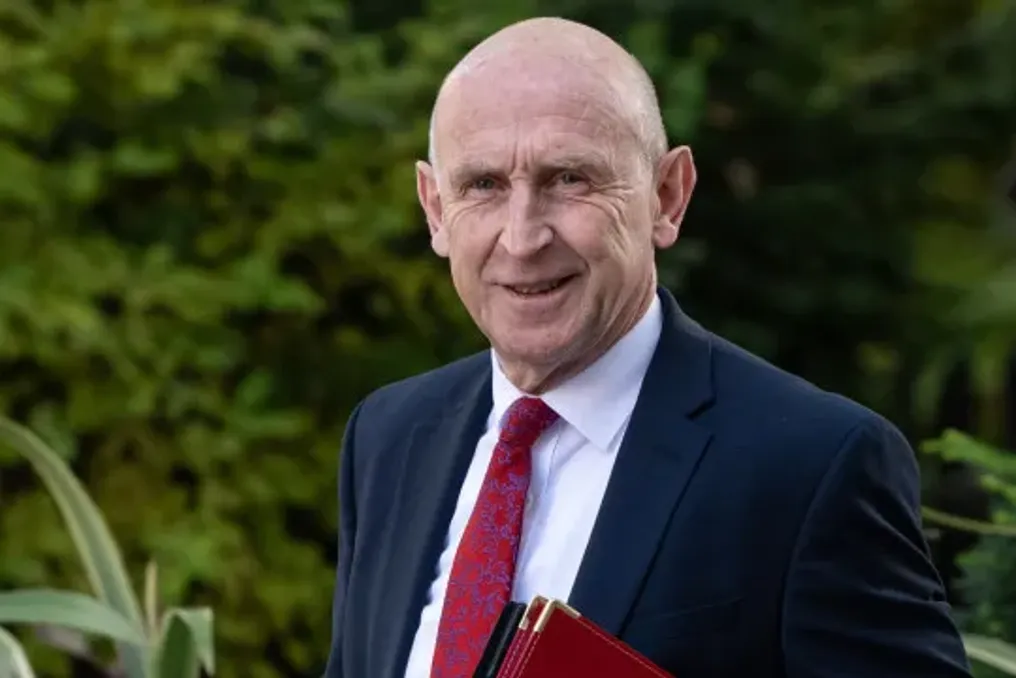
During the presentation of the State Budget in parliament, the British Finance Minister, John Healey, expressed a desire to provide 'some breathing room' for both families and businesses. He justified that the Middle East conflict has led to increases in fuel, energy, and mortgage prices for households, in addition to raising operational and borrowing costs for companies.
Among the announced initiatives is a one-off payment of £100 (equivalent to €120) that will be distributed this winter to approximately 20 million low- and middle-income families. Additionally, the Government decided to extend the reduction in electricity tax and eliminate a previously applied fee on gas bills.
To fund these measures, John Healey proposed increasing the bank profits surcharge from 3% to 6% for a period of 15 months, starting in January. The minister assured that, 'In the midst of global economic turbulence, I count on our banks to help finance some breathing room for British families.'
The budget also includes tax cuts targeted at local trade and the hospitality sector, while providing for an increase in taxation on the gambling segment. In terms of defense policy, the minister reaffirmed the UK's commitment to invest 3% of annual Gross Domestic Product (GDP) in defense by 2030, exceeding the current 2.7%. This commitment will be detailed next year when the triennial spending plans are presented.
Healey also announced a reinforcement of £10 billion (€12 billion) to economically and militarily support Ukraine. Declaring publicly, 'Today we send a clear message to Moscow: the UK will stand by Ukraine for as long as necessary.'
According to the Government, the British economy is expected to register 1.2% growth in 2026, although this pace is projected to slow to 1% in 2027, a figure lower than the previous estimate of 1.6%, due to the economic impact generated by the war in Iran. Inflation in the UK reached 3.5%, the highest level in almost a year, and is expected to continue rising in the coming months, moving away from the 2% target set by the Bank of England, which is expected to implement further interest rate hikes.
Public debt remains a central challenge: British debt exceeded three billion pounds (approximately €3.6 billion) for the first time, and the cost of debt servicing consumes 8% of public expenditure. The Office for Budget Responsibility (OBR) estimates an increase of £14 billion (€17 billion) in debt interest payments this year.
John Healey emphasized that 'These are the storms we face. We cannot wish them away. We have to choose the path we will take to face them.' In contrast, Conservative Party leader Kemi Badenoch criticized the budget presented by John Healey, labeling it 'not good enough, not strong enough, not bold enough.'
The opposition leader argued that in the following year, the tax burden in the UK will reach 'the highest level in the country's history,' in a scenario where the country, in her view, exhibits 'excessive spending, excessive debt, excessive taxes, and is drowning in an uncontrolled welfare system.' She also advocated for a stance of 'tough love' regarding social support, warning of the risk of the UK collapsing 'under the weight of the welfare state.'
Rob Wood, chief economist for the UK at Pantheon Macroeconomics consultancy, assessed that John Healey's first State Budget 'is unlikely to be memorable.' For him, the budget offers 'a small relief for investors,' but the government plans continue to neglect medium-term challenges related to funding military expenditure and budgetary consolidation programs.
Meanwhile, the Institute for Fiscal Studies (IFS) considered that the budget met what many expected, highlighting that, given unfavorable economic news, the minister opted to accept higher debt over the next five years. According to the think tank, although John Healey spoke of a budget providing 'breathing room' for families and businesses, the executive postponed many crucial decisions for the future amid reduced fiscal headroom, poorer quality of life, and persistent economic risks.