The Spanish Railway Drivers' Union (Semaf) has decided to maintain the strike scheduled for Thursday at Renfe. The stoppage aims to defend track safety and ensure compliance with agreements made to promote structural changes in the sector.
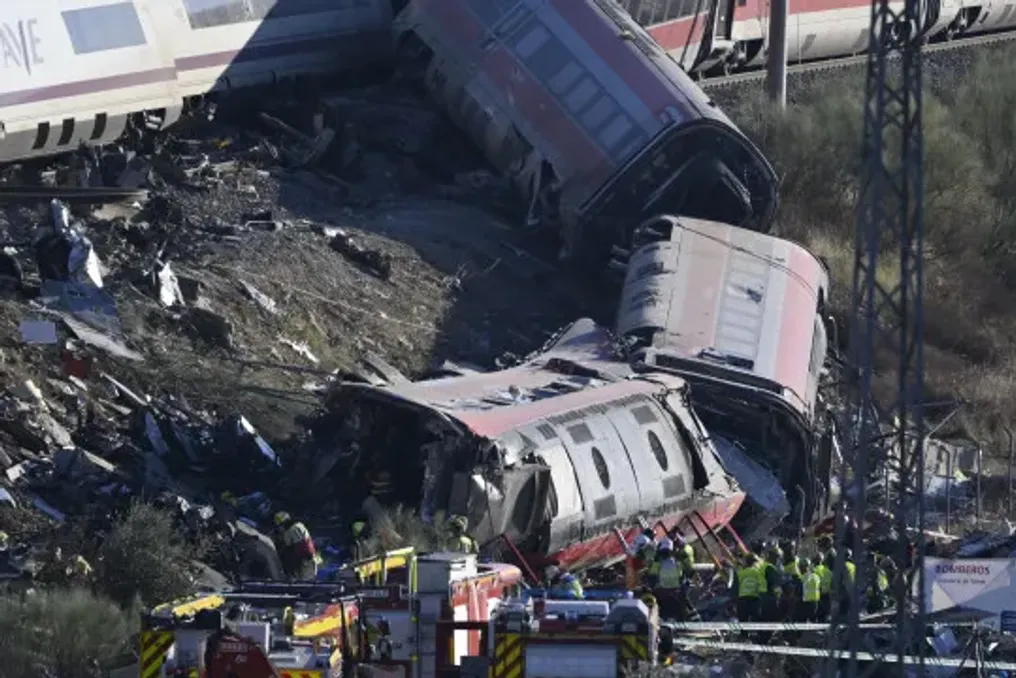
This decision was reinforced by the recent and serious accident that occurred at Urda station in Toledo. In the collision between two high-speed trains, there were an official count of at least 68 fatalities.
The union reported that it is evaluating new initiatives and measures to protect railway safety, in addition to the Thursday strike, and advised all drivers to increase their attention while performing their duties.
Semaf expressed deep dismay over the morning incident on the high-speed line connecting Madrid and Seville. The accident involved a train from Renfe, a public company, and another from the private carrier Iryo. No information is yet available regarding the drivers who were in the cabin of the public company's vehicle.
In a statement, the union stressed the intention to proceed cautiously in analyzing the causes of the accident, awaiting complete details to avoid speculation, given that the priority is to offer support to the victims' families.
Thus, approximately 6,000 workers from drivers across all companies in the Renfe group were called to a 24-hour strike, starting at midnight on Thursday (corresponding to 11:00 PM on Wednesday in Lisbon). The main reason is the administrative blockage of agreements related to railway safety, climate emergency protocols, hiring of new drivers, assistance in cases of hit-by incidents, and the reliability of rolling stock.
Semaf called the strike on the 16th of this month, after finding attempts at resolution through the conflict commission unsuccessful. In a meeting with the Ministry of Transport, Adif (the railway infrastructure manager), the State Railway Safety Agency (AESF), and Renfe, the union found that 'everything remains as paralyzed as in May.'
Following the sectoral strike in February, motivated by the Adamuz accident, working groups were formed to implement the commitments established in the agreements with the Ministry of Transport and Sustainable Mobility and with Renfe, which allowed the end of the stoppage.
According to Semaf, meetings took place between February and April, when the drivers presented technical proposals, but these 'came to a standstill.' Although the involved entities claim to comply with all commitments, the union states that 'everything is as it was at the end of April.'
On the other hand, Renfe argues that Semaf's demands to justify the strike exceed its scope of competence. The company considers it 'incoherent to call a strike against its service over issues unrelated to the company, such as driving time regulations or certain actions by the Labor Inspectorate, over which it also does not have decision-making power.'
Additionally, Renfe alleges that the points raised by Semaf to justify the strike are not included in the collective agreement signed with the union in July. The company defends its stance regarding the claims made by Semaf in recent months, highlighting that the union itself recognizes existing agreements between Renfe and other operators.
Regarding the agreement signed in February, which provided for strengthening the railway system after the Adamuz accident, the company guarantees having fully complied with all obligations, as reported in the follow-up meetings in April, May, and October.
To mitigate the impacts of the stoppage, the Spanish Ministry of Transport and Sustainable Mobility implemented minimum services for suburban trains, varying according to schedules. During peak hours (between 6:00 AM and 9:00 AM, 1:30 PM and 3:30 PM, and 6:30 PM and 8:30 PM), minimum services represent 75% of the usual offering; during the rest of the day, they are set at 50%.
For medium-distance trains, an average of 65% of usual services was defined. For long-distance and high-speed services, the percentage is 73%, while for freight rail transport, minimum services correspond to 26% of planned operation.
Semaf also decided to maintain the call for six days of strike at Ouigo, starting Friday, in reaction to 'repeated failures by the company's management to comply with the provisions agreed upon and stipulated in the current collective agreement.'