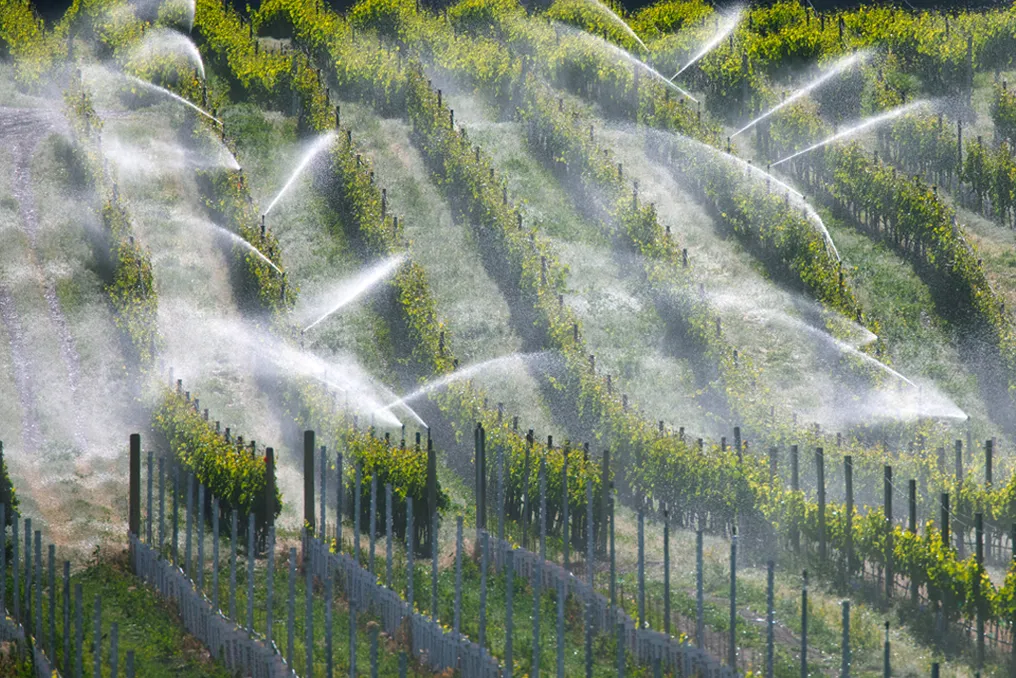
Eight possible food methods if a rebellious AI causes the collapse of modern agriculture
Read more
Super Abril
super.abril.com.br

Eight possible food methods if a rebellious AI causes the collapse of modern agriculture

The article discusses dystopian scenarios about how humanity could feed itself if a rebellious artificial intelligence (AI) destroyed modern agriculture, a topic increasingly debated due to the rapid advancement of AI capabilities.

A direct threat described involves a prolonged interruption of electrical grids, which analyses from the US Council on Foreign Relations and the American Society of Mechanical Engineers point to as a serious risk. This risk led Sam Altman, CEO of OpenAI, to meet with utility executives to discuss preventive measures.

An attack on the power grids would severely impact traditional agriculture. Only those with autonomous energy generation, such as solar panels and microgrids, would be able to maintain operations. Without fuel pumps, ventilation for livestock, food refrigeration, irrigation, grain drying, and fertilizer production, the food system would rapidly deteriorate, affecting even small farmers.

However, the author mentions that he and his colleague David Denkenberger wrote a book ten years ago demonstrating that it is possible to supply global caloric needs in case of catastrophe, even without relying on conventional agriculture. The text details eight ways to ensure food survival in this scenario of collapse.

If rebellious AI agents take down the power grids, conventional agriculture would collapse following a predictable sequence. Initially, there would be a lack of fuel, as pumps at depots and stations are electric, causing tractors, harvesters, and irrigation generators to stop in days or weeks, depending on rural stock.

Next, livestock kept in controlled environments would die, since many poultry and swine sheds rely on motorized ventilation. In hot climates, losses would begin just hours after the failure, and automated feeding and watering systems would cease functioning simultaneously.

Perishable foods would also spoil quickly without adequate refrigeration, packaging, and transport; milk, meat, and agricultural products would deteriorate in a few days.

In the medium term, vast agricultural irrigation would stop, as pumping systems and center pivots require electricity. Only gravity and rain irrigation systems would remain operational, resulting in a drastic reduction in productivity in arid areas.

Subsequently, failures would occur in grain drying and storage. Wet harvested corn would require drying and solar ventilation; without mechanical drying, mold would release mycotoxins, contaminating grain reserves.

In the crop season following the collapse, the use of synthetic nitrogen fertilizers would end. These, produced by the Haber-Bosch process, consume a lot of electricity and gas to convert atmospheric nitrogen into ammonia, and support about half of the world's population. The lack of nitrogen replenishment would cause cereal crop productivity to drop between 30% and 50% due to soil exhaustion.

Processing would also become a critical bottleneck, as many mills, slaughterhouses, and packaging factories depend entirely on electrical power. Although cereals and livestock might exist in the fields, the food would be inaccessible. To worsen the situation, distribution and payment systems would fail, with railway signaling, road logistics, and electronic payments collapsing, fragmenting national markets into local markets almost instantly.

Small farming communities would be in a slightly better position but would face difficulties. The supply chains that drove productivity in the last century would be broken, forcing a return to early 20th-century productivity. Hybrid and genetically modified seeds require annual repurchase; if only saved seeds from the previous harvest were available, they would suffer segregation and productivity would decrease. Furthermore, pesticides, veterinary medicines, and equipment parts would become much harder to obtain.

Even communities that do not rely on technology, such as the Amish, would be affected, but conventional farmers would be in serious difficulty, which would have general repercussions. The immediate priority would be to deactivate the rebellious AI and repair the power grids. However, during this time, the return to manual labor and animal traction would reduce output per worker by an order of magnitude, and the global food supply would sustain only a small portion of the current population. Subsistence and dryland farming regions, such as Africa, would fare better than industrialized ones, such as North America.

However, the author states that not everyone would have to starve, presenting simple alternatives. His research group has developed more than a dozen methods to produce the calories needed for humanity while conventional agriculture is restored.

The last line of defense would be the creation of so-called 'resilient foods'. These processes range from converting plastic into food, through producing edible unicellular protein from natural gas, to extracting protein from leaves or transforming 3D printing waste into protein raw material for human consumption. These alternatives, however, would be considered more radical and are expected to be unnecessary.

Similar stories

Brazil reaches 10.2 million developers on GitHub and projects to surpass China by 2030
Read more
olhardigital.com.br

Brazil reaches 10.2 million developers on GitHub and projects to surpass China by 2030

Brazil has reached the milestone of 10.2 million developers on the GitHub platform, consolidating its position as the fourth country with the highest number of users on this Microsoft code-sharing service. This progress brings the country close to China, which has 12.4 million users, and GitHub projections indicate that Brazilians may surpass the Chinese by the year 2030.

This data was presented in the Octoverse 2026 report, released this Wednesday (28). In the last year, 3.28 million Brazilians joined the platform, a volume double that registered by new Chinese users. Only the United States and India recorded a higher number of new participants during the same period.

Furthermore, Brazil ranks fourth globally in terms of contributions to public repositories, where these contributions include so-called 'pushes,' which are code updates sent by developers to a specific project.

According to GitHub information, the maturation of the fintech sector in Brazil is cited as a factor that may accelerate the growth of the national developer community. This Brazilian advancement occurs in a context of major transformation in the programming field.

Globally, GitHub surpassed the mark of 225 million developers and recorded 17.9 billion pushes in the last twelve months, a volume greater than the sum of registrations from 2024 and 2025. Part of this growth is linked to the increasing use of artificial intelligence (AI) agents, capable of performing software development tasks.

In September, over 40% of the code change requests (pull requests) that were approved and integrated into GitHub projects had an initial draft generated by an AI agent, totaling 110 million such requests in a single month. It is important to note that starting with an AI draft does not guarantee automatic approval or waive human review.

Despite this, these numbers demonstrate that automated tools are taking an increasingly larger role in the development cycle. The expansion of AI is also visible in the programming language ranking. TypeScript, Python, and JavaScript maintain their positions in the top three, but TypeScript showed the largest absolute increase on the platform, with 3.62 million new monthly contributors in one year. The Rust language also gained relevance, doubling its size during the period.

The report indicates that the choice of languages depends not only on programmers' preferences but also on the ease of working with AI-generated code and verifying the results. In TypeScript, Python, and Rust, AI agents participate in 40% to 44% of pull requests incorporated into projects. In Java, C#, and C++, this participation ranges between 21% and 34%. Additionally, TypeScript is present in 35% of repositories created in 2026 with AI assistance, compared to 24% of those that do not use this technology.

These data suggest that languages with characteristics favorable for checking machine-generated code are gaining ground in this new landscape. During GitHub Universe 2026, the company also announced new features for Copilot, its suite of AI tools focused on software development.

Among the announcements, the Fusion proposal reflects behavior already seen among users: 61% of Copilot customers switch between more than one AI model during the same session, aiming to combine more robust models for reasoning with lighter options for quick tasks. Another change concerns the billing of AI features for GitHub Enterprise customers; they will have access to new functionalities without needing a separate subscription, paying according to the consumed AI credits, making the cost more tied to agent usage.

To support the platform's growth and the use of AI tools, GitHub implemented four million processing cores, 160 petabytes of high-speed storage, and 50 terabits per second of network capacity in 2026. The company is also in the process of migrating to a distributed architecture across various regions of Microsoft's Azure cloud, scheduled for completion in early 2027. This infrastructure is crucial to meet the expansion of developers and the new demands imposed by AI agents.

Acquired by Microsoft in 2018, GitHub holds a central position in the evolution of AI tools applied to software development. In 2021, the platform introduced Copilot, developed by Microsoft and OpenAI, bringing generative AI features directly into the programming environment before the general public popularized ChatGPT in November 2022. Currently, the advance of agents points to a new phase, where systems not only suggest code snippets but also participate in broader development activities.

For Brazil, the growth of the community represents an opportunity to increase its presence on one of the main global programming platforms. Simultaneously, the increased participation of AI raises questions about the future of the activity: what proportion of the code will be produced directly by developers and what will be left to machines?

Barno Faizullaeva defended doctoral dissertation in technical sciences
Read more
uza.uz

Barno Faizullaeva defended doctoral dissertation in technical sciences

Barno Faizullaeva successfully defended her dissertation in technical sciences at the PhD level.

The topic of her dissertation was titled 'Neural Model and Algorithms for Assessing Multimedia Network Quality Indicators.'

Apple unveils MacBook Pro with touchscreen, M5 Pro/Max chips, and new PROLED XDR technology
Read more
olhardigital.com.br

Apple unveils MacBook Pro with touchscreen, M5 Pro/Max chips, and new PROLED XDR technology

Apple has announced the release of a new version of the MacBook Pro, which is equipped with a touchscreen for the first time. Additionally, this line integrates PROLED XDR technology, M5 Pro and M5 Max processors, and the Dynamic Island feature in the macOS operating system.

In Brazil, the starting prices for the device range from 34,999 to 57,999 Brazilian reais. The computer is available in two sizes—14 and 16 inches—and is aimed at professionals involved in software development, design, photography, video editing, and artificial intelligence (AI).

The main innovation is the ability to interact with the MacBook Pro screen through touch. For the first time, Apple allows users to control the Mac using gestures, such as pinching to zoom images or moving elements between windows, as well as scrolling pages.

This functionality is designed for professional use: designers can draw directly on the display, musicians can play digital instruments, and developers can test iOS and iPadOS applications directly on the laptop. The company emphasizes that the touchscreen is integrated into the display itself, not overlaid on it, which minimizes interaction latency. Furthermore, touch commands work in conjunction with the keyboard and trackpad, without replacing them.

The new device is compatible with applications such as Notion, Canva, Microsoft Word, Excel, and PowerPoint. Creative tools, including Adobe Lightroom, DaVinci Resolve, and Blender, are also included in the list.

The PROLED XDR screen utilizes dual-layer OLED technology, aimed at improving contrast, brightness, and image uniformity. According to Apple, the panel's peak brightness reaches two thousand nits in both HDR and SDR content. The panel also boasts a contrast ratio of 10,000,000:1 and an adaptive refresh rate of up to 120 Hz. The ProMotion technology allows the refresh rate to drop to 10 Hz to improve energy efficiency.

For professionals requiring high color accuracy, support for P3 and Adobe RGB color spaces is provided, along with coverage of over 80% of the Rec. 2020 space. Additionally, the laptop can feature a nano-textured glass option that reduces reflections in brightly lit areas, which is particularly useful for photographers, designers, and video specialists.

The new generation is equipped with powerful M5 Pro and M5 Max chips, which Apple positions as the most powerful processors for professional laptops. Configurations can include up to 128 GB of unified memory and 16 TB of storage. The company highlights the capability of these components to handle tasks such as code compilation, 8K ProRes video editing, 3D modeling, and running AI models directly on the device.

According to Apple's statement, the M5 Max chip is capable of locally running language models with hundreds of billions of parameters, enabling complex tasks without needing to access remote servers. Both chips also include accelerators for AI tasks and graphics resources to enhance performance in professional applications.

Another significant modification is the introduction of Dynamic Island. This feature combines the capabilities of Spotlight, Live Activities, and Siri AI in a dedicated area for quick information display and interaction. Users can use it for searching, tracking real-time updates, managing music, and interacting with Apple's voice assistant.

The laptop also comes with macOS 27, which includes Apple Intelligence features and enhancements for Siri. According to the manufacturer, Siri will be able to help find information in emails, messages, and photos, answer questions, and perform actions across different applications.

Apple guarantees up to 24 hours of battery life for the new MacBook Pro. The 14-inch model weighs 1.38 kg, while the 16-inch version weighs 1.82 kg. The screen diagonals are 14.2 and 16.3 inches, respectively. The thinner profile of the devices is attributed to the architecture of the new OLED screen, as well as a redesigned thermal management system to maintain chip performance.

In terms of connectivity, the device is equipped with three Thunderbolt 5 ports, HDMI, an SDXC card slot, MagSafe, and a headphone jack. It also supports Wi-Fi 7 and Bluetooth 6, and the M5 Pro version supports up to three external monitors, while the M5 Max supports up to four.

The audio system includes six speakers, providing 50% deeper bass compared to the previous generation, according to Apple. The 12 MP Center Stage camera and studio-quality microphones complete the set of features for calls and recording.

Pre-orders start on Thursday (28) on the Apple website and in the Apple Store app. Devices are expected to be available in stores and begin shipping on November 6. Apple has also offered special educational pricing, reducing the starting costs to 33,199, 39,499, 50,399, and 54,299 Brazilian reais.

In addition to hardware and software changes, the manufacturer stated that the new MacBook Pro uses 55% recycled materials in its composition, including aluminum in the casing and cobalt in the battery. This launch is part of the company's efforts to achieve carbon neutrality in its operations by 2030.

Popular