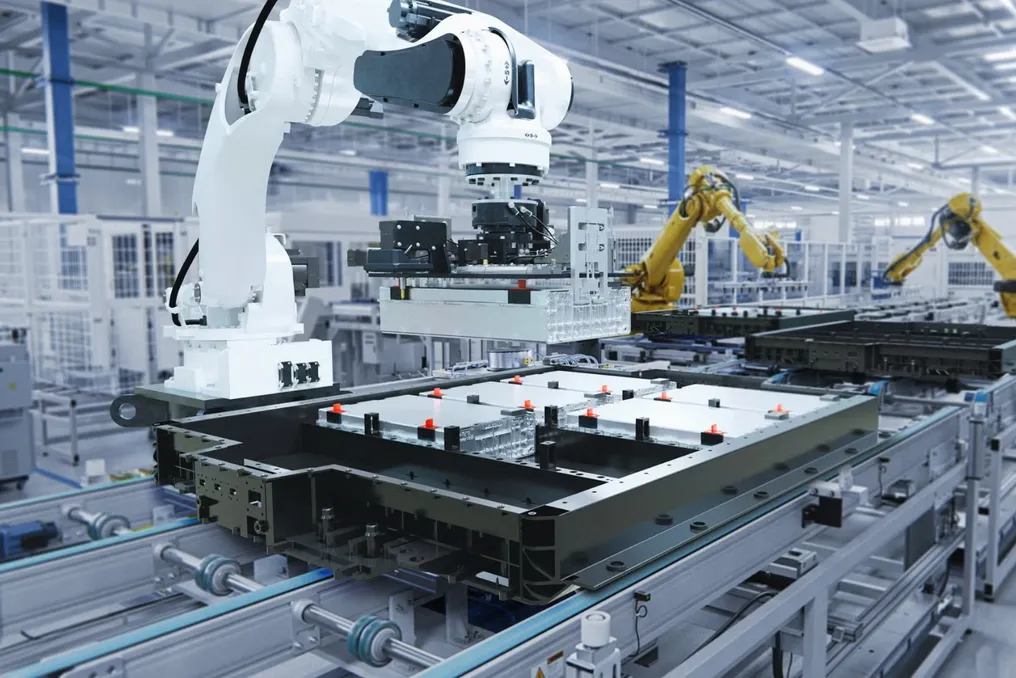
Re:Build Manufacturing raises $2.1 billion to scale industrial production in the US
Read more
Ventureburn
ventureburn.com

Re:Build Manufacturing raises $2.1 billion to scale industrial production in the US

Re:Build Manufacturing, founded by Amazon veterans, aims to bring manufacturing back to the United States after decades when most American factories were located abroad. The company has successfully raised $2.1 billion in funding to expand industrial production in the US.

The funding round was led by General Catalyst and Strategic Investment Group from JPMorgan Chase. This move is considered one of the largest investments in American high-tech industries. This initiative is important for those who follow supply chains, defense industry, or where goods are manufactured.

Re:Build was established in 2020 by Jeff Wilke and Miles Arnoone. Both founders met during the Leaders for Manufacturing program at MIT. Jeff Wilke previously served as the Commercial General Manager at Amazon, overseeing the company's consumer business. Miles Arnoone worked at several machine tool manufacturing companies in the US and in private investment firms focused on manufacturing.

Amazon's influence remains in the company through Wei Gao, a long-time Amazon Vice President and technical advisor to Jeff Bezos, who serves as Re:Build's Chief Digital and Product Officer. Other executives also come from Amazon. Jeff Wilke highlighted the reason for founding the company, stating: 'The deindustrialization of America is an economic failure and a risk to national security.'

Re:Build positions itself as the American answer to Shenzhen, China, which is the world's largest industrial and manufacturing hub. The company operates in two main areas. Firstly, it collaborates with industrial enterprises to design, develop, and mass-produce products, including aerospace and defense sectors. Secondly, it incubates startups in markets that the company deems critically important but underserved. This model borrows principles from the Japanese keiretsu—a network of engineering firms that share skills and work together.

Through acquisitions and organic growth, Re:Build's network reached 13 facilities by 2024. Today, its workforce exceeds 2,100 employees across the US, and its production space covers over 2.4 million square feet. Over six years, the company has launched hundreds of products and production systems.

Re:Build is a company that spun out of Slate Auto. Wilke and Arnoone conceived Slate in 2022 and spun it off in 2023 so it could raise funds independently. Slate has already raised at least $1.4 billion, including funds from Bezos' family office. Slate's goal is to create an ultra-affordable, basic electric pickup truck that customers can customize.

This track record demonstrates Re:Build's ability to develop an industrial startup and turn it into a major player. The $2.1 billion capital injection will allow for increased capacity to produce high-tech products and launch new industrial startups. Simply put, this means more factories, more products, and more jobs in America. Investors see more than just profit in this. General Catalyst CEO Hemant Tanenya called the restoration of US industrial capacity 'one of the most important imperatives for the economy and national security of our time.'

He also noted that the innovative world needs to learn how to build hardware again. For the founders, this is a signal that hardware is back in vogue. For politicians, it means that private money is supporting reshoring on a real scale. While one company may not be able to match Shenzhen, having $2.1 billion makes Re:Build a company worth watching.

Similar stories

Vodacom recognizes profit of 23 billion rand amid legal disputes with Safaricom
Read more
techcentral.co.za

Vodacom recognizes profit of 23 billion rand amid legal disputes with Safaricom

Vodacom will record a one-off profit of 23.2 billion rand from Safaricom in its interim results, despite Kenyan courts deciding whether to annul the acquisition of the operator's controlling stake.

This profit, announced in a trading statement on Wednesday, will increase earnings per share for the six months ended September 30 by 272%–279%, bringing it to between 1756 and 1789 cents. Vodacom attributed this to the 'revaluation of previously held interest in Safaricom.'

This amount is a result of accounting arising when gaining control over a business in which the company already held a stake. When a company gains control over an enterprise in which it already owns a part, it must revalue that stake at fair value and recognize any difference between this value and the book value as a profit or loss. Before completing the acquisition of an additional 20% on June 30, Vodacom owned about 35% of Safaricom, including 15% from the Kenyan government and an effective 5% from its parent company Vodafone Group, which brought it to 55% and made Safaricom a subsidiary.

The profit is tax-exempt and does not affect the earnings per share metric, which is the main measure of profitability on the JSE and excludes capital items such as this revaluation. Vodacom forecasts an EPS growth of 22%–27%, to 570 cents–593 cents compared to 467 cents the previous year. The company did not specify what portion of this growth will be due to the consolidation of Safaricom from July.

The trading statement did not mention the legal disputes. In September, the Kenyan Court of Appeal ruled that the sale of the 15% stake by the state was 'unconstitutional, void' and ordered the shares to be returned to the state. The Kenyan government and Vodacom appealed.

Legal Disputes

On October 13, the Court of Appeal ruled to maintain the current status quo pending consideration of the accelerated appeal, leaving Vodafone Kenya, a Vodacom subsidiary, as the registered shareholder. If the high court's decision takes effect, Vodacom's stake will decrease to approximately 40%, and it will lose the majority. Furthermore, the 5% of shares purchased from Vodafone are not affected by this ruling.

Vodacom plans to publish its interim results on November 10.

Foundry Robotics raises $100 million to build America's first AI-powered assembly factory
Read more
ventureburn.com

Foundry Robotics raises $100 million to build America's first AI-powered assembly factory

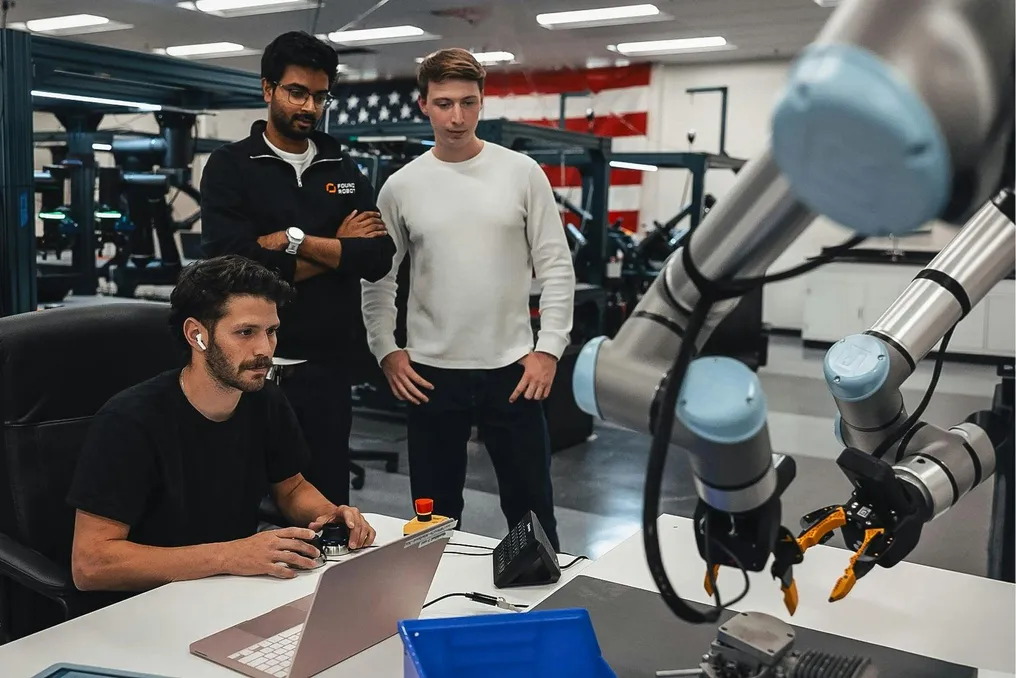
Foundry Robotics, based in Emeryville, California, announced on Wednesday that it has raised a Series A round of $100 million. These funds are intended for the construction of what the company calls America's first autonomous assembly factory. Additionally, the capital will be directed towards expanding its robotics, engineering, and operations teams, as well as implementing additional artificial intelligence models.

Founded only this year, Foundry is demonstrating a rapid pace of development. Founder and CEO Adarsh Kulkarni has experience with robotics; previously, he was a fourth employee at Ghost Robotics, working on bipedal robots for the US armed forces, and later became the first head of the robotics department at Scale AI.

Co-founder Emmanuel Lamakkiya possesses deep knowledge of manufacturing, having led the Model Y program at Tesla, overseeing the production of approximately 1.5 million vehicles annually. Anup Karmakar, a former software lead at Tesla, also joined the team. The team also includes veterans from the military who have experience working at Raytheon and Northrop Grumman, highlighting their ability to scale production.

Unlike most robotics startups that sell the robots or software themselves, Foundry owns and operates factories independently, offering a manufacturing-as-a-service model. The company installs AI-supported robotic cells at its sites. The FoundryOS system connects these robots, the factory, and cloud services. Each production cycle feeds data back into the models, allowing the system to continuously improve.

For clients, this means faster and more consistent production. Foundry claims it can take a product from design to release in a matter of weeks, eliminating the need to create a new production line or costly equipment retooling. For defense contractors awaiting components, this could shorten program timelines by months.

The company's main specialization is complex electromechanical assemblies such as drones, satellites, wire harnesses, and underwater vehicles. The list also includes components for autonomous vehicles, ground robots, and data center equipment. The new 130,000 square foot facility in Emeryville increases the company's production capacity twentyfold.

In addition to Marlinspike, early investors in the round returned, including Khosla Ventures and Red Glass Ventures. New participants include SE Ventures, Wing VC, and Axiom Ventures. Existing investors Hanabi and Zero Shot Fund maintained their positions. This funding round ranks among the top 3% of registered Series A rounds in US deep tech, a rare achievement for such a young company. Earlier reports indicated initial funding of about $14 million, making the current round a significant leap.

Marlinspike's Managing Director, Mislav Tolusik, noted that manufacturers urgently need in-house production capacity. He also believes that Foundry quickly secures contracts with clients. Duane Fortingham, President of HII Unmanned Systems, stated directly that 'production capacity is a national bottleneck for deploying unmanned systems.' This is where Foundry fits in.

Kulkarni insists that factories capable of reviving American manufacturing must be designed from scratch, not merely repaired. The company's mission is to revitalize US industry. Foundry is not alone in this endeavor; Arda Industries launched this month with $232 million in funding. Maven Robotics also raised $100 million in a Series A round in September. Investors clearly see a shift, but big claims require proof. An 'autonomous factory' is only valid if it delivers reproducible results at scale, and Foundry now has the funds to demonstrate this.

Indian Government Plans to Attract $220 Billion in Investments to Renewable Energy Sector by 2030
Read more
timesofindia.indiatimes.com

Indian Government Plans to Attract $220 Billion in Investments to Renewable Energy Sector by 2030

The Indian government aims to mobilize $220 billion in investments into the renewable energy sector by 2030. These funds will be directed towards expanding production capacities, developing energy transmission infrastructure, and increasing green hydrogen production.

These plans are being implemented ahead of the four-day India Renewable Energy Summit & Expo (BRESE), which will take place in the capital from November 2 to 5.

Popular