Iranian Culture Minister calls for deeper understanding of Iranian civilization at 'Night of Iran' event
Read more
Tehran Times
www.tehrantimes.com

Iranian Culture Minister calls for deeper understanding of Iranian civilization at 'Night of Iran' event

Iran's Minister of Cultural Heritage, Seyed Reza Salehi-Amiri, emphasized that Iran has yet to adequately present its rich heritage and civilization to both the younger generation and the international community. He made this statement at an event titled 'Night of Iran,' calling for the creation of a more comprehensive and historically grounded description of the country's cultural, scientific, and artistic achievements.

During the evening event on Tuesday, the minister stated: 'We have not yet been able to tell the story of Iran as it deserves, considering the history, culture, and civilization of this land.' He added that this deficiency must be addressed by providing a comprehensive account of Iran based on historical data and facts.

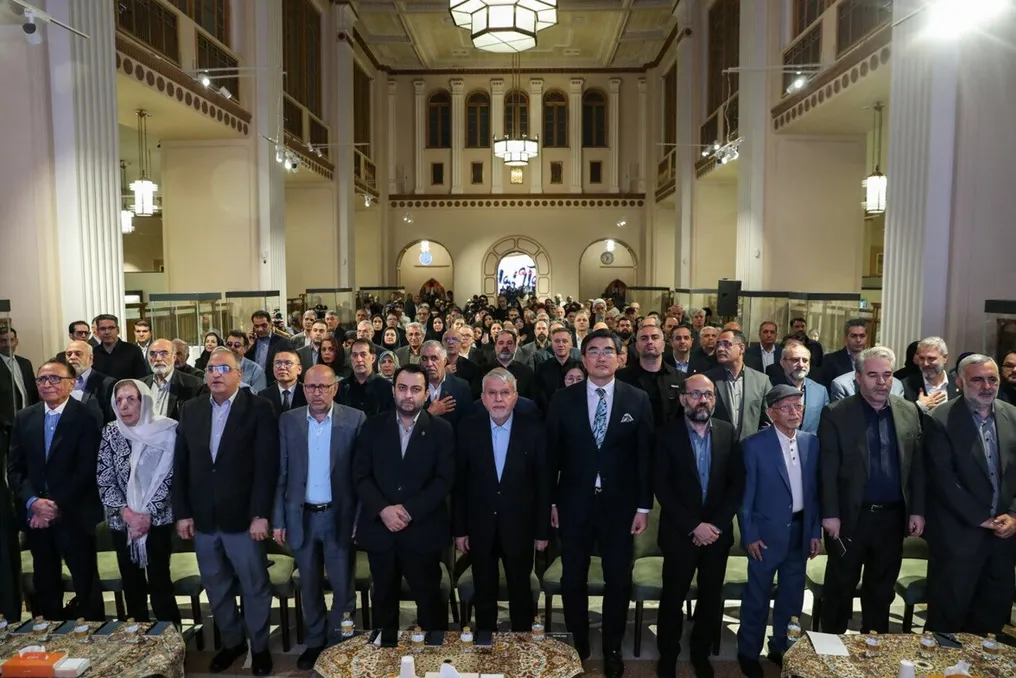
The event took place at the National Bank of Iran Museum in central Tehran and gathered cultural officials, archaeologists, researchers, legislators, and other participants from the country's cultural heritage sector. As part of the event, a collection of photographs titled 'A Thousand Years of Iran' by Herbert Karim-Masighi was presented, documenting aspects of Iran's historical and cultural heritage.

Salehi-Amiri characterized Iran as a country with deep roots, continuous historical continuity, and a vibrant culture that has withstood thousands of years of turmoil and foreign invasions. He noted that successive invasions and political upheavals, from Mongol and Afghan incursions to recent threats, have damaged the country but have not destroyed its cultural and civilizational foundations.

The minister compared Iran to a tree whose branches may bend in a storm, but whose roots remain strong, asserting that the survival of Iranian civilization demonstrates its resilience across generations. He stressed that cultural heritage is one of Iran's most vital national assets, as it strengthens social cohesion, enhances national identity, and fosters a shared sense of belonging among Iranians.

Salehi-Amiri presented Iran as a unifying force for people worldwide, connecting individuals with diverse ethnic, cultural, social, and intellectual characteristics through their historical ties to the country. He insisted that the history and civilization of Iran should play a more significant role in shaping the country's international image, questioning why Iran is often perceived solely through the lens of war, missiles, and political disputes.

He called for increased efforts to integrate the country's historical heritage through education, scientific research, and public cultural programs. The minister specifically noted that educational institutions should incorporate relevant materials on Iranian history and civilization into their curricula, helping students understand the historical and cultural background to which they belong. Universities, he said, should also expand teaching and research on Iranian history, its intellectual traditions, art, and national identity.

Salehi-Amiri also highlighted that a significant portion of Iran's historical heritage remains undiscovered or insufficiently documented. He suggested that continued archaeological excavations and historical research could reveal new facets of the country's past and bring lesser-known stories to public attention.

The minister mentioned the views of scholar Jaleh Amoujegar regarding the resilience of Iranian civilization, noting that political leaders and governments come and go, while cultural achievements can endure for centuries. Furthermore, he reported holding meetings with heads of banking and economic institutions regarding their participation in restoring and completing historical projects, emphasizing the potential role of the private and financial sectors in preserving the nation's heritage.

Addressing the complex situation in the country, Salehi-Amiri called for national solidarity and stated that the government is working to support the population and alleviate its difficulties. He apologized for shortcomings and expressed confidence that Iran will overcome current challenges.

Amoujegar, an Iranian scholar of ancient cultures, languages, mythology, and literature, also spoke at the event, focusing on the importance of hope and confidence in young generations. She stated: 'Iran will not die along with the youth and artists it possesses, and we must not lose hope.' She argued that Iran's cultural vitality is based on a broad base of creative talents, not just a handful of outstanding individuals, and that the country continues to produce people capable of sustaining its artistic and cultural life.

Mohsen Seyfi-Kafashgari, CEO of Bank Melli Iran, noted that the bank's century-long history is closely linked to the country's economic and social development and deserves documentation for future generations. He emphasized that the institution has undergone many changes and difficulties over its first 100 years, and preserving records of its activities could shed light on aspects of modern Iranian history.

The ceremony was attended by Abdollah Hosrobanah, Secretary of the Supreme Council of the Islamic Revolution of Iran; Golamareza Amirkhani, Head of the National Library and Archives of Iran; Kim Joon-pyo, South Korean Ambassador to Iran; as well as archaeologists, cultural heritage specialists, parliamentarians, and officials from cultural institutions. Attendees included researchers and archaeologists Fahri Daneshparvar, Jalil Golshan, and Mehrdad Malekzadeh, as well as Jabrial Nokandeh, Director of the National Museum of Iran, and Mohammad Mehdi Asgarpour, Chairman of the Board of the Iranian Cinema House.

Similar stories

Iran and Tajikistan plan to expand cultural cooperation
Read more
www.tehrantimes.com

Iran and Tajikistan plan to expand cultural cooperation

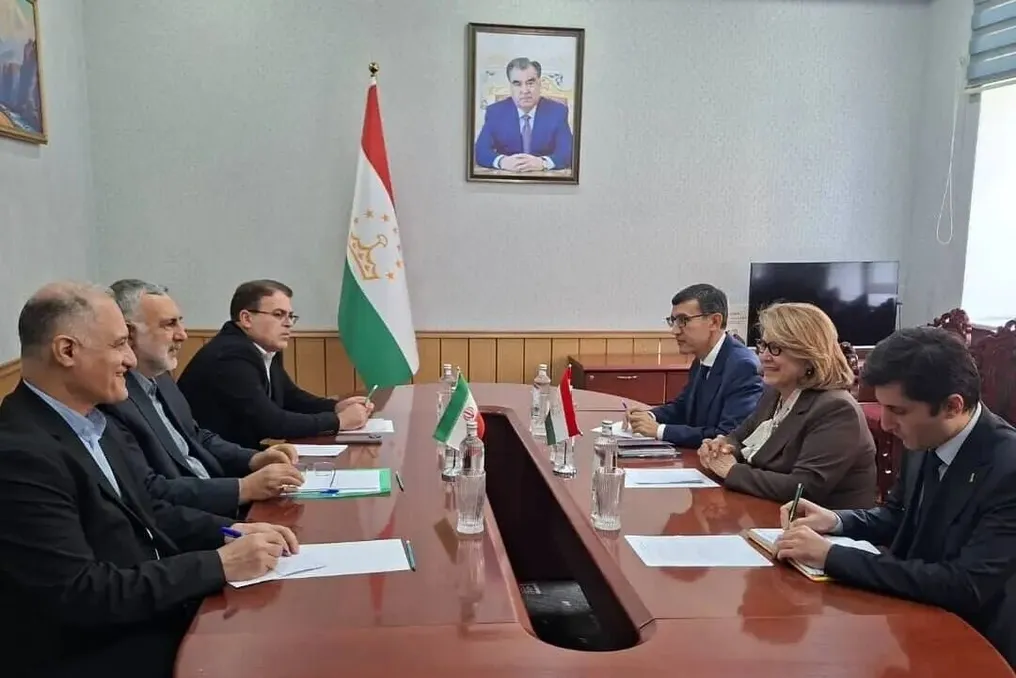
Mohsen Javadi, Deputy Minister of Culture of Iran, and Matlubahon Sattoriyon, Minister of Culture of the Republic of Tajikistan, emphasized the need to establish a specialized working group to monitor and implement bilateral cultural agreements in the fields of publishing, printing, and translation of literary works, as well as the popularization of shared Persian heritage.

According to ISNA, the meeting took place on October 24 during the XIV Dushanbe International Book Fair in Tajikistan. The goal of the negotiations was to deepen long-standing cultural and literary ties between the two states.

Discussion of practical solutions for expanding cooperation

During the meeting, the parties exchanged views on practical ways to increase the level of interaction in various aspects of the book industry, including printing, publishing, and reading books. Special attention was paid to coordinating, synergizing, and planning work on collecting, printing, and publishing the works of prominent literary and historical figures common to both countries.

Cultural representatives of Iran and Tajikistan noted the ancient heritage of Persian language speakers as a valuable asset, stressing that its preservation and proper publication require the continuous involvement of relevant organizations and institutions in both countries. Other topics raised at the meeting included the introduction and translation of works by contemporary authors from both countries, as well as the development of an ecosystem for the Persian language in cyberspace.

To ensure the implementation of approved measures and the practical realization of the reached agreements, it was decided to form a special joint working group composed of representatives of Iranian and Tajik culture. This group will be responsible for continuous monitoring and facilitating the process of implementing bilateral cooperation programs.

The XIV Dushanbe International Book Fair took place from October 22 to 24 at the National Museum of Tajikistan. The House of Books and Literature of Iran presented over 300 titles at the fair, promoting Iranian literature and opportunities for cultural partnership. The Iranian pavilion showcased classical and modern literature, studies on Iranian culture, as well as children's and youth literature.

The House of Books and Literature of Iran also held meetings with Tajik cultural officials and participated in specialized sessions to study issues of cooperation in translation, publishing, and literary exchange. Iran regularly attends the Dushanbe Fair, and Tajikistan participated in the Tehran International Book Fair (TIBF), becoming a special guest of TIBF in 2023.

Iranian Rural Settlements Worth Visiting Beyond Famous Cities
Read more
www.tehrantimes.com

Iranian Rural Settlements Worth Visiting Beyond Famous Cities

Iran's historic cities are renowned for their magnificent mosques, Persian gardens, traditional bazaars, and Silk Road heritage. However, beyond well-known locations such as Isfahan, Shiraz, and Yazd, lies another side of the country—a landscape of mountain villages, ancient mud-brick settlements, and rural communities whose traditions offer a different perspective on life in Iran.

These places, scattered across the country's mountains, valleys, and desert outskirts, demonstrate the diversity of Iran's geography, architecture, and cultural heritage. Some can be visited as a day trip from a nearby city, while others require more time and effort to explore. Together, they give travelers an opportunity to look beyond the most famous attractions and get acquainted with the character of rural regions.

Kandovan: Life Inside Volcanic Rock

In northwestern Iran, Kandovan stands out for its unusual architecture. Located near Tabriz, this village is known for its conical rock formations into which generations of residents carved living quarters and other spaces. Kandovan is often compared to Cappadocia in central Turkey and belongs to a small group of settlements where people continue to live in rock-cut dwellings in modern times. Its unique landscape, shaped by volcanic activity and centuries of human adaptation, gives the village a look distinct from most Iranian settlements.

Unlike archaeological cave sites, which are mostly preserved as historical monuments, Kandovan remains a living community. Its houses illustrate how residents adapted traditional building methods to the surrounding geology and climate. Furthermore, this village is one of the most accessible rural destinations for tourists visiting Tabriz, making it a convenient introduction to rural Iran.

Palangan, a Village Climbing the Mountains of Kurdistan

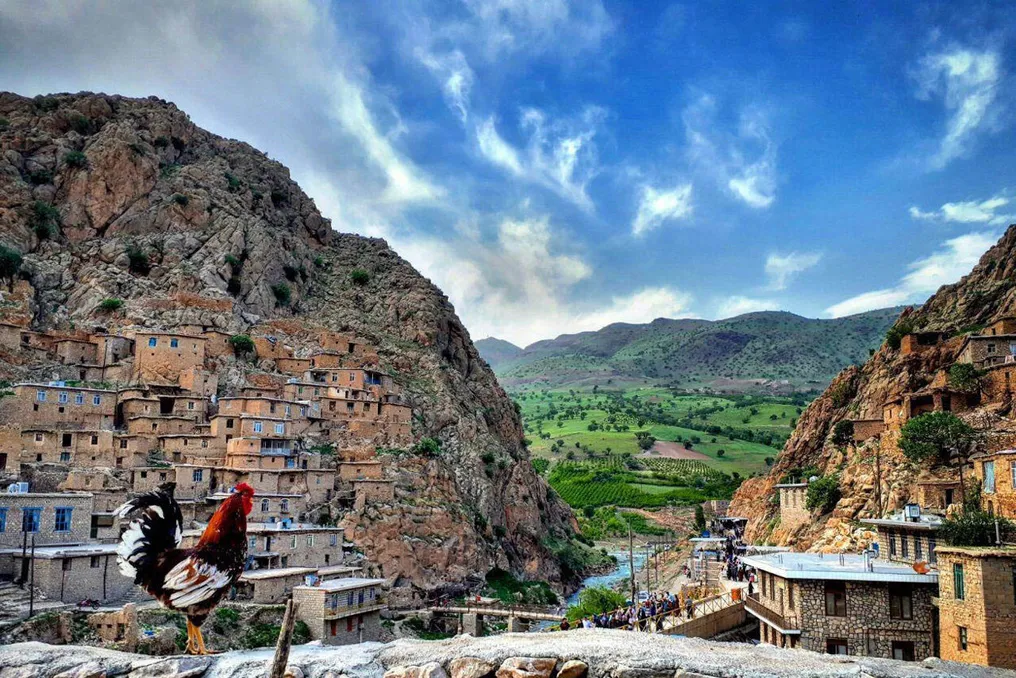
In Kurdistan province, western Iran, Palangan is famous for its terraced architecture and dramatic mountainous setting. Traditional houses rise above one another along the slopes, forming a compact settlement that seems to grow out of the surrounding landscape. This village offers insight into Kurdish rural life, including local culinary traditions and the close connection between communities and their natural environment. Its river, mountain scenery, and stone houses make it a popular spot for visitors from surrounding areas.

Local restaurants serving river fish provide an opportunity to taste regional cuisine, while the surrounding hills serve as a place for walks and exploration. Palangan is among several terraced villages located in the Kurdish mountainous regions of western Iran. Although some rural settlements in this area remain relatively inaccessible, Palangan can be reached from nearby urban centers, including Sanandaj, with possibilities for further travel.

Masuleh: Where Rooftops Become Streets

Further north, in Gilan province, Masuleh presents another striking example of architecture adapted to mountainous terrain. Its traditional houses are built along a steep slope, where the roof of one building often serves as a passage or courtyard for the house situated above it. This arrangement gives the village its characteristic stepped appearance and makes pedestrian movement an integral part of its architectural identity.

Located amidst the misty mountains of northern Iran, Masuleh is known for its humid climate, lush vegetation, and frequent clouds hanging over the settlement. Its popularity among domestic tourists means that the streets can become crowded, especially during peak travel periods. Nevertheless, walking trails leading into the surrounding mountains offer a chance to escape the busiest spots and enjoy the scenery. Within the village, rooftops and narrow paths remain important places for daily encounters, reflecting a strong sense of community. Thus, Masuleh is both a picturesque place and an example of how traditional settlements have evolved in response to steep topography and local living conditions.

Ghazor Khan: Gateway to the Alamut Valley

For travelers interested in history and mountain landscapes, Ghazor Khan in Qazvin province offers a combination of both aspects. This village is best known as the entrance to the UNESCO World Heritage site of Alamut Castle, a fortress associated with the Nizari Ismailis, members of whom were known as Assassins in medieval sources. Perched high above the Alamut Valley, the fortress held a strategic position and became an important center of the Nizari Ismaili state. Its history is closely linked to Hassan-i Sabbah, who established his base there in the late 11th century. The Mongol campaign led by Hulagu Khan resulted in the capture and destruction of the fortress in the 13th century. Although much of the original structure has disappeared, the remaining ruins and the surrounding mountain landscape continue to attract visitors. Besides the historical site, Ghazor Khan is a quiet mountain village surrounded by orchards, including apple, apricot, and cherry trees. In spring, the blooming trees add color to the landscape, and hiking trails offer opportunities to explore the valley. The trip requires more planning than visiting villages near major cities, but the combination of history, scenery, and rural life makes it a worthwhile destination.

Abyaneh: A Living Link to Iran's Past

Located near Kashan, at the foot of Mount Karkas, Abyaneh is among Iran's most famous historical villages. Its red earthen buildings, wooden balconies, narrow alleys, and traditional clothing give it a distinctive look. The settlement is often associated with pre-Islamic Iran, although its long history spans many periods. The architecture reflects the use of local materials, particularly red soil, which gives the buildings their characteristic color. Abyaneh is also notable for preserving elements of the local language and cultural traditions. Some elderly residents speak a distinct local dialect, and traditional dress remains an important part of the village's cultural identity. Men traditionally wore dark coats and loose trousers, while women's clothing is known for its colorful patterns and white headscarves. These customs provide a visible link to regional traditions that have survived amid broader changes in Iranian society. However, Abyaneh's popularity has created challenges. Visitors can fill its narrow streets, especially during peak tourist seasons, and the village can sometimes feel more like an open historical exhibit than a typical rural community.

Nain: Desert Heritage Off the Main Tourist Routes

Between Yazd and Tehran, Nain offers a quieter glimpse into Iran's desert heritage. Although technically a small town rather than a village, it merits attention due to its historic architecture and relatively modest place on many tourist itineraries. The town is known for its historic Jameh Mosque, old bazaar, traditional cisterns, and the ruins of Narenj Castle. These structures together reflect the architectural and engineering traditions that helped communities survive in Iran's arid central regions. Traditional cisterns, known as ab-anbar, were designed to store water for use during dry periods. Along with other water management structures, they demonstrate the importance of adapting settlement models and architecture to scarce water resources. Parts of Nain's historic fabric have deteriorated, and some old buildings are in poor condition. Nevertheless, the town's less commercialized atmosphere can offer a different experience compared to more visited heritage sites. The contrast between historic quarters and newer districts also shows how traditional settlements have evolved as residents adapt to modern life.

Haranak: Traces of an Ancient Silk Road Settlement

Northeast of Yazd, Haranak is known for its abandoned mud-brick settlement and atmospheric ruins. The village developed along historical travel routes and is connected to a network of settlements supporting movement through central Iran. Its old buildings, narrow alleys, and earthen walls form a dense architectural landscape. Some structures are believed to date back many centuries, although the history of individual buildings varies. Walking through the abandoned quarter provides insight into how communities once organized their homes and passages in a desert environment. From elevated points, visitors can see the settlement against the backdrop of surrounding mountains and open land. The ruins are also vulnerable. Weathering, erosion, and uncontrolled visitor access can accelerate the decay of fragile earthen structures. Responsible exploration of this area means avoiding unstable buildings, staying on designated paths where possible, and respecting any closed zones. Haranak can be combined with visits to Meybod and the Zoroastrian pilgrimage site Chak-Chak, making it a possible addition to a broader route from Yazd.

Meybod: Desert Architecture and Ingenious Design

Meybod, another historic settlement near Yazd, offers a broader view of the architectural traditions of Iran's central desert. Although it is a town, not a village, its historic buildings make it a worthwhile stop for travelers interested in the region's cultural heritage. One of the main attractions is Narenj Castle, a large earthen fortress whose origins date back to antiquity. The town also preserves traditional cisterns and a historic pigeon tower. Pigeon towers were built to shelter birds and collect their droppings, which were used as agricultural fertilizer. Their construction reflects the ingenuity of communities that relied on local materials and devised practical solutions to meet daily needs. The pigeon tower in Meybod is one of the notable surviving examples of this building tradition in Iran. Together, the castle, cisterns, and pigeon tower illustrate how desert architecture served practical purposes while becoming part of the region's distinctive cultural landscape.

Why Iran’s Rural Destinations Matter

Exploring Iran's villages and small historic settlements offers more than just a change of scenery. These places reveal how people have adapted to various environmental conditions—from volcanic formations in the northwest to the steep mountains of Kurdistan and the arid landscapes of the central plateau. Their architecture reflects local responses to climate, geology, and available resources. Their languages, clothing, food, and customs also demonstrate the country's regional and ethnic diversity. For travelers whose itineraries focus on Iran's famous cities, adding even one or two rural destinations can broaden their understanding of the country.

Center for Islamic Civilization in Tashkent Demonstrates Shared Historical Ties Between Iran and Uzbekistan
Read more
www.tehrantimes.com

Center for Islamic Civilization in Tashkent Demonstrates Shared Historical Ties Between Iran and Uzbekistan

During his visit to Tashkent, an Iranian journalist noted that the vast Center for Islamic Civilization was viewed from two perspectives: as a visitor discovering the depth of Uzbekistan's cultural heritage, and as an Iranian guest seeking familiar traces of a civilization that never recognized modern political borders.

These traces were found in manuscripts, works of art, and the names of scholars whose activities connected Central Asia with Iran and the wider Islamic world. This raised the question of how a country can preserve its own national history while also showing that its greatest cultural achievements were often shared with other cultures.

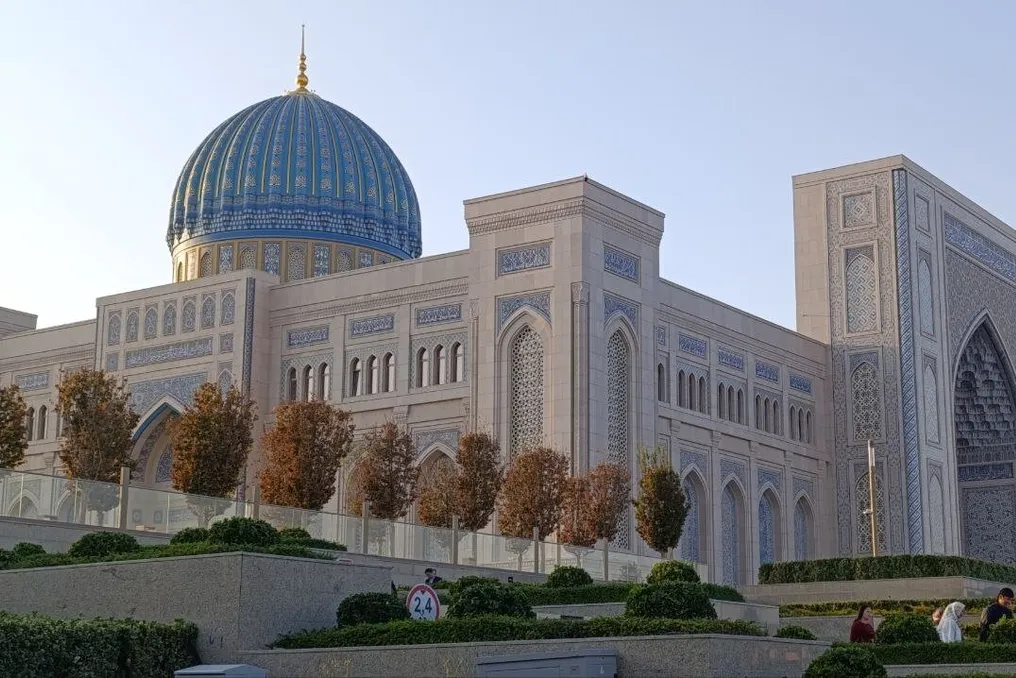
The Center for Islamic Civilization offers an ambitious answer to this question. The complex, which officially opened in March 2026, is located next to the historic Khast Imam ensemble, one of Tashkent's most important religious and cultural sites.

The guide during the visit, Mr. Ozod Kuvondikov, head of the Information Service of the Committee of Uzbekistan on Interethnic Relations, demonstrated high professionalism, patience, and deep knowledge of the places he showed, while speaking fluent English.

Architectural Narrative

Even from a distance, the center is difficult to ignore due to its four monumental entrance portals, each approximately 34 meters high. These portals draw inspiration from the architectural traditions of various regions of Uzbekistan. The eastern entrance resembles the Ulugh Beg Madrasah in Registan Square in Samarkand, the western portal reflects the religious architecture of Bukhara, while the northern and southern entrances include references to other historical regions and cities such as Khiva, Shahrisabz, Karakalpakstan, Kokand, Tashkent, and Termez.

Together, these entrances form a kind of architectural map of the country, suggesting that Uzbekistan's heritage cannot be reduced to a single city, dynasty, or style; it developed through numerous regional traditions, each contributing its own forms, colors, and artistic vocabulary.

A central dome rises above the complex, exceeding 60 meters in height. The building occupies an impressive interior area—over 40,000 square meters—providing space for exhibition galleries, research centers, a library, educational zones, and conference halls. Official descriptions classify this complex as one of the country's largest recent cultural projects.

Inside, the scale is even more apparent: wide halls lead into exhibition spaces, and the bright surfaces and monumental proportions of the building allow visitors to pause rather than rush from one exhibit to another.

However, the most interesting feature of the center is not just its size, but the way the building strives to transform history into a continuous narrative. Instead of presenting the past as a series of disconnected treasures, the main exhibition follows a chronological route. It begins with ancient civilizations of Central Asia, moves to the pre-Islamic heritage of the region, then covers the period of scientific and cultural flourishing between the 8th and 13th centuries, and concludes with a display of artistic and political achievements from the 14th–16th centuries. The final section is dedicated to modern Uzbekistan and its vision of new cultural revival.

This structure emphasizes an important point: the history of Islamic civilization in Central Asia did not begin with the advent of Islam nor end with the decline of any specific dynasty; it emerged from earlier societies and continued for centuries of exchange, adaptation, and intellectual labor.

Hall of Fame: Scholars Beyond Borders

One of the first spaces to attract attention is the Hall of Fame, where huge mosaic panels vividly depict some of the most influential thinkers in Islamic history. Among the figures presented are Avicenna, known in the Islamic intellectual tradition as Ibn Sina; Al-Khwarizmi, whose works laid the foundations of algebra; Al-Biruni, a scholar whose research covered mathematics, astronomy, geography, and other fields; and Al-Farabi, a philosopher often called the Second Teacher after Aristotle.

The portraits are assembled from thousands of small tiles. From a distance, they form monumental images, and upon closer inspection, the patience and precision required to create such a complex composition become visible. This effect is both artistic and symbolic: each scholar is presented as an individual whose ideas helped shape a much broader intellectual world.

A Glimpse into the Ancient World

The center's historical journey goes much deeper than the Islamic period. In galleries dedicated to pre-Islamic heritage, archaeological artifacts present Central Asia as a place of human settlement, artistic production, and cultural contact spanning thousands of years. Among the numerous items described in the exhibition are stone tools and arrowheads associated with the Obi-Rahmat site, dating back approximately 80,000 years. Gold jewelry and other finds related to ancient Bactria—a historical region encompassing parts of modern Uzbekistan, Afghanistan, and Tajikistan—are also displayed.

A special exhibit is the sculpted head known as the Kushan Prince's Head, dated to the 1st or 2nd century CE and found at Dalverzins-Tepe in southern Uzbekistan. Its features and preserved details provide insight into the artistic culture that developed under the Kushan Empire, whose territory connected parts of Central and South Asia.

Nearby is a sculpture of a deer, dating back to the 1st millennium BCE, which recalls the symbolic significance of animals in ancient artistic traditions. Its presence gives the gallery a different character compared to the exhibits of manuscripts and religious objects in other parts of the building. Here, visitors encounter societies whose beliefs and artistic languages formed long before the advent of Islam.

These artifacts challenge the idea that the history of Uzbekistan can only be understood through the lens of the modern Uzbek state's history. The territory was home to numerous peoples, languages, religions, and political systems. Sogdian, Bactrian, Khorezmian, Persian, Turkic, and other cultural traditions were part of a broader historical landscape. For the Iranian visitor, this part of the exhibition seems particularly close, as ancient Bactria and surrounding regions were connected to the Iranian cultural world through language, religion, trade, and political contact. These connections were not simple or unchanging, but they constituted an important part of the history of the lands that today make up modern Iran and its neighbors.

When Technology Brings History Closer

The chronological galleries are supported by various digital installations. Multilingual screens provide information about the exhibits, and digital reconstructions place historical buildings and cities in their former surroundings. Interactive displays allow visitors to explore historical periods in ways that would be difficult to achieve with only plaques and display cases.

Some of the most engaging features use artificial intelligence to animate portraits of scholars and present their discoveries in a more personal format. Instead of simply reading a brief biography, visitors can meet a digital representation of a historical figure explaining aspects of their work. Such displays make a complex topic more accessible, especially for younger visitors or those unfamiliar with the history of Islamic science. Mathematics, philosophy, and astronomy can seem distant if presented only with dates and technical terms; the digital guide helps turn them into stories of human curiosity, disagreement, and discovery.

One of the most effective installations is the interactive Silk Road map. This historical trade network is often depicted in books as a series of lines connecting distant cities. Here, its routes become visible paths of movement and exchange, helping visitors understand how merchants, religious teachers, diplomats, artists, and ideas traveled between regions. The Silk Road was never a single road with a fixed route; it was a changing network of land and other connections linking East Asia, Central Asia, the Middle East, and Europe over many centuries. Its significance lay not only in the goods transported along it but also in the knowledge and artistic practices that accompanied them. This is why it is sometimes called the Silk Roads, rather than the Silk Road.

Looking at the map, the author pondered how often the history of our region is divided into national chapters, even when historical evidence points to constant interaction. The roads connecting Samarkand, Bukhara, and Khiva also linked them to cities further south and west, including cities of historical Iran.

Other interactive elements make the experience more playful. Visitors can try virtual archery or study an installation demonstrating how bellows supply air to a traditional tandoor oven. In the gallery dedicated to modern Uzbekistan, Humo AI acts as a digital assistant, answering questions about the center and the country's history. These activities may seem far removed from ancient manuscripts, but they serve a useful purpose by prompting visitors to ask questions. A museum is not just a place for contemplating the past; it is also a place for discovering how people lived, worked, cooked, and understood their world.

Quran Hall and the Long Journey of a Manuscript

The most solemn place in the center is the Holy Quran Hall, covering about 1,200 square meters and serving as the symbolic heart of the complex. The room is monumental: the walls are lined with pink marble, and an extremely large crystal chandelier hangs overhead. Silk carpets bearing verses from the Quran add another layer of artistry to the setting.

Nevertheless, the central object is the manuscript, not the surrounding architecture. This manuscript, known as the Uthmanic Quran, Quran of Uthman, or Samarkand Kufic Quran, is traditionally associated with the third Caliph Uthman ibn Affan and dates back to the 7th century. It is among the most famous early Quranic manuscripts and was included in the UNESCO World Heritage List in 1997.

According to a widely circulated account, the manuscript was brought to Samarkand during the reign of Amir Timur in the late 14th century. It remained there for centuries before being transported to St. Petersburg during the Russian Tsarist rule in the 19th century. After further relocation during the revolution, it returned to Tashkent in 1924. Visitors are advised to keep a respectful distance from the manuscript, and photography of the original is restricted. Copies and multimedia displays help explain its history, script, and significance. These restrictions are understandable: the fragile manuscript must be protected from excessive light, touch, and other risks.

Standing in the hall, the author was struck by the contrast between the vast space and the modest physical form of the object at its center. The chandelier, marble, and carpets create a sense of grandeur, but the manuscript itself consists of pages inscribed with lines. Its importance lies in the religious significance attributed to it, the history it has endured, and the generations that have considered it a treasure.

Artifacts Crossing Cultural Borders

In other parts of the center, the collection expands the narrative through religious objects, archaeological finds, manuscripts, textiles, and works of art. Some items come from Uzbek museums, others were acquired at international auctions or through cooperation with foreign institutions. In cases where the originals remain abroad, ...
Popular