
Anatel makes biometrics mandatory for activating and maintaining mobile lines
Read more
Tecnoblog
tecnoblog.net

Anatel makes biometrics mandatory for activating and maintaining mobile lines

The National Telecommunications Agency (Anatel) has made the use of biometric validation mandatory both for activating and maintaining mobile phone lines. This new regulation was approved by the Superintendence of Planning and Regulation and released this Wednesday, October 28th. The rule applies to individuals and individual microentrepreneurs (MEI) and will be implemented progressively until the end of 2028.

According to official documentation, facial recognition will be required in several situations, such as new activations, portability processes, SIM card replacement, and any cadastral or contractual modification requested by the consumer themselves. Those who already have a line will also need to comply with this procedure by December 31, 2028. However, legal entities that are not classified as MEI are exempt from this requirement.

The main purpose of this measure is to make it more difficult to open or transfer lines using false information or information belonging to third parties. One of the most well-known scams mentioned is SIM swap, where criminals manage to redirect the victim's number to a different chip, allowing them to receive calls and authentication codes via SMS.

Biometrics serves as an additional layer of security in this process. Previously, Anatel had already made SMS confirmation mandatory in cases of portability and launched the Anatel Protege tool, aimed at blocking the opening of lines linked to the user's CPF. It is important to note that the use of biometrics in the sector is not new; since 2021, operators have been using what is called Digital ID to validate registrations on certain prepaid lines, by sending a selfie along with a document.

The Anatel technical standard specifies that the verification must include CPF validation, face capture, and proof of life, ensuring that there is a real person in front of the camera. Subsequently, this image will be compared with a biometric database, which can be public or private. If the recognition fails, alternatives are available, such as another attempt, in-person service, or comparing the selfie with the photo contained in an official document.

Vivo, as an example, already employs a similar method in certain services. When requests are made via phone or WhatsApp, the operator may send an SMS containing a link to confirm identity. The customer must display their face and wait a few seconds for validation before any plan change can be effected.

Although the initiative aims to curb fraud, it also introduces a new circumstance in which consumers will need to provide biometric data to access a service. Service providers will also have the prerogative to add other checks to identify fraudulent activities.

The regulation mandates that data collection be restricted to what is strictly necessary, requires compliance with the General Data Protection Law (LGPD), and prohibits undue sharing with third parties. Furthermore, systems must maintain auditable records of all verifications performed.
Similar stories

Essential settings on Android phones to ensure greater durability and performance
Read more
g1.globo.com

Essential settings on Android phones to ensure greater durability and performance

When purchasing an intermediate Android smartphone in 2026, it is essential to pay attention to various technical details in the device's specifications. The focus should go beyond camera megapixels or just the price, seeking a well-balanced device that offers good performance, adequate storage space, and longevity.

RAM Memory: minimum 8 GB

The fluidity of the device is directly affected by the RAM memory. For the year 2026, a minimum of 8 GB of RAM is recommended so that using browsers, social networks, messaging apps, and multitasking occurs without constant freezing. Models equipped with 12 GB or more of RAM are more common and represent an advantage for users who game or wish to maintain a high level of performance for longer.

Storage: minimum 256 GB

Internal storage has become crucial due to the growing memory consumption by Android, applications, and personal data. With 256 GB, the user has more capacity to store videos, photos, documents, and games without the constant need to delete content. This capacity is considered more appropriate for those planning to use the device for several years.

Battery: at least 5,000 mAh

The battery remains one of the most important components for most consumers. In intermediate smartphones, 5,000 mAh is the safe benchmark to support more than one day of use without access to a power outlet. It is advisable to check if the battery uses silicon-carbon technology, as this allows manufacturers to incorporate larger charge capacities into thinner devices. Currently, models are available in stores with capacities exceeding 6,000 mAh, reaching up to 10,001 mAh.

Screen: 120 Hz is the standard

Screen quality directly impacts the user experience. Panels that use AMOLED or similar technology generally provide more vibrant colors, better contrast, and deeper blacks. Furthermore, a 120 Hz refresh rate ensures smoother browsing, faster animations, and fluid scrolling.

Updated Android

The Android support period and the availability of security updates have become decisive criteria when buying phones. Security updates and new versions of Android are vital to keep the device protected and compatible with the latest software. The ideal is to opt for models that offer support for at least five years. Some brands, such as Samsung, already provide six years of updates on certain intermediates, while others, like Motorola, show variations between two and seven years, depending on the specific model. It is recommended to consult the manufacturer's website for this information.

NFC: a differential for payments

NFC is a relevant feature to check before buying, as it is the technology used for contactless payments, but not all budget phones include this feature. The prices of intermediate Android models analyzed in the last week of October ranged between R$ 2,100 and R$ 7,000. Examples presented included the Jovi V70 (8 GB / 256 GB, 7,000 mAh, screen up to 120 Hz), Moto Edge 70 Pro (12 GB / 256 GB, 6,500 mAh, screen up to 144 Hz), Oppo Reno 16 (8 GB / 256 GB or 512 GB, 6,000 mAh, screen up to 120 Hz), Realme 16 (8 GB or 12 GB / 256 GB or 512 GB, 6,550 mAh, screen up to 120 Hz), and Samsung Galaxy A57 (8 GB / 128 GB or 256 GB, 5,000 mAh, screen up to 120 Hz).

Starting in 2027, cell phones will be able to use competing carrier networks on Brazilian highways
Read more
autopapo.com.br

Starting in 2027, cell phones will be able to use competing carrier networks on Brazilian highways

The federal government will implement a requirement for mobile phone operators to share their signals on highways starting in 2027. This will allow users in areas without coverage from their own operator to use a competitor's network, ensuring 4G or higher connection.

This determination is part of the National Policy for Connectivity on Highways, which was presented this Thursday, the 15th, by the Ministries of Communications and Transport. The plan sets the goal of providing mobile internet across 72.3 thousand kilometers of federal and state roads by the year 2030.

The sharing mechanism, known as roaming, will be supervised by Anatel, which is responsible for defining both the technical guidelines and the remuneration terms between the operating companies.

According to the Minister of Communications, Frederico de Siqueira Filho, the government will not provide financial compensation to the companies; it is up to them to balance the cost of providing the network with the benefit of using competitors' infrastructure. Furthermore, the possibility of increasing tolls due to this plan has been dismissed.

Only with sharing is the available coverage on federal highways expected to increase from 36.6% to 58.9%, according to data from the Ministry of Communications. The covered area will increase from 27.2 thousand to 44.1 thousand kilometers.

Combining this measure with other actions, such as requirements in highway concessions, the overall goal is to reach 57.1 thousand kilometers of federal roads with signal by 2030, which represents more than double the current situation.

For the year 2027, the government plans to connect 16 thousand kilometers of federal highways, including the entire BR-101, covering approximately 4,800 kilometers from Rio Grande do Norte to Rio Grande do Sul.

A portion of this expansion comes from the 700 MHz band auction conducted by Anatel in May. Winning companies committed to investments of about R$ 2 billion, intended to bring signal to 6.5 thousand kilometers of federal roads currently without coverage.

Starting in 2027, operators will also be able to access resources from Fust, the federal fund for telecommunications universalization, through BNDES, aiming to expand infrastructure on the roads.

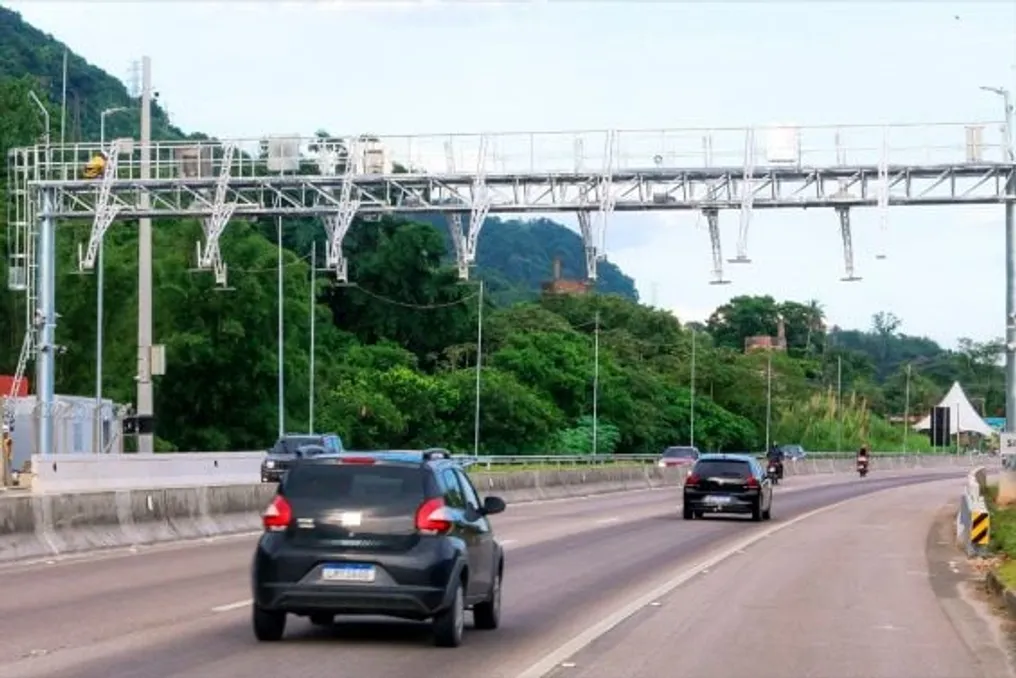
Meanwhile, the Minister of Transport, George Santoro, emphasized that improving signal on highways will facilitate both accident response and the implementation of the free flow toll system, which will be standard in new concession tenders.

Popular