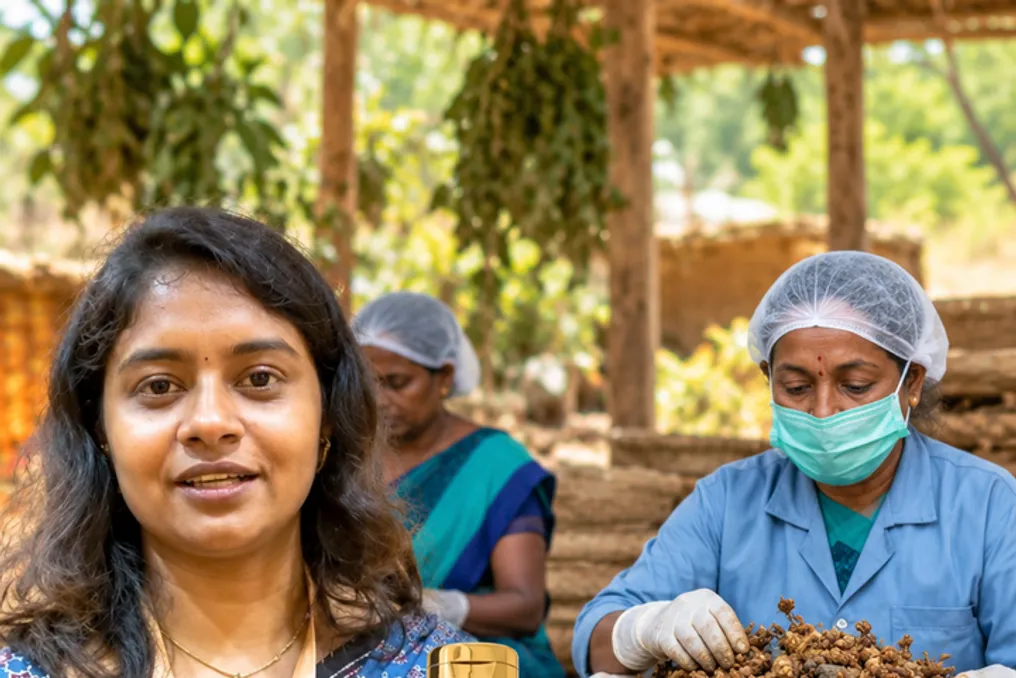
Forests can provide livelihoods for millions of people, but families that collect herbs and honey in them often earn very meager incomes. A young forest service officer decided to change this situation by promoting the growth of an herbal brand.
In the depths of Madhya Pradesh forests, tribal families traditionally collect herbs, medicinal roots, and wild honey, using knowledge passed down through generations. Nevertheless, selling this produce in its raw form brought them negligible profit.
When Gitanjali Janarthanan, an employee of the Indian Forest Service since 2020, headed MFP-PARC, she clearly saw this problem. The question arose as to why others could earn significantly more profit while tribal communities earned so little?
She focused her efforts on developing the Vindhya Herbals brand, which processes forest products into herbal teas, Ayurvedic medicines, essential oils, skincare products, and wellness products, thereby adding value before reaching the market.
Under her leadership, the turnover of Vindhya Herbals increased from 17 crore to 42 crore rupees in less than two years, demonstrating the potential of transforming forest products into finished goods accessible to a wider market.
Within the broader ecosystem of Madhya Pradesh, nearly 40 million forest produce collectors participate, including 19 million women. Behind these products are communities whose knowledge of the forests sustains their livelihoods.
The brand has also introduced eco-friendly packaging, skincare based on Mahua, and Ayurvedic products intended to support children with sickle cell anemia. Their most popular wild forest honey is collected directly by tribal communities.
Today, Vindhya Herbals products are sold in 28 Sanjeevani stores across Madhya Pradesh and at MP Bhavan in Delhi.