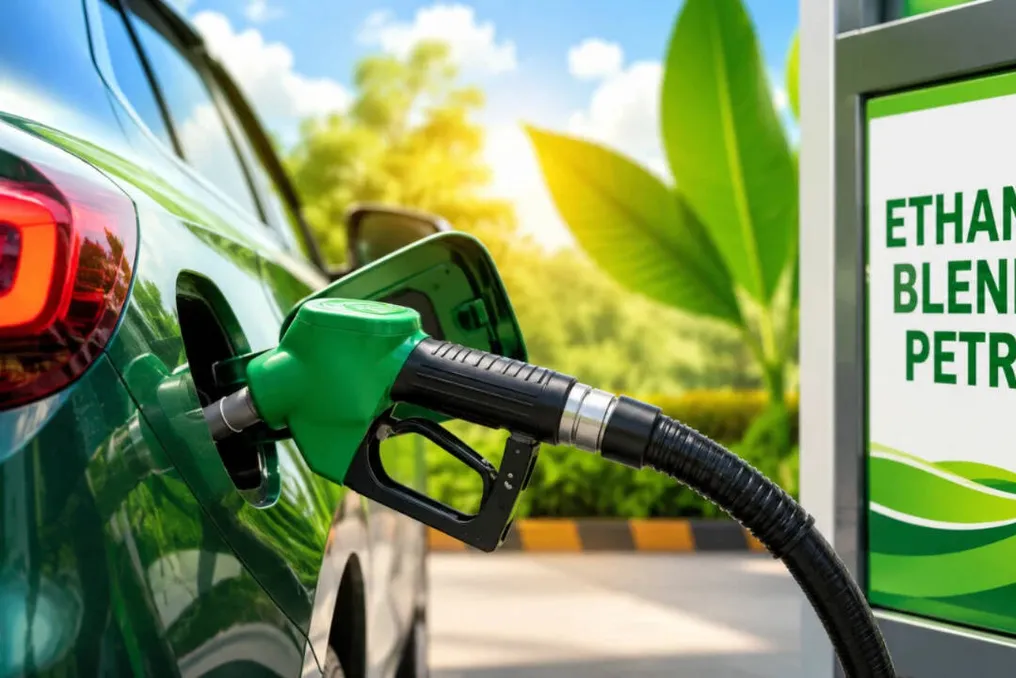
The Indian government has implemented a significant update to its vehicle homologation standards, formally including pure ethanol (E100) and the E85 blend for flex-fuel automobiles. This regulatory change, which took effect immediately after official notification, defines the technical and legal path for manufacturers to certify and commercially launch these models in the local market.
With this new directive, emission regulatory tables now consider E20 alongside E10 in the gasoline category. Furthermore, there was an expansion of biodiesel specifications to cover the B100 standard. Another relevant technical adjustment was the increase in the maximum permitted gross weight for these vehicles, which rose from 3,000 kg to 3,500 kg, correcting inconsistencies discussed since a preliminary draft presented for public consultation in the first half of the year.
The responsible government department emphasized that flex engines are equipped with automated systems capable of instantly adapting to the proportion of ethanol present in the tank. This technology already has a proven track record in major markets, such as the United States and Brazil. Economically and ecologically, the Indian administration argues that increasing the use of biofuels contributes to reducing dependence on crude oil imports, lowers exhaust pollutant emissions, and supports the national goal of achieving carbon neutrality by 2070.
Despite the legal release for this new energy matrix in transport, local experts and authorities warn that E100 and E85 supply must be used exclusively in vehicles factory-designed for this purpose. Conventional cars, adjusted for smaller blends, are not compatible with pure proportions. Therefore, the standard guidance for drivers is always to consult the owner's manual and check the official fuel compatibility seal before refueling.