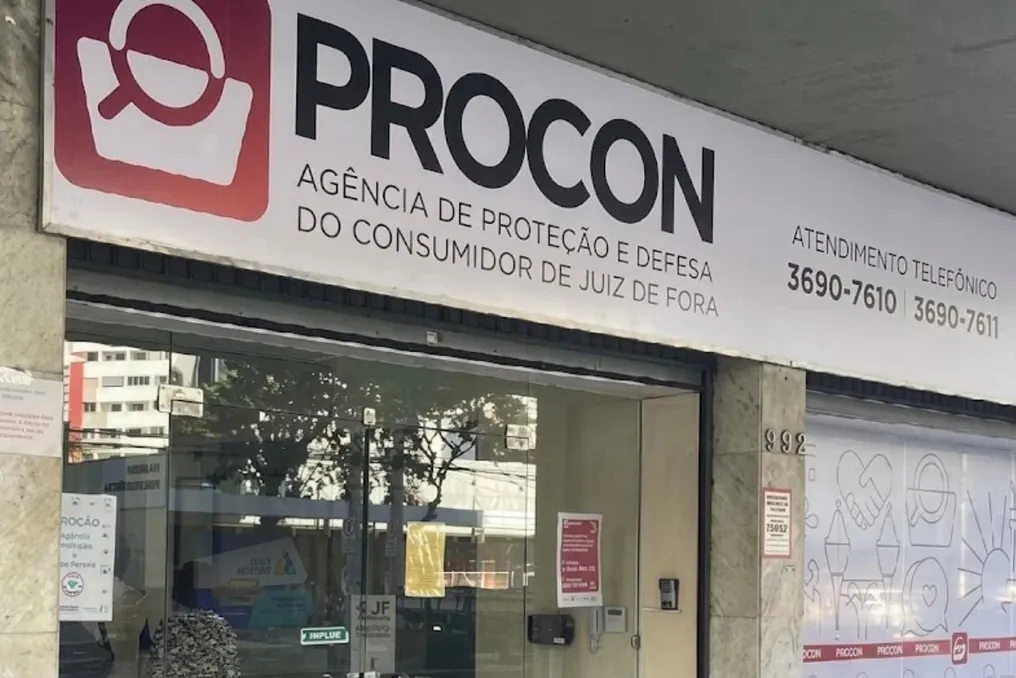
According to a survey released by Procon of Juiz de Fora, telecommunications companies and banks topped the list of complaints registered in the first half of 2026. TIM was the company with the highest number of complaints during the period, followed by Banco Mercantil do Brasil and Bradesco.
Between January and June, the municipal body conducted over 2,800 hearings aimed at mediating conflicts between consumers and service providers. This data forms the tenth edition of the bulletin titled 'Supplier in Focus,' which consolidates complaints received through various channels, such as phone, letter, and during hearings, in addition to presenting the companies' performance in resolving issues.
Although the document details the performance, it does not specify the total amount of complaints registered nor the exact number of complaints directed to each company.
Most Complained Companies
The complaint ranking includes not only telecommunications operators and financial institutions but also suppliers from the commerce and electric energy sectors. The ten most cited companies in the first half of 2026 include TIM, Banco Mercantil do Brasil, Bradesco, Grupo Casas Bahia, Itaú Unibanco, Cemig, Banco BMG, Vivo, Nio, and Claro.
Hearings and Conflict Resolution
The study also provides information on how many hearings resulted in agreements between consumers and companies. TIM, which led the complaint ranking, was called to 80 hearings and managed to close agreements in 54 of them, achieving a resolution rate of 67.5%. Banco Mercantil do Brasil, in second place, reached a consensus in only 13 of the 80 hearings convened, corresponding to 16.25%.
Grupo Casas Bahia had 116 summons and formalized 64 agreements. Bradesco was summoned to 111 hearings but resolved only 17 cases, showing a rate of 15.32%. This rate measures the proportion of called hearings that culminated in an agreement.
Analyzing the results presented by Procon, Mercado Livre registered the lowest resolution rate among the detailed companies, with only four agreements in 66 hearings. Banco Itaú also showed one of the lowest rates; out of 73 summons, the institution attended 63 hearings but signed an agreement in only eight.
Comparison with 2025
The bulletin also establishes a comparison between the conflict resolution rates and those recorded in the second half of 2025. Despite having one of the highest percentages of agreements among the examined companies, TIM saw its resolution rate decrease, falling from 81.1% to 67.5%. Mercado Livre also registered a drop, going from 23.53% to 6.06%. Bradesco experienced a reduction from 27.3% to 15.32%. In contrast, Grupo Casas Bahia showed improvement, raising its resolution rate from 36.2% in the second half of 2025 to 55.17% in the first six months of 2026. Nevertheless, six of the ten companies listed in the survey ended the first semester with resolution rates below 50%.
Procon Measures
During the first half, Procon of Juiz de Fora also held meetings with companies that accumulated a large volume of complaints. Among the summoned suppliers were Grupo Casas Bahia, Banco Mercantil do Brasil, Mercado Livre, Banco Itaú, Magazine Luiza, Banco BMG, Nio Fibra, and Vivo. According to the body, these companies received guidance to develop action plans, defining goals and deadlines, aiming to improve services and reduce consumer complaints.
Companies' Positions
TIM declared its commitment to providing the best experience to customers, continuously investing in the evolution of services, customer service, and relationship channels, focusing on agility, respect, and transparency to solve demands and ensure user satisfaction.
Banco Mercantil also issued a note to the report, emphasizing its commitment to transparency and reducing complaints. The bank stated that it adopts policies and standards in full compliance with the current laws of the Central Bank of Brazil and the Consumer Defense Code, prioritizing the mitigation of complaints and maintaining a transparent relationship with clients.
Bradesco communicated that it constantly monitors manifestations and carries out intensive work in forwarding solutions, considering the reduction of complaint volume as a priority. The bank highlighted its absolute respect for the client and their interests, using complaints to improve processes, products, and services.
Grupo Casas Bahia highlighted the advance in the conflict resolution rate at Procon of Juiz de Fora, which rose from 36.2% in the second half of 2025 to 55.17% in the first half of 2026, reflecting improvements in demand resolution actions.
Itaú Unibanco also sent a note, stating that it works to reduce complaints and uses consumer demands as a basis to improve its services, remaining available to hear and resolve issues through its service and Ombudsman channels.
Banco BMG informed that it maintains constant and collaborative dialogue with Procon of Juiz de Fora, monitoring service indicators. The bank invests in evolving the customer experience, improving processes and channels, and sees dialogue with the body as fundamental to guiding consumers.
Vivo spoke about the available service channels, seeking to take care of the end-to-end customer experience with a resolutive service across all channels. The company mentioned that the customer can self-serve through the Vivo App or speak with specialists via chat, in addition to having over 1,800 stores and the Relationship Center at 10315.
Magazine Luiza reported advances in resolution rates across various consumer defense platforms. Magalu registered 83.88% resolvability in ProConsumidor in 2025, evolving about eight percentage points compared to the previous year. On Consumidor.gov.br, the solution index exceeds 84% in 2026, and on Reclame Aqui, it reached over 90% with maximum RA1000 reputation.