Jundiaí horror short film to be adapted into feature film with producers of 'City of God' and 'Central do Brasil'
Read more
Grupo Globo
g1.globo.com

Jundiaí horror short film to be adapted into feature film with producers of 'City of God' and 'Central do Brasil'

The independent horror short film titled 'A Última Fita,' produced in the city of Jundiaí, in the state of São Paulo, will be adapted into a feature film format. This expansion will feature executive production from Elisa Tolomelli, a professional known for her work on acclaimed films such as 'City of God' and 'Central do Brasil.'

The work, which was written and directed by the Jundiaí filmmaker Caroline Adrielli, is currently in the scriptwriting phase under the provisional title 'A Fita.' The original version, with a runtime of 18 minutes and filmed in the region, won six international awards at festivals focused on the slasher genre.

The collaboration between Caroline and Elisa began when the director presented the project during a course taught by the executive producer. Upon seeing the short film, Elisa recognized great narrative potential to transform it into a feature film, aiming to reach a wider audience.

The decision to produce the film

Elisa justified her choice by saying she saw potential in the story and recognized Caroline's clarity on how she wanted to tell the narrative. She commented that the short film demonstrated Caroline's ability to master the language of horror, even while working with limited resources.

The producer also expressed appreciation for collaborating with emerging professionals, believing that cinematic experience can help new directors realize their ideas in projects accessible to the public. With about 40 productions, Elisa has built a career linked to Brazilian cinema with international projection, having been an executive producer for 'Central do Brasil' (by Walter Salles) and 'City of God' (by Fernando Meirelles), both nominated for the Oscar, as well as 'Lavoura Arcaica' (by Luiz Fernando Carvalho).

How the story will be expanded in the feature film

In the plot of 'A Última Fita,' five young people rent a vacation house and discover VHS tapes containing recordings of violent crimes that occurred at the location during the 1990s. Isolated and without phone communication, they realize that the killer remains nearby and that they could be the next victims.

Caroline Adrielli mentioned that the suggestion for the title 'A Fita' came from Elisa and that working with her and the structure of Inova in the finalization represents a chance to deepen a story born in the countryside and bring it to major centers with renowned partners in national cinema.

The director noted that the slasher subgenre, characterized by the pursuit of victims by killers, requires space for character development, crime progression, and plot motivation. Furthermore, comments from horror specialists requested the continuation of the story, confirming its viability for expansion.

The feature film proposal does not aim to alter the events of the short film but rather to develop the context prior to the young people's arrival at the residence and detail the story behind the recordings. Caroline plans to explore what was not addressed in the short film, initially focusing on who the young people are before arriving at the location and why they rented that house.

Another aspect that will gain prominence is the universe of the criminal responsible for the tapes. The director will have time in the feature film to detail how the recordings are prepared and how this element integrates into the narrative, something that in the short film was only presented through the footage.

The script will remain under Caroline's responsibility, with support from production. Elisa emphasized that the goal is to maintain the director's creative vision while providing support for a larger-scale production.

Expanding the reach of inland cinema

The São Paulo director highlighted that this partnership marks a new phase in her career, offering the opportunity to take a narrative created in Jundiaí beyond the region. She stressed that the professional production of a feature film requires a structure distinct from that used in an independent short film.

Caroline insisted that while a short film can be made with friends and local partnerships, a feature film is a strictly professional process linked to the film market. She also highlighted the importance of creating a unique identity for Brazilian horror, building memorable characters and visual elements, as international franchises of the genre do.

Elisa shares the vision of valuing productions outside major audiovisual hubs. For her, filming in other areas allows for the exposure of diverse cultures and boosts the local economy, involving professionals, suppliers, and the community. This helps foster audiovisual production in these regions, generating direct and indirect employment.

Elisa's philosophy is that bringing stories from different locations to the screen serves to present different realities to the public. In the case of 'A Última Fita,' the expansion of the production will allow the story originating in Jundiaí to reach new markets.

When will the feature film be shot?

Currently, the project is in the script development phase and has been submitted to two specific calls for this stage. The text is expected to be completed in early 2027, and the producer hopes to start filming in the second half of the following year. There is currently no definitive schedule, announced cast, or established release date.

The realization will be conducted in collaboration with Inova Filmes, responsible for finalization and audiovisual effects. Elisa informed that the company's structure possesses the necessary technical resources to work on effects even before filming begins.

The producer aims for the feature film to unite elements of horror and humor, contributing to increasing the genre's space in Brazilian cinema, making the audience feel both fear and fun.

Free screening in São Paulo

While the feature film is in development, the public can watch the short film that gave rise to the project in a special Halloween screening. The screening of 'A Última Fita' will take place this Saturday (31st) at 6:30 PM at the Museum of Image and Sound (MIS-SP), in São Paulo. This event will be free and open to the public, marking the short film's debut in the capital of São Paulo and allowing viewers to see the production filmed in Jundiaí that will serve as the basis for the future feature film.

Similar stories

Kangana Ranaut returns to horror films alongside 'Baahubali' star Rana Daggubati
Read more
www.aajtak.in

Kangana Ranaut returns to horror films alongside 'Baahubali' star Rana Daggubati

Actress and Member of Parliament from the Bharatiya Janata Party (BJP), Kangana Ranaut, is preparing for a significant return to the film industry. In addition to the upcoming film 'Queen 2', she plans to return to the horror genre after a 17-year hiatus. Actor Rana Daggubati will also participate in this new horror project, which he personally announced.

During the HorrorCon India 2026 event in Delhi, actor Rana Daggubati made an unexpected announcement about his upcoming film. He stated that he intends to produce a horror film titled 'Scary Picture'. The Telugu filmmaker and actor Ravi Babu will direct this project. Kangana Ranaut will be starring in this movie, information she also shared on her Instagram account on Sunday.

A video from the event, where Rana Daggubati announced his next film on stage, was circulated by event users on social media. A preliminary look at the film shown on screen suggests that the movie will be shot in Hindi, judging by the title.

Despite this, no official announcement about the film has been made by Rana's production house yet. However, Kangana reposted the video where Rana made this announcement on Instagram.

At the event, Rana commented on the film, clarifying that it is a horror film. He noted that the director is Ravi Babu, his friend, who has created many horror films in Telugu. This will be Ravi Babu's first feature film as a director in Hindi. The film's announcement was made here for the first time, as previously no information was provided to Indian media.

Kangana Ranaut last acted in the horror film 'Raaz 2', which also featured Imran Hashmi. This film was released in 2009 and was directed by Mohit Suri, receiving positive reviews at the box office. Now, after years, she is re-entering the horror genre, and it remains unknown how successful her new project will be.

Review of the film 'Dorothy': An exploration of gender stereotypes and self-identification
Read more
www.aajtak.in

Review of the film 'Dorothy': An exploration of gender stereotypes and self-identification

People often say phrases like 'You are a boy, and you never cry' or 'Boys don't help with housework'—these are attitudes instilled in boys from childhood. There is a concept of toxic masculinity, which was long accepted, although it is discussed more often today, and its meaning has changed. However, there was a time when women did not interfere in a man's life regardless of his actions.

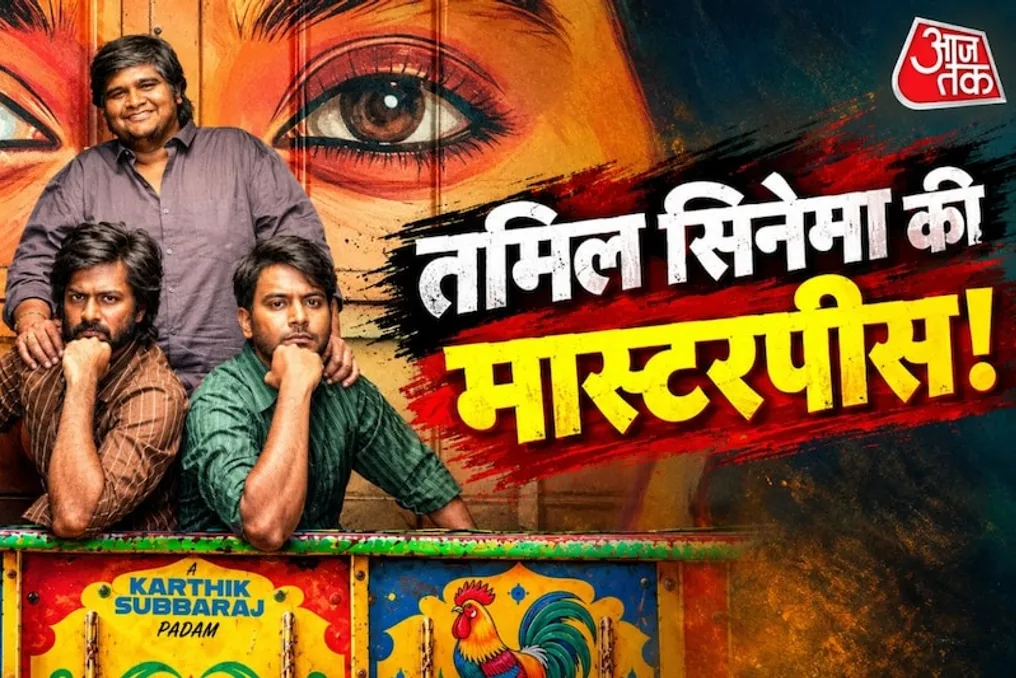
Previously, masculinity was associated with strength and dominance. But what happens if a girl appears in this world built on concepts of masculinity, capable of shaking these ideas? This is the story presented by Thai film director Karthik Subbaraj in his film 'Dorothy,' which recently premiered on Netflix. Before its theatrical release, the film caused a significant stir in Tamil cinema, and after moving to OTT platforms, it is being discussed even more actively, being called one of the best Tamil films of the year.

The plot tells the story of two close friends, Karthik (Rishikant) and Subbu (Sannanth), who have been friends since childhood. In youth, Karthik is portrayed as a weak and frightened child, while Subbu is the bravest. Subbu lost his mother and sister early; his father, Visil (Muthukumar), is a man who is not afraid to display his masculinity, and his older brothers share this view.

Over time, Karthik and Subbu undergo significant changes. Karthik transforms from a timid child into a brave and fearless man, while Subbu becomes weaker and more sensitive, losing his initial courage.

Dorothy (Kirthi Suresh) enters the lives of Subbu and Karthik, bringing joy to Subbu. However, Dorothy dies one day due to men in her house. This tragedy has an extremely negative impact on Subbu, as if someone has ripped out his soul. After losing his mother and sister in childhood, he can no longer cope with the shock of Dorothy's death. As a result, he commits an act that deeply damages his family's reputation, and his entire life turns upside down. The step he takes is revealed to the viewer upon watching the film.

In the trailer, director Karthik Subbaraj did not reveal many details, but a suggestion arises about serious changes in the lives of Karthik and Subbu. However, the changes shown in the film deeply affect the viewer's consciousness. Through Subbu's fate in 'Dorothy,' the viewer can understand the importance of self-identity and acceptance in society. The film shows how a person is forced to hide their true self and wear a mask under societal pressure.

The theme addressed by director Karthik Subbaraj is related to transgenderism. He aimed to show the characters' struggle with complete truth and fearlessness. This film is not for everyone; it is made for a mature audience ready to openly look at such topics. The director deserves credit for daring to present this story on the big screen. The emotions touched upon in 'Dorothy' cause the viewer discomfort and make them think about the value of women in this world.

Although the film is not without flaws, it dedicates a lot of time to plot development. It would have been beneficial to show a bit more of Dorothy's story to strengthen the emotional connection with her character, but the director quickly shifted attention to Subbu and Karthik. Even in the character of Karthik's mother, whom Subbu considers his mother, there is a lack of emotion. The only strong bond between the characters in the film is observed between Karthik and Subbu. The musical score in the film is also good; it creates the necessary emotional moments.

Regarding the main actors, Rishikant's performance as Karthik was very good; the viewer feels an emotional connection with him. His character has his own journey, as does all of Karthik Subbaraj's films. Rishikant fully embodied his character and succeeded in doing so. However, Sannanth attracts the most attention. The transformation he demonstrated in the role of Subbu is praiseworthy. Sannanth breathed life into every scene; the film 'Dorothy' largely depended on him. His performance became the real highlight of the film, and he handled the role perfectly. Through Subbu, Sannanth conveys all the necessary emotions. Furthermore, Kirthi Suresh, although appearing briefly, impresses in the role of Dorothy. Her innocence and smile touch the viewer's heart.

Fast and Furious' 25th Anniversary: Details and Facts Behind the Movie Scenes
Read more
autopapo.com.br

Fast and Furious' 25th Anniversary: Details and Facts Behind the Movie Scenes

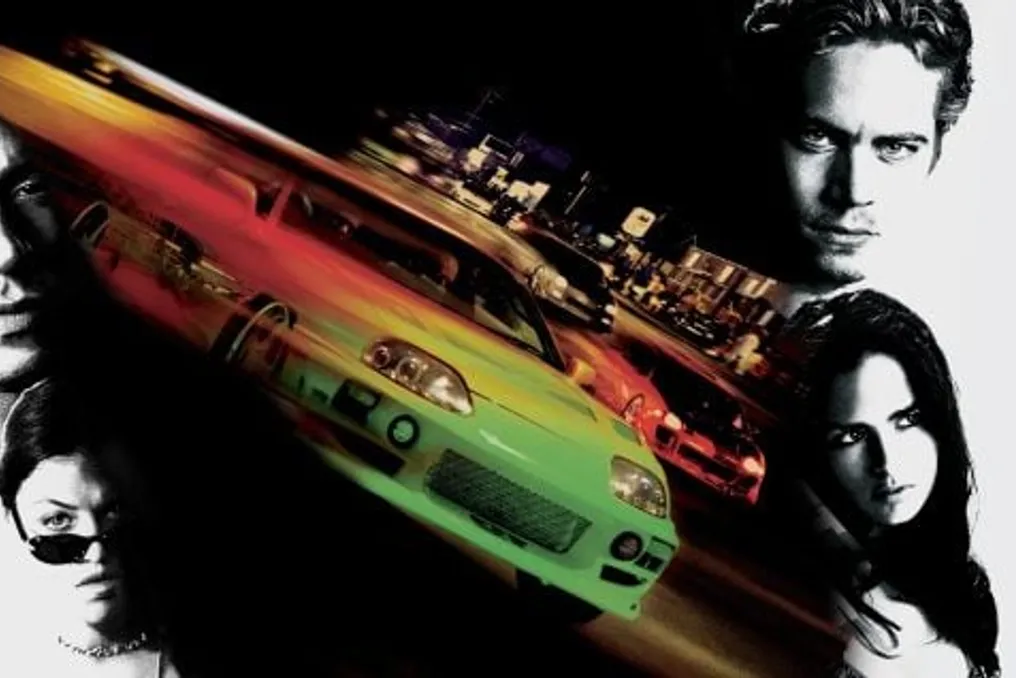
The Fast and Furious movie celebrated 25 years since its release and will be shown again in Brazilian cinemas starting November 12th. Initially conceived as just another action film, it became a cultural phenomenon thanks to the customized cars featured in the scenes.

Although tuning culture existed since the 90s, Fast and Furious significantly contributed to popularizing this type of modification. This cultural impact led many young people to shift their focus from Italian supercars to appreciating Japanese sports vehicles.

Currently, many tuning enthusiasts tend to ignore this phase, considering the colorful and accessory-laden cars as outdated. However, the influence of Fast and Furious during that time was undeniable. Five curiosities about the first film deserve highlighting.

Technical details of the iconic cars

The notorious green Mitsubishi Eclipse driven by character Brian O’Conner attracted great attention due to its paint job and the film's dialogue, suggesting it was a prestigious vehicle. However, the car depicted does not match the description; the version used in Fast and Furious was the entry-level model, the RS.

This specific model did not have a Japanese turbo engine; instead, it was equipped with a 2.0 naturally aspirated Chrysler engine, identical to the one used in the Neon, generating 142 hp. The visible modifications on the hood were mainly aesthetic, including colored hoses and spark plug wires, as well as a chrome valve cover and other ornaments. The nitro system was merely cosmetic.

Even if functional, the Eclipse would not have stood a chance against the Mazda RX-7 driven by Dominic Toretto. Although nitro increases power, it does not extend the vehicle's gears, maintaining the same top speed.

Another car that had no potential to win a race was Jesse's Volkswagen Jetta. The vehicle used in the film had a 2.0 naturally aspirated engine with 116 hp and an automatic transmission.

In the late 90s, tuning was characterized by vibrant paints, neon lighting, modified bodies, and stickers of parts brands. The vinyls with exaggerated designs from Fast and Furious were developed by the film's production team.

Artworks such as the futuristic knight on the Toyota Supra, the mechanical shark on the Nissan Maxima, and the rocket on the Mazda RX-7 were created by artists at Universal Studio, with no connection to the automotive industry. Craig Lieberman, who served as a consultant in the early films, reported that these stickers were the subject of jokes among the car suppliers.

The cars featured in the racing scenes faithfully represent the modifications of that era, but after Fast and Furious, these stickers with exaggerated art became a trend.

The case of the Nissan Skyline GT-R R33

The Nissan Skyline GT-R R33, considered the most impressive Japanese car in the franchise, belonged to Leon. It appeared in certain scenes but never participated in competitions; currently, this model is no longer available.

The Nissan Skyline GT-R was sold exclusively in Japan and could not have been in the United States in 2001, given that local legislation imposes import restrictions on vehicles less than 25 years old. The company MotoRex imported the car for research and development purposes.

MotoRex carried out the necessary procedures to legalize the Skyline GT-R in the US, which included impact and emissions testing. During the film's production, there was only one unit of this car, which is why it only served as a background extra. Although MotoRex managed to legalize some units of the Skyline GT-R, the yellow example from Fast and Furious was not part of that batch. In 2012, it was seized by the state of Wisconsin and destroyed because it lacked a valid chassis number in the US.

Science behind Nitro

Nitrous oxide (N2O), known as nitro, is a gas that can be injected into the engine to increase its power. This process increases the mass of oxygen injected, reducing heat in the combustion chamber and allowing for the burning of a greater proportion of the air-fuel mixture.

In the context of Fast and Furious, the Mitsubishi Eclipse is hit and explodes in green flames due to the use of nitro. Outside the fictional universe of the series, such an event would be impossible, as nitrous oxide is non-flammable.

Cast and Production

Actor Paul Walker participated in less successful films before Fast and Furious. He had previously collaborated with director Rob Cohen and accepted the role of Brian O’Conner when invited, although he almost lost that opportunity.

The studio even invited rapper Eminem to play the protagonist, but he declined the offer to focus on his own film, 8 Mile. Furthermore, actors Mark Wahlberg and Christian Bale were considered for the role, and Timothy Olyphant was considered for Dominic Toretto, refusing because he considered the film stupid.

Popular