Number of ultra-rich in China reaches record driven by tech entrepreneurs
Read more
Grupo Globo
g1.globo.com

Number of ultra-rich in China reaches record driven by tech entrepreneurs

According to the Hurun China Rich List, released this Tuesday (28th), China has reached a new level, registering 1,529 individuals with net worth exceeding 5 billion yuan, which is equivalent to US$ 750 million or R$ 4 billion.

This number surpasses the previous record of 1,460 people, established in 2021. Among the 263 new members added to the list, the majority come from the artificial intelligence, robotics, and semiconductor segments.

Wenfeng's fortune increased after the launch of the R1 artificial intelligence model last year. Rupert Hoogewerf, lead researcher at the Hurun Research Institute and responsible for compiling the ranking, observed that the 2026 list mirrors a 'two-speed economy' in China: while technology-related goods are growing strongly, those in more traditional sectors are declining.

Among the top one hundred, 60% accumulated their wealth in areas considered strategic by the country. These regions are part of a plan initiated by China in 2015, aiming to achieve technological leadership in ten years.

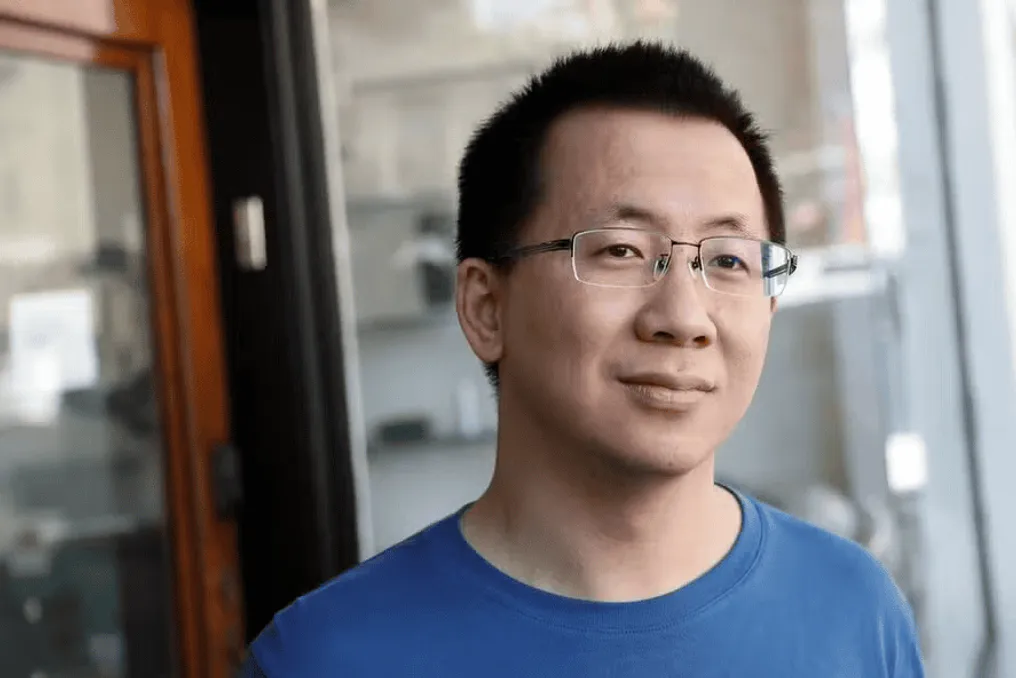
Zhang Yiming, founder of ByteDance, regained the top position in the ranking after holding it in 2024. His wealth is estimated at US$ 99.7 billion, the highest amount ever recorded on the list, corresponding to about R$ 533 billion. He surpassed Zhong Shanshan, known as the 'King of Bottled Water' and founder of Nongfu Spring.

ByteDance, owner of TikTok and Douyin, faces increasing regulatory pressures in various nations. Nevertheless, its AI chatbot, Doubao, boasts nearly 420 million monthly active users, a significantly higher number than its Chinese competitors.

Other names among the top ten include Robin Zeng, founder of CATL; Pony Ma, of Tencent; William Ding, of NetEase; and Chen Tianshi, of Cambricon.

Additionally, DeepSeek is reportedly close to closing a new investment round of 100 billion yuan, the largest amount ever seen in the Chinese artificial intelligence industry. This transaction would raise the company's market value to nearly 500 billion yuan.

In the ranking of the richest women in China, compiled by Hurun, Zhou Qunfang, founder of Lens Technology, a manufacturer of touch-sensitive screens, holds the first place. Her fortune is estimated at US$ 18.9 billion, which represents approximately R$ 101 billion.

Similar stories

Mukesh Ambani tops list of biggest billionaire wealth gains according to Forbes
Read more
business-standard.com

Mukesh Ambani tops list of biggest billionaire wealth gains according to Forbes

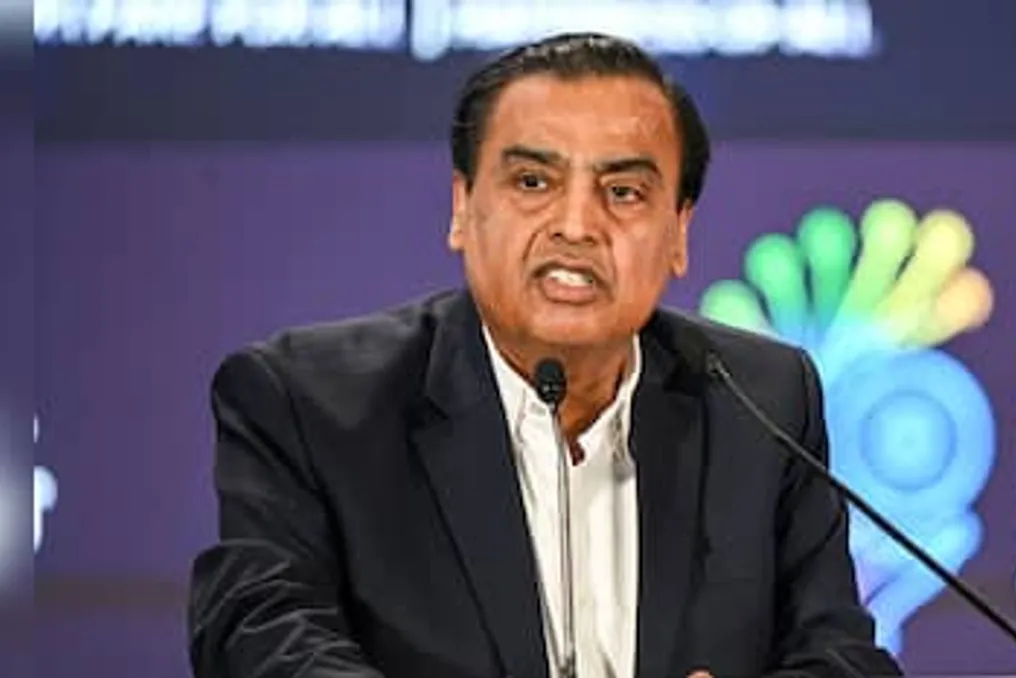
According to Forbes' Real-Time Billionaires list, Mukesh Ambani's net worth increased by 7.85 percent, amounting to $6.3 billion, making him the largest global wealth gainer in the latest rating update from November 2.

The Chairman of Reliance Industries, Mukesh Ambani, became the largest global wealth gainer among billionaires, adding over $6 billion to his fortune in just one day. This occurred after the flagship company's shares demonstrated stronger-than-expected quarterly financial results.

This growth significantly surpassed the second-largest wealth gain on the list, which was recorded by Spanish retail billionaire Amancio Ortega, who added $1.7 billion, as well as Chinese businessman John Shanshan, who added $1.5 billion.

Thanks to these increases, Ambani rose to 23rd place in the global billionaire ranking, becoming the richest Indian before Gautam Adani, who held 26th place with a net worth of $79.12 billion, according to Forbes' publication. Ambani himself had a net worth of $88.8 billion, according to Forbes.

The sharp increase in Ambani's wealth coincided with the rise in Reliance Industries' shares, which grew by 11.6 percent on Monday. This marked the company's strongest trading session in over six years. The shares closed at a daily high and were the biggest gainers in the Nifty 50 benchmark index.

This growth followed September results, which showed a 40.6 percent year-on-year increase in consolidated net profit to ₹25,548 crore, significantly exceeding analyst forecasts. The profit growth was driven by improved refining and petrochemical margins, as well as increased profitability in the Jio telecommunications business.

These results strengthened investor confidence in Reliance's two main revenue streams—the petrochemical business and digital services—despite ongoing pressure on the profitability of the retail segment.

The profit of the company's core refining division grew by 68 percent, while the core revenue of Jio Platforms increased by 16.6 percent during the quarter. Forbes notes that 'Mukesh Ambani leads and manages Reliance Industries, which has revenues of $125 billion and interests in petrochemicals, oil and gas, telecommunications, retail, media, and financial services.'

Reliance was founded by his late father Dhirubhai Ambani, a yarn trader, in 1966 as a small textile manufacturer. After his father's death in 2002, Ambani and his younger brother Anil divided the family empire.

The telecommunications and broadband service Jio Platforms was listed in October 2026, reaching a market capitalization of $137 billion, making it the second most valuable company in the country after the parent company.

In 2023, Ambani's three children joined the Reliance board of directors. His son Akash heads Jio; his daughter Isha oversees retail and financial services; and his youngest son Anant works in the energy sector.

In 2026, Ambani announced plans to invest $110 billion in artificial intelligence infrastructure, which will be built across the country over the next seven years, as stated in the publication.

Tech and AI Industry Leaders Expand China's Richest People List for 2026
Read more
iol.co.za

Tech and AI Industry Leaders Expand China's Richest People List for 2026

This year, the number of ultra-wealthy individuals in China reached an all-time high as tech magnates, including the founder of DeepSeek, joined the closely tracked list amid the country's expanding presence in artificial intelligence.

According to the annual Hurun China Rich List published on Tuesday, the number of people whose net worth exceeds 5 billion yuan ($750 million USD) grew to a record 1,529, significantly surpassing the previous high of 1,460 recorded in 2021.

Lian Wenfeng, founder of the AI startup DeepSeek, debuted at seventh place with an estimated net worth of $41.7 billion—one of 263 newcomers, most of whom come from sectors such as semiconductors, AI, and robotics.

His wealth increased thanks to DeepSeek's R1 reasoning model, which caused a stir in the industry last year and triggered a sell-off in American tech stocks.

This year's list reflected China's concept of a 'dual-speed economy,' where technological fortunes grew against a backdrop of declining traditional wealth, noted Rupert Huggeverf, a senior researcher at the Hurun Research Institute that publishes the list.

Of the top 100 individuals, 60 percent amassed their fortunes in sectors designated by China under a plan launched in 2015 to achieve technological leadership within ten years.

Huggeverf stated in a press release: 'It was a year when 'Made in China 2025' became a reality.'

Zhang Yiming, founder of ByteDance and China's richest person in 2024, reclaimed the top spot with an estimated net worth of $99.7 billion—a record for this list. He overtook John Shanshan, founder of Nongfu Spring, known as the 'King of Bottled Water.'

ByteDance, which includes TikTok and Douyin, has faced increasing regulatory pressure globally; however, its AI chatbot Doubao boasts nearly 420 million monthly active users, significantly outpacing local competitors.

Robin Zeng from CATL, Pony Ma from Tencent, William Ding from NetEase, and Chen Tianshi from Cambricon also made the top 10.

It is reported that DeepSeek is close to completing a new funding round of 100 billion yuan—a record for the Chinese AI industry—which could value the company at approximately 500 billion yuan.

Hurun's list of China's richest women, published on Wednesday, showed that Zhou Cunfan, founder of sensor screen manufacturer Lens Technology, maintained her first-place position with a net worth of $18.9 billion.

TikTok founder, Zhang Yiming, ranks among China's wealthiest with a $100 billion fortune
Read more
olhardigital.com.br

TikTok founder, Zhang Yiming, ranks among China's wealthiest with a $100 billion fortune

The advancement of artificial intelligence (AI) is reshaping the Chinese economy, increasing the wealth of prominent figures in the technology sector. Zhang Yiming, creator of ByteDance, the company that owns TikTok, has returned to the top of the richest individuals ranking in China, with a fortune valued at $100 billion, which corresponds to approximately R$ 540 billion.

This amount demonstrates a 43% increase compared to the previous year and sets a new record for the country's wealthiest person. The data was presented in the 2026 edition of the annual Hurun Research Institute list, released this Tuesday, the 27th.

According to Rupert Hoogewerf, president of the institute, most of Zhang's fortune growth is directly linked to AI. ByteDance, which also manages the Chinese platform Douyin, has expanded its operations in this segment, highlighting the AI assistant Doubao, ranked by Hurun as the most used in China.

This scenario illustrates how the competition for AI is generating fortunes beyond corporations focused on chips and language models. Companies that already possess large user bases can capitalize on their infrastructure to launch new tools and gain market share.

Despite Zhang Yiming regaining the lead, other notable entrepreneurs are among the top positions. Zhong Shanshan, a bottled water magnate, holds the second position, with an estimated fortune of $61 billion (about R$ 329 billion), representing a 23% decrease in one year.

In third place is Robin Zeng, president of CATL, a manufacturer of electric vehicle batteries, whose fortune was valued at $57.3 billion (approximately R$ 309 billion). Pony Ma, co-founder of Tencent, dropped to fourth place with $51.5 billion (about R$ 278 billion).

Another point of attention was Lei Jun, president of Xiaomi, whose fortune halved, reaching $25.1 billion (about R$ 135 billion), according to the survey.

The variations in the rankings reflect the heterogeneous performance of the industries and sectors where these entrepreneurs operate. While businesses related to AI, chips, and robotics gained strength, consumer sectors and the real estate market registered value losses.

The list also points to the difficulties faced by the Chinese real estate market, which is under pressure due to a persistent crisis for several years, affecting domestic demand. According to Hoogewerf, for the first time since the beginning of the survey, no mainland Chinese property developer is among the top hundred. Names from the real estate sector maintaining positions at the top of the ranking belong to families owning properties in Hong Kong.

Consumption also showed weakness, as consumers are reducing their spending, which makes life difficult for small entrepreneurs, in contrast to companies benefiting from Chinese support for technologies such as AI and electric vehicles.

Despite this uneven landscape, the Chinese economy recorded a 4.5% growth in the third quarter of 2026, compared to the same period last year, driven by exports. The official growth target for the year remains between 4.5% and 5%.

The 2026 edition of the Hurun list identified 1,529 individuals with net worth exceeding 5 billion yuan, equivalent to about $740 million (approximately R$ 4 billion). This number represents a 6.6% increase compared to the previous year and surpasses the previous record set in 2021. The total number of billionaires in dollars reached 1,176, an increase of 155 people in one year, surpassing the quantity recorded in the United States, according to the institute.

The survey considers fortunes estimated up to September 1, 2026, with adjustments made for any significant changes that occurred until the publication date. This study has been conducted annually since 1999 and is in its 28th edition.

Popular