Bricklayer who started working at age 11 becomes writer inspired by his mother's stories
Read more
Grupo Globo
g1.globo.com

Bricklayer who started working at age 11 becomes writer inspired by his mother's stories

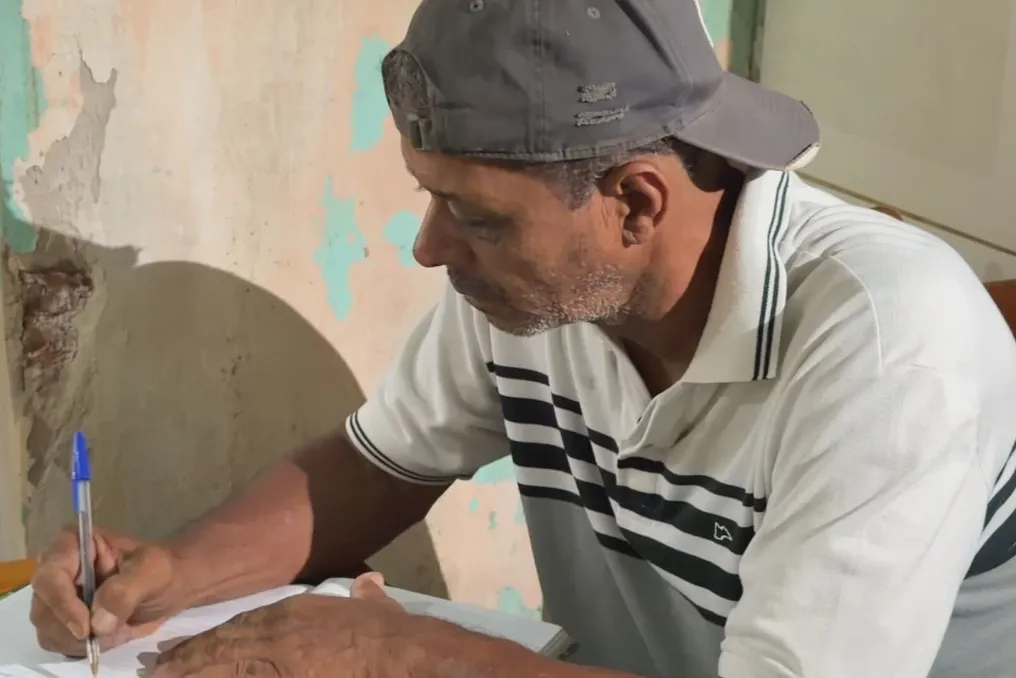
In his daily life, Gildo Francisco de Sá works as a bricklayer, using bricks, mortar, and concrete in Cedral, São Paulo. However, after finishing his work activities, he changes focus, moving from the construction site to his home kitchen, where he transforms memories, popular tales, and imaginary characters into written narratives.

Gildo discovered in literature a way to document the stories he heard since childhood. At eleven years old, he started as an assistant to an uncle who was a migrant from the North of the country. In an interview with TV TEM, he stated that he has already published three children's books and is awaiting the release of his fourth title.

At home, Gildo's mother used stories and her creativity to cope with resource scarcity and protect her children from cold and hunger. She used to make blankets from fabric scraps and prepare meals with available ingredients. Gildo recounted: 'To eat, she often made a soup by combining whatever she had, which we called 'rubble soup,' or invented creative recipes like 'quebra-bucha' cake. To overcome difficult reality, she also told stories on days when there was little food.'

Even during periods of financial restriction, the uncle would also gather the family at night to share legends and popular tales. In the absence of electricity, the narratives were told under candlelight, which sometimes had to be extinguished to save energy. The author recalled: 'There was no light, and we would sit there while he told stories at night. He told folklore stories, about headless women, about people who turned into Exu. This filled my mind with imagination.'

Creativity amidst difficulties

These memories remained preserved for several decades. The need to work to provide for the family led him to keep all the ideas in his memory for approximately thirty years. The decision to transfer these plots to paper was made three years ago.

The writer explained: 'I spent my whole life gathering everything in my head, learning. Now, I am just putting it on paper. I was afraid of reaching a certain age and losing all of this, which is why I needed to write.'

Gildo released three works aimed at children, titled 'The Jealous Spider,' 'Owl Mother,' and a third publication. The book 'Owl Mother' even generated a fun dialogue with his granddaughter Cecília, who questioned the title after reading the end of the story with her grandfather.

Literary production and family partnership

Currently, Gildo awaits the publisher's response regarding the release of his fourth book, which will be the first aimed at adults and belong to the suspense genre, marking a novelty in his career, which until then was restricted to children's books.

Furthermore, he has other ongoing projects, with titles planned such as Leléu, Galo Cacetete, O Boi do Padre, and Dona Mariquinha, which are still awaiting registration. In his literary journey, he has the support of his wife, Rosângela Santos de Sá, whom he has been married to for over thirty years. She reviews the notebooks written by Gildo before the manuscripts are sent to the publisher.

Rosângela commented on his talent: 'He has talent. It is a gift that no one can deny. It is very difficult, but the taste of victory will be even sweeter.'

Far from seeking fame or wealth, Gildo defines success as fostering the habit of reading and imagination among young people. He concluded: 'I work to bring my stories to these children and to my granddaughters. I want to take books to schools. I don't see it as a competition. For me, the dream is to share knowledge and imagination with them.'
Similar stories

Exhibition on the Work of Eugenio Fuselli: Architecture of Care and Shelter
Read more
archdaily.com.br

Exhibition on the Work of Eugenio Fuselli: Architecture of Care and Shelter

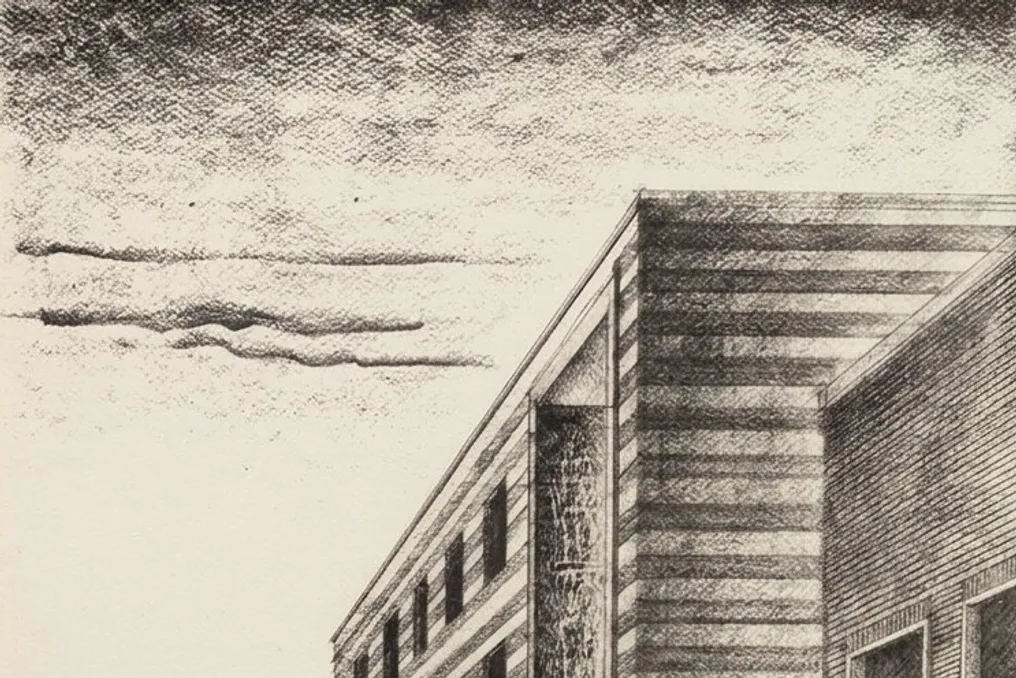
Fondazione A.N.M.I.G., together with Associazione Culturale Giano and with the support of Regione Liguria and the Order of Architects - Genoa, presents an exhibition titled «Eugenio Fuselli. What Is a House? Architecture of Care and Shelter». This exhibition offers a journey through drawings, documents, sculptures, paintings, and photographs, aiming to study the features of one of the masterpieces of rationalist architecture in Liguria—the Mutilato house in Genoa.

The building itself was erected between 1937 and 1938. It was originally conceived as a place for assistance and rehabilitation for veterans of the First World War who were disabled. Notably, this structure was built against the backdrop of a new conflict that would soon devastate Europe following the invasion of Poland by Nazi Germany.

The building's design provided for the creation of a welcoming environment. Consequently, it included facilities for practical medical care for victims of armed conflicts, as well as areas designed to provide protection in case of future military attacks.

Paulo Freire's experience in Angicos recognized as intangible cultural heritage of Rio Grande do Norte
Read more
g1.globo.com

Paulo Freire's experience in Angicos recognized as intangible cultural heritage of Rio Grande do Norte

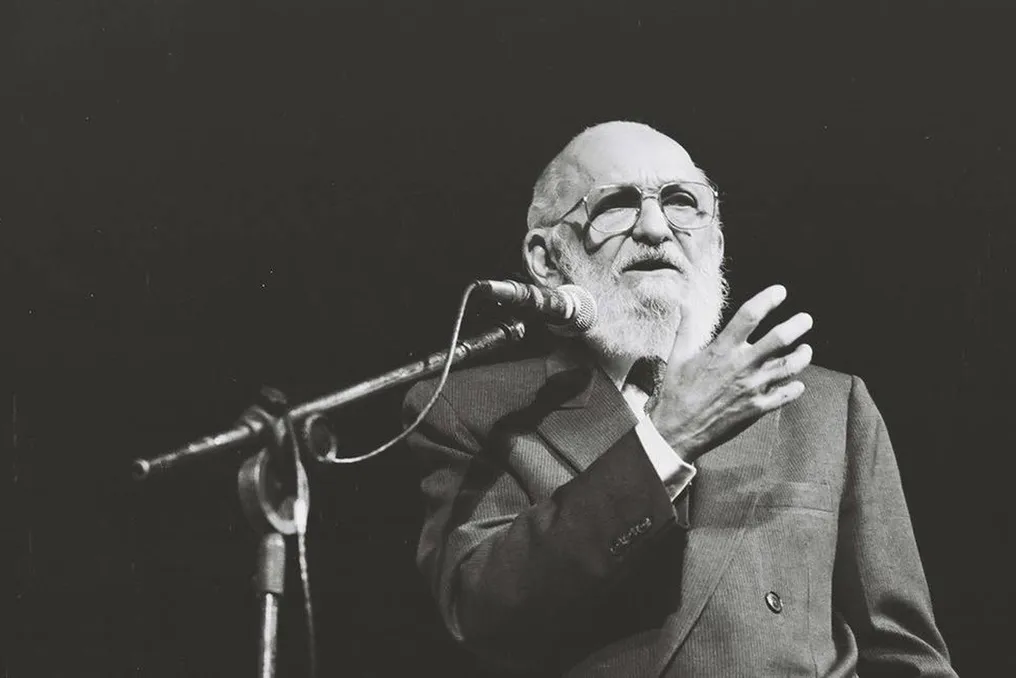
The initiative known as "40 Hours of Angicos," coordinated by educator Paulo Freire in 1963 in the city of Angicos, has been officially recognized as Intangible Cultural Heritage of Rio Grande do Norte. This decision was formalized in this Tuesday's (27th) Official Gazette.

This literacy project was implemented in the municipality of Angicos, located in the interior of the state. The recognition covers all aspects related to the experience, including oral accounts, knowledge, pedagogical practices, and the memories of the communities and individuals who participated.

As established by legislation, the purpose of this recognition is twofold: to preserve the collective memory of those involved and to stimulate research, in addition to promoting the dissemination of historical and cultural references linked to the project. Furthermore, it aims to transmit this legacy to future generations and highlight the relevance of Angicos to the trajectory of Brazilian education.

The official text clarifies that such recognition does not annul the administrative procedures for inventory and registration provided for in cultural heritage protection standards. Nor does it impose on the state education network the adoption of a specific pedagogical method or promote changes in school curricula.

The 40 Hours of Angicos

In 1963, Freire introduced an innovative model of popular education in the city of Angicos, located in the West of Rio Grande do Norte, which at the time had approximately 9.5 thousand inhabitants. The educator set an ambitious goal: to teach adults to read and write in just 40 hours. The first class had 380 registered participants, about 300 of whom completed the course, which took place between January 28 and April 2.

The Paulo Freire method focuses on adult literacy through the discussion of their mutual experiences, using words extracted from the reality of the students themselves, which are later decoded to aid in acquiring writing and understanding the world.

Freire structured his literacy method based on people's life experiences. Instead of using standardized teaching materials, such as teaching phrases like "the bull baba" or "grandma saw the grape," he worked with so-called "generating words" that came from the reality of the common citizen.

A practical example shows that a factory worker could learn terms like "brick" or "cement," while a farmer would learn vocabulary such as "sugarcane," "hoe," "earth," and "harvest." The formation of new vocabulary occurred through the phonetic decoding of these words.

The coordination of Paulo Freire's arrival in Rio Grande do Norte began in 1962, under the management of the then governor Aluízio Alves, a native of Angicos, and was facilitated by the Secretary of Education Calazans Fernandes. The intention was to extend the Paulo Freire program throughout the state to reduce illiteracy rates; however, the educator was exiled in 1964 after the military coup, accused of subversion.

Casa Bahia Project by Architect Patricia Martinez Arquitetura
Read more
archdaily.com.br

Casa Bahia Project by Architect Patricia Martinez Arquitetura

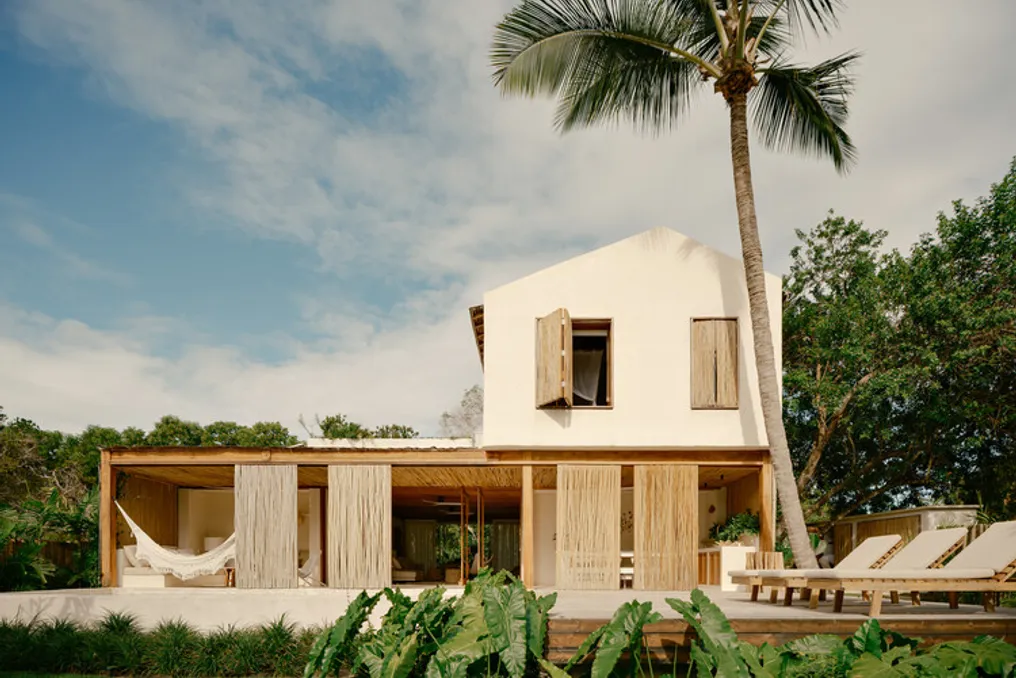
The Casa Bahia project, developed by architect Patricia Martinez under the responsibility of the Patricia Martinez Arquitetura office, was conceived as an exercise in synthesis. It is a private summer residence for the architect, expressing a search for essentials.

In this project, there is a balance between form, materiality, and sensibility, reflecting Patricia Martinez's own architectural vision.

Project Gallery

Information about the project was provided by the project team.

Popular