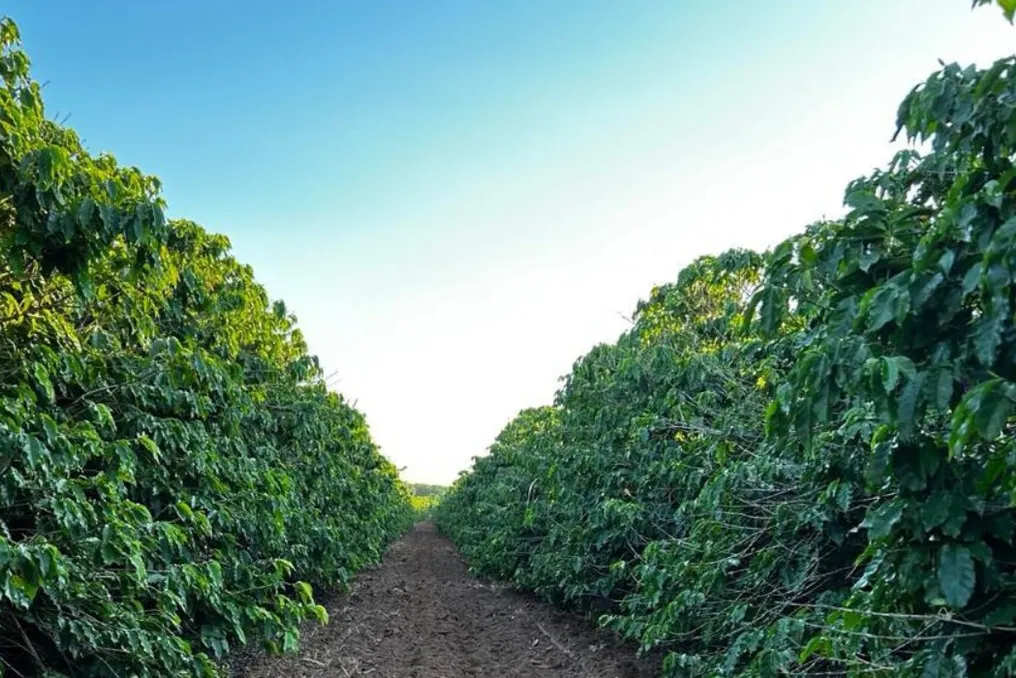
For producers in Nova Alta Paulista, obtaining coffee with a pronounced aroma, natural sweetness, and well-balanced flavor depends on a series of rigorous practices that begin before harvesting and continue until the beans are prepared for roasting.
In this area, coffee growers have directed their investments towards plantation management and careful selection of production, aiming to create specialty coffees, including micro-lots and nano-lots.
The distinction between coffees does not lie only in the volume produced; it is determined by the choice of beans, the stage of maturation, post-harvest procedures, and the correct identification of the beverage's sensory characteristics.
Producer Experiences in Osvaldo Cruz
In Osvaldo Cruz, Lucas Antônio Neves Benites, who has been involved with coffee for three years, developed his production on an already established family property. Since then, he has intensified the use of management techniques to elevate the quality of the beans.
Lucas explained that producing high-quality coffee requires continuous management from the start, using analyses to understand the plant's needs and apply precise fertilization, meeting all the crop's requirements.
The producer emphasized the relevance of soil and leaf analyses to diagnose plant demands, along with monitoring pests and diseases. According to him, appropriate nutrition is crucial to guide crop development and prevent damage that could affect the final result.
However, the care does not end in the field. The drying and storage phases directly impact the beverage's quality. Lucas warned that inadequate drying is a major factor, as leaving coffee in very thick layers on the drying floor can promote unwanted fermentation.
He also cautioned against using excessively high temperatures in dryers and storing in hot and humid environments, conditions that tend to reduce aroma and alter the coffee's flavor.
Tradition and Selection in Parapuã
In Parapuã, Santo Altrão has a connection to coffee farming that spans several generations. At 60 years old, he reported learning about the culture from his father, growing up among the coffee plantations. After a period of financial difficulties that kept him away from the activity, he returned to cultivation with his children, who also take care of planting and bean processing.
The family works with Arabica coffee, covering all stages, from harvesting and processing to preparation and roasting. His vast experience has allowed Santo to compare local production with coffees from other regions of Brazil, identifying unique traits in the Nova Alta Paulista beverage, notably in the balance between acidity, body, and sweetness.
To achieve this profile, it is essential to select the beans at the exact moment. Santo made an analogy between coffee maturation and fruit maturation: a prematurely harvested bean differs from one that has reached the ideal point. He compared it by saying that, just like in a ripe mango, selective harvesting of cherry beans ensures a smoother beverage, with higher sugar concentration and more apparent flavor.
The producer detailed that care must begin with soil preparation and continue during growth, maturation, and harvest. After being removed from the plant, the beans require proper drying. Santo stressed that freshly harvested coffee should not remain piled up and moist for too long, as this can cause unwanted fermentations. On the drying floor, the beans must be turned several times a day to ensure adequate drying.
He emphasized that both pre-harvesting and harvesting are decisive for good quality coffee. The coffee cycle, including flowering and development after planting, occurs at the end of September or October, depending on the rainy season. The actual harvest takes place in April and May, when maturation begins. Therefore, it is vital to closely monitor the crop during this period due to the necessary care against common pests in the hot region, such as the coffee berry borer, which can cause defoliation.
This phase is particularly important because failures in post-harvest can compromise the qualities the producer sought to maintain, even after all the work done in the field.
Micro-lots and Nano-lots
Specialty coffee production can also be segmented into smaller lots, intended to highlight specific characteristics. In this context arise micro-lots and nano-lots, categories recognized in the Nova Alta Paulista quality competition.
According to Sebrae-SP, a micro-lot represents a specific section of the farm, distinguished by its cultivation conditions, variety, or maturation method. The nano-lot is an even more restricted cut, possibly involving a few rows of coffee trees or a singular post-harvest process.
Quantities and participation criteria vary according to the rules of each competition. Lucas informed that, in the regional competition, samples of these two categories have different volumes. He specified that the micro-lot corresponds to a sample of 180 kg, while the nano-lot, which he won, consists of a 90 kg sample, with the primary difference being the sample quantity.
In the case of the micro-lot, the focus is on the importance of caring for every stage of production to preserve the coffee's qualities. The selection and care of the beans allow producers to identify specific attributes of the beverage and seek a higher level of quality. In both cases, dividing the production allows for the evaluation of distinct samples, following the parameters defined in each competition.
Quality Criteria
Coffee quality is not defined solely by the visual appearance of the beans. During sensory evaluations, specialized tasters examine aspects such as fragrance, aroma, flavor, sweetness, acidity, body, finish, and balance. The presence of defects can also influence the score.
Santo pointed out that, in the regional beverage, harmony among the various attributes is essential, without any one standing out excessively. He observed that although acidity must be present, it needs to be balanced. The coffee is not described as excessively syrupy, nor too weak, presenting a balanced body and a pleasant persistence in the mouth, with the characteristic flavor of coffee. Sweetness, according to him, is essential, as it has a moderate level that allows the coffee to be consumed without added sugar, and presents little bitterness, a trait considered unique to Nova Alta Paulista coffee.
The producer reinforced that sweetness and bitterness are crucial characteristics for defining the beverage profile, and the combination of these elements distinguishes the coffees grown in the region.
Incentive and Recognition
The pursuit of excellence has been driven by initiatives that value coffee farming in Nova Alta Paulista. One example of this is the Nova Alta Paulista Arabica Coffee Quality Competition, whose eighth edition took place in Osvaldo Cruz.
Besides recognizing producers, the event aims to increase the region's visibility and consolidate the association of coffee with its territory. Guilherme Soares mentioned that the initiative also helps promote the Geographical Indication of Nova Alta Paulista Arabica Coffee and encourages participation in other competitions.
In the nano-lot category, Lucas achieved first place with 81.91 points. In the micro-lot category, the winner was Augusto Enrico Gonsales Altrão, representing the Altrão family from Parapuã, with 82.91 points.
For Santo Altrão, this recognition serves to demonstrate the region's potential in producing specialty coffees and add value to the activity. He advocates that coffee growers should focus on more efficient and quality-oriented production, rather than merely prioritizing the quantity harvested. There is an expectation that the valuation of local coffee will motivate other producers to invest in the crop, strengthening the entire production chain, connecting those who plant, process, roast, and consume the beverage.