Dismissal of James Moloi has not removed the threat of a ban from World Athletics for South Africa's participation in the Olympic Games
Read more
IOL
iol.co.za

Dismissal of James Moloi has not removed the threat of a ban from World Athletics for South Africa's participation in the Olympic Games

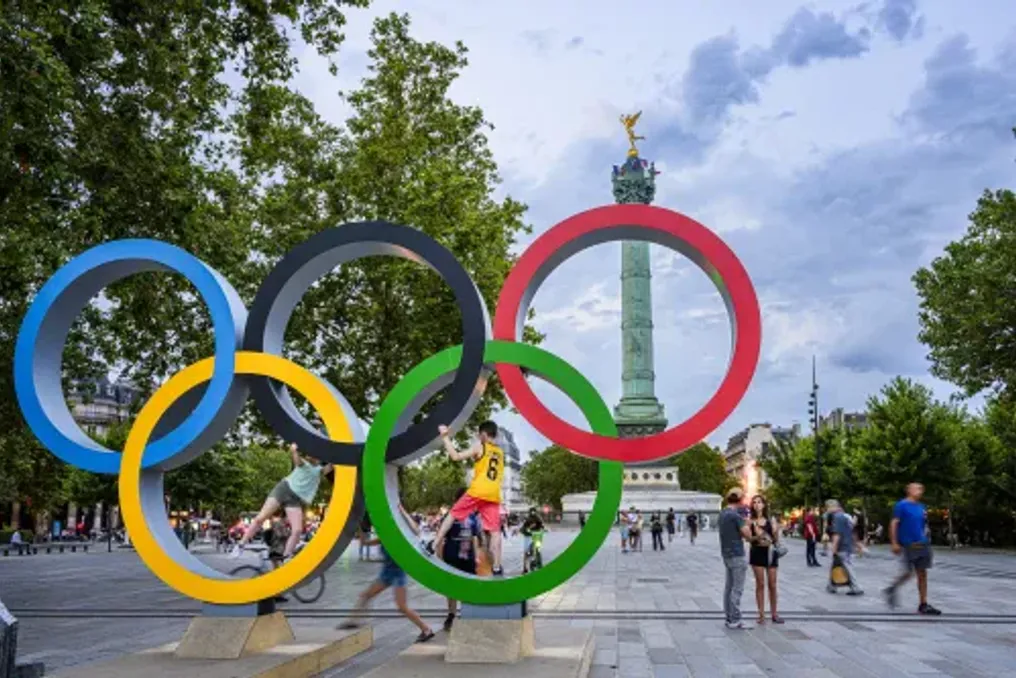
Despite the dismissal of James Moloi, the threat of a ban from World Athletics continues to overshadow South Africa's plans to host the Olympic Games.

The Confederation of Sports Games and the South African Olympic Committee (Sascoc) is preparing to officially announce South Africa's candidate city for hosting the historic Olympic Games in 2036 or 2040 in Johannesburg on Thursday. However, the deepening governance scandal within Athletics South Africa (ASA) jeopardizes the country's international sporting ambitions.

While the national Olympic committee moves forward with a grand Olympic demonstration, athletics—a sport central to any Olympic program—remains entangled in administrative chaos.

Recently, ASA internally decided to suspend President James Moloi following an independent disciplinary investigation led by retired referee Bashir Waglay. The commission found Moloi guilty of serious financial irregularities related to the misuse of the federation's corporate credit card for personal expenses, including vehicle maintenance, clothing, and food costs.

Moloi's immediate and unconditional dismissal was one of the key, non-negotiable demands made by World Athletics, which insisted that the federation react promptly to Waglay's findings.

Nevertheless, his delayed departure did little to ease the tension with the global governing body. World Athletics imposed a strict six-month ultimatum on ASA: implement major governance reforms or face temporary international suspension under Article 13 of the World Athletics constitution.

An international suspension would have catastrophic consequences for South African athletics. Under Article 13 sanctions, South African athletes would be barred from competing in world competitions under the national flag, freezing their participation in Diamond League events, Continental Tour events, and the 2027 World Athletics Championships in Beijing.

Furthermore, this would undermine national preparation and official qualification pathways for the 2028 Los Angeles Olympics, depriving elite athletes of international experience and jeopardizing Olympic solidarity funding.

World Athletics recently rejected the ASA constitution draft, ruling that it lacked critical governance standards such as mandatory term limits, independent non-executive directors, and autonomous athlete representation.

Subsequently, World Athletics and the Confederation of African Athletics (CAA) made the exceptional decision to appoint Zahle Dlamini, President of Athletics Eswatini and Vice-President of CAA, as an independent observer to monitor the document review process.

According to the global body's mandate, the adoption of a new constitution requires the immediate dissolution of the current ASA board to hold new national elections.

Exacerbating the crisis, ASA's interim leadership also found itself at the center of controversy. Current President John Matan faced criticism for alleged procedural interference during Moloi's disciplinary investigation, as well as growing parliamentary scrutiny.

The Parliamentary Portfolio Committee on Sport, Arts and Culture previously reviewed forensic accounting reports recommending the suspension of several executive council members and investigated alleged misappropriation of funds from the National Lottery Commission and missing athlete prize money, with legislators supporting calls for the council's dissolution.

As of this week, regarding the World Athletics deadline status and the constitutional change roadmap, ASA stated that it could not provide further developments or official statements.

This administrative deadlock creates a sharp contrast with Sascoc's grand Olympic plans. While sports officials present South Africa's readiness to host the world's premier multi-sport event, the federation governing its core Olympic discipline faces a ticking clock that could lead to its athletes being internationally isolated.

Similar stories

Rassi analyzes the composition of the South African squad ahead of defending the World Cup title
Read more
iol.co.za

Rassi analyzes the composition of the South African squad ahead of defending the World Cup title

Rassi Erasmus faces the challenge of deciding which players from the Springboks and young forwards of the South African national team should be retired, and whom to support to form a team capable of winning a third consecutive World Cup.

World Cups are often remembered by teams that crossed the line when their emotional coaches could not let go of aging stars. However, Erasmus will not allow such a scenario, as the 'Boks' are preparing to defend their title in Australia next year.

His November squad demonstrates an understanding of this task. The inclusion of several promising young players is aimed not at a complete overhaul of the South African national team, but at ensuring the readiness of the next generation for when the current elite leaves the field.

Young talents such as Yakin Ahmed, Luan Gillime, Marcus Müller, and Riley Norton were included, while Sebastian de Clercq and Emmanuel Tsituka took their places due to good form in the United Rugby Championship.

As the South African national team's opening match against Italy in Adelaide on October 3, 2027, approaches, Erasmus has little time to determine which young players can transition from promising candidates to genuine contenders for the Tests.

The November tour is seen as the ideal opportunity for this determination. At the beginning of the year, Erasmus set two key goals for 2026: achieving victory in the 'Great Rugby Rivalry' and building squad depth during international matches in July and November.

He followed this plan in July, making significant changes to the lineup for matches against Scotland and Wales after fielding his strongest team against England. Now, ahead of another intense series of games, the focus is on finding players who can withstand the pressure of international rugby without lowering the standard of the South African team's victories.

Erasmus acknowledges the value of investing in youth. The South African junior team won the U-20 Rugby World Cup in both 2025 and 2026, providing a promising stream of talent for the senior team.

Fourteen players from these recent junior successes have already gained experience in the United Rugby Championship, and three—Wusi Moyo, Jaco Williams, and Norton—have advanced to play for the senior South African team.

This is an encouraging result, but the real test is how many of them can establish themselves as permanent international players and, ultimately, World Cup contenders.

Rugby in South Africa has previously shown similar progress. The 2002 Junior World Cup champions under Jake White included John Smith, Shalk Burger, Jean de Villiers, Frikkie du Preez, and Ricky Januarie. They became central figures in the triumph of the South African team at the 2007 World Cup, where Smith led the team to glory.

The takeaway is not that every junior champion will become a star in the senior squad, but that a strong development system can lay the foundation for future international success.

School rugby is also becoming increasingly professional, helping young athletes arrive in senior squads better prepared for the demands of elite competition. Erasmus has an additional advantage in close cooperation with South Africa's U-20 coach, Kevin Fourie, which gives him insight into the progress and potential of young players long before they reach the senior squad.

His current task is to turn this potential into reliable squad depth for the Tests. This does not mean throwing a handful of young players into deep water and hoping they learn to swim. Erasmus usually prefers to introduce newcomers gradually, surrounding them with experienced veterans who can help them settle in.

The November opponents must provide a tough test. Italy is capable of causing problems for the South African team, regardless of its world ranking. Old rivals France and Ireland will be very difficult opponents.

Erasmus acknowledged that the National Championship format adds extra motivation, as every earned point could be decisive in the race for the top of the table.

South Africa is currently leading the Southern Hemisphere rankings in points difference, with 15 points, the same as New Zealand. The South African team will play Italy on November 7, France on November 13, and Ireland on November 21, before the Final weekend in London from November 27 to 29.

The immediate goal is to win, but the long-term mission is no less important. Erasmus must determine which veterans are still playing a vital role, which young players are ready right now, and where succession planning remains incomplete.

Delhi Capitals acquired young player Uma Kashvi at WPL auction
Read more
www.aajtak.in

Delhi Capitals acquired young player Uma Kashvi at WPL auction

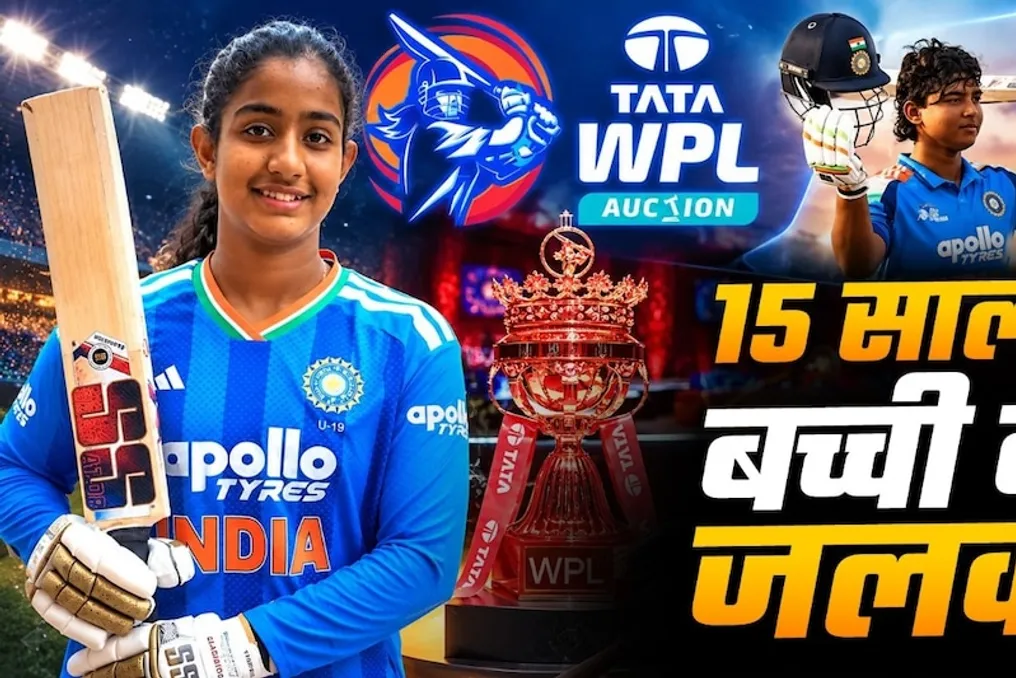
Significant events took place during the WPL 2027 auction, marked by the appearance of a very young athlete. Similar to the whirlwind batter from the Indian team Vaibhav Suryavanshi, the young player is poised to make a splash in Indian women's cricket.

WPL 2027 Auction:

During the Women's Premier League mini-auction, Uma Kashvi made a historic acquisition. Delhi Capitals included this star all-rounder from Karnataka in their squad, purchasing her for the base price of 10 lakh rupees.

It is worth noting that Uma Kashvi is younger than Vaibhav Suryavanshi. Vaibhav was born on March 27, 2011, while Uma was born on April 9, 2011. Thus, she became the youngest participant to go to the WPL 2027 auction.

Who is Uma Kashvi?

Uma Kashvi hails from Karnataka and is an all-rounder who bowls left-arm off-spin. At such a young age, she has attracted attention in Indian cricket due to her excellent technique and versatile play.

Recently, during a series of matches between India U-19 and Sri Lanka U-19, Uma demonstrated her bowling skills. She took 4 wickets in three T20 matches and also helped the team by sending two players to the bench during ODI matches.

For Uma Kashvi, the opportunity to become part of Delhi Capitals, where she will play with major international cricket stars, is like a dream come true, which is expected to further enhance her game.

Which players caught Delhi Capitals' eye at the auction?

At the auction, Delhi Capitals bid on several players: Kiran Navgire (base price 40 lakh, bought for 75 lakh), Uma Kashvi (base price 10 lakh, bought for 10 lakh), Christie Gordon (base price 10 lakh, bought for 10 lakh), and Nazma Khan (base price 10 lakh, bought for 10 lakh).

The list of players retained by the team includes Anabel Sadler, Chinelle Henry, Laura Volhardt, Lucy Hamilton, Marizan Kapp, Diya Yadav, Jemima Rodrigues, Mamta Madivala, Minnu Mani, Ann Shri Charni, Nandni Sharma, Nikki Prasad, and Shafali Verma.

Orlando Pirates and Durban City debutants receive tough groups in CAF competitions
Read more
iol.co.za

Orlando Pirates and Durban City debutants receive tough groups in CAF competitions

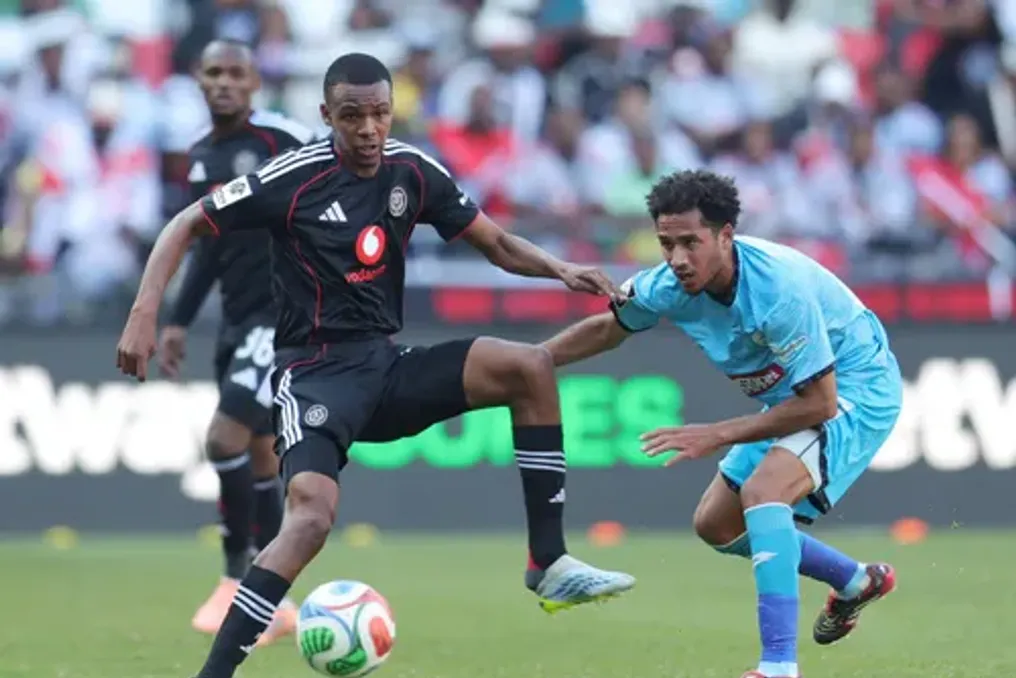
South African representatives, the teams Orlando Pirates and Durban City, have been assigned challenging fixtures in the group stage of CAF tournaments following the draw held in Egypt on Wednesday.

In the CAF Champions League, the Pirates team landed in a difficult group alongside Moroccan giants RS Berkane, Tanzanian Simba SC led by South African coach Steve Barker, and Cameroonian side Colombe Sportive. Although the Buccaneers players are familiar with continental conditions, this draw presents significant risks.

RS Berkane are experienced participants known for achieving results, and a trip to Dar es Salaam to face Simba at the packed Benjamin Mkapa stadium is never easy. The addition of the unpredictable Colombe Sportive means that the Sea Robbers must be ready from day one to qualify for the playoffs.

Pirates will meet the Cameroonians for the first time, but they have a substantial recent history with the other two opponents. In 2022, they met Simba twice: in both instances, each team won at home 1-0, after which Pirates advanced to the final, winning on penalties 4-3. In the same 2022 Confederation Cup season, Bucs reached the final against Berkane but lost on penalties 5-4 after the match ended 1-1.

Meanwhile, Durban City found themselves in a real proving ground in Group C of the CAF Confederation Cup. The coastal team faced Moroccan side AS FAR, Tanzanian Azam FC, and Libyan team Al Ahli Tripoli.

This is a very serious challenge for Durban City, especially considering it is their first appearance on the continental stage. Trips to hostile territories in North and East Africa are easily considered one of the toughest tasks in football, particularly for South African teams, who often face harsh reception both on and off the pitch.

Popular