Smog recorded in Tashkent: PM2.5 levels reached dangerous marks at night
Read more
Podrobno.uz [uz]
podrobno.uz

Smog recorded in Tashkent: PM2.5 levels reached dangerous marks at night

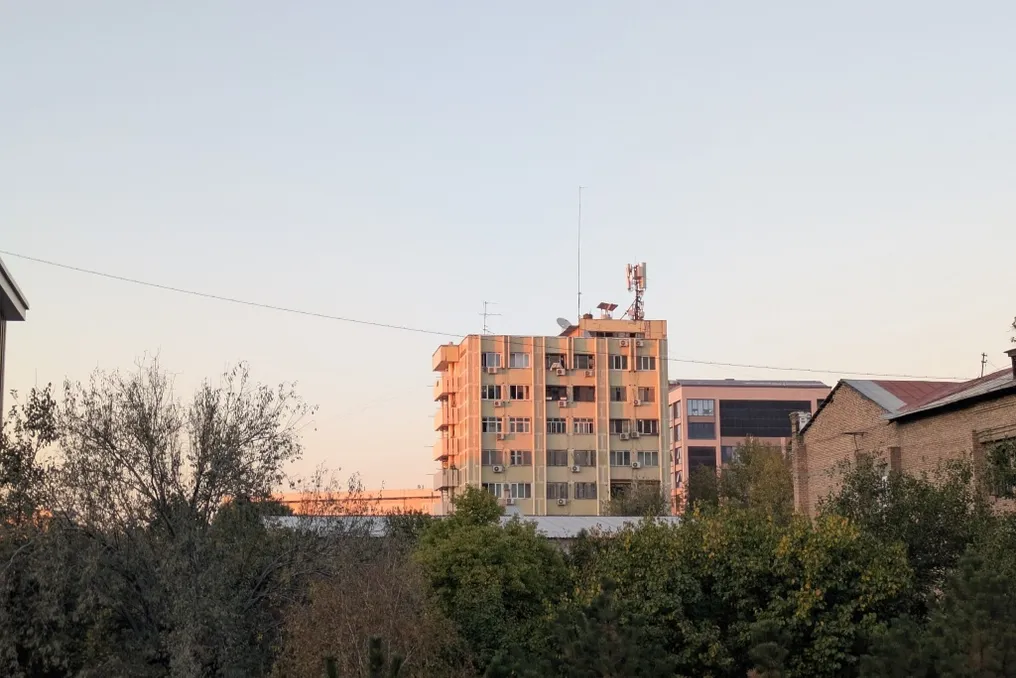
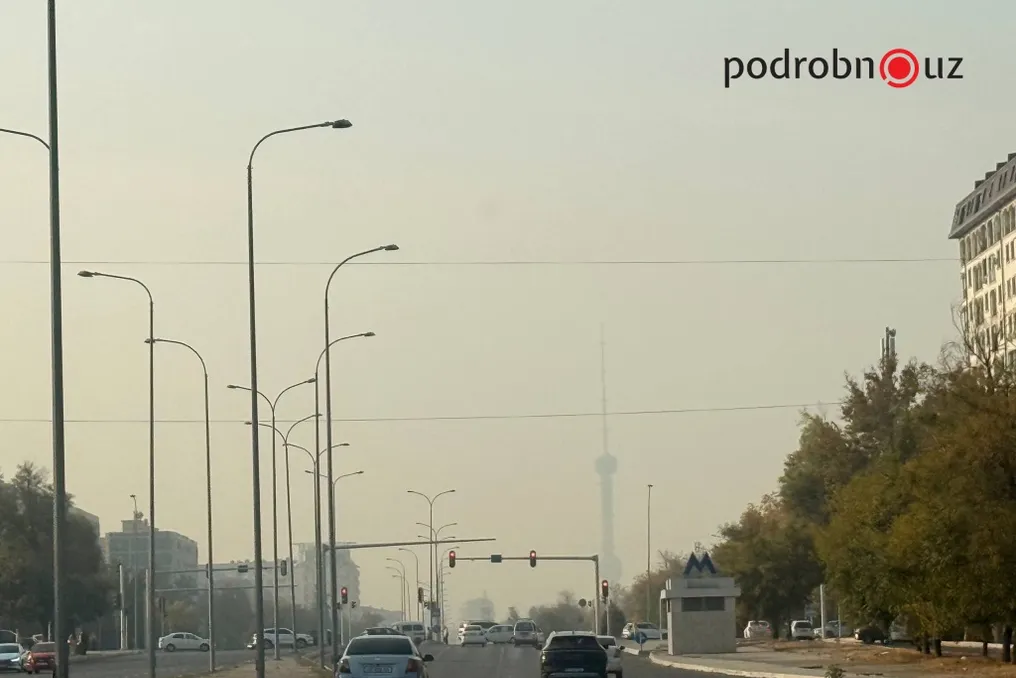
On the night of October 27 to 28, Tashkent faced air pollution. Due to the lack of wind and falling temperatures, harmful substances could not disperse and accumulated near the ground surface. Specialists recorded dangerously high concentrations of fine PM2.5 particles in five districts of the city.

According to environmental monitoring data, the air quality in the capital was at a 'unfavorable' level according to the international AQI index during the night. At some stations, indicators reached the 'very unfavorable' category. According to the national index, the average pollution level of PM2.5 particles was assessed as 'yellow', and for PM10 as 'orange'.

Measurements were conducted in Yunusabad, Almazar, Yangiha'it, Sergeli, and Yashnabad districts, where the 'very unfavorable' category was observed at all points. Specialist forecasts indicate that on the afternoon of October 28, the air quality in the capital will remain 'unfavorable' according to the international AQI index. On the national scale, a 'yellow' level is expected primarily, although it may periodically rise to 'orange', and the situation may also remain dangerous in the evening.

Environmentalists advise the population: children, the elderly, pregnant and breastfeeding women, as well as those suffering from heart and respiratory diseases, are advised to avoid being outdoors in the evening and at night. If going outside is necessary, a protective mask should be used, and time spent outdoors should be minimized. It is recommended to keep windows closed in residential premises to prevent the infiltration of polluted air.

A specialized atmospheric laboratory operates in Tashkent, which studies the composition of the air and determines the main sources of pollution. This work is necessary to understand the factors contributing to the accumulation of harmful impurities and to develop measures to combat them.

Similar stories

Expert assessed the content of PM2.5 particles in Tashkent's air during temperature inversion
Read more
podrobno.uz

Expert assessed the content of PM2.5 particles in Tashkent's air during temperature inversion

During temperature inversion events in the atmosphere of Tashkent, approximately one ton of fine particulate matter PM2.5 may be present, provided that the height of the inversion layer reaches about 200 meters. With weak winds, these particles are less effectively dispersed and tend to accumulate near the ground surface, leading to an increase in pollutant concentration.

Dr. Zikrilla Alimov, Doctor of Technical Sciences, who heads the atmospheric air protection laboratory at the Research Institute of Ecology and Environmental Protection, provided this information. According to his calculations, in September and October, the share of natural dust in air pollution can range from 30 to 70 percent. Combustion products, including emissions from transport, energy facilities, and greenhouses, are estimated at 30–50 percent, while transport and metallurgical dust can account for another 5–10 percent.

Alimov emphasized that the proportions of various pollution sources depend on wind direction and current weather conditions. He also recommended that to reduce PM2.5 levels, it is critically important to identify specific emission sources and implement countermeasures based on scientific data.

It was previously noted that since the beginning of 2026, the concentration of PM2.5 particles in Tashkent has decreased by a quarter compared to the same period last year. The Ecology Committee attributes this improvement to the launch of the 'Clean Air' program.

Deterioration of atmospheric air quality expected in Tashkent on the night of October 24
Read more
podrobno.uz

Deterioration of atmospheric air quality expected in Tashkent on the night of October 24

The National Committee for Ecology and Climate Change warned about a probable temporary decrease in the quality of atmospheric air in Tashkent on the night of October 24.

According to the agency, an increase in the concentration of fine particles PM2.5 and PM10 is forecast during the evening and night. This may lead to the air reaching a 'unfavorable' level according to the international Air Quality Index (AQI). Meanwhile, according to the national air quality index, indicators are likely to remain within the 'yellow' zone.

The main factors contributing to the accumulation of pollutants are cited as the drop in temperature at night, weak wind movement, and strong temperature inversion. In such meteorological conditions, the exchange of air in the lower layers of the atmosphere is restricted, causing a concentration of fine dust particles directly near the Earth's surface.

It is expected that after sunrise and as the temperature inversion weakens, air quality will begin to slowly recover. However, in the morning hours in some parts of the capital, values on the international AQI scale may remain at a level considered 'unfavorable for sensitive groups.' A special commission is continuously monitoring the air quality in the city.

Residents of Tashkent warned about deteriorating air quality on the evening of October 14
Read more
podrobno.uz

Residents of Tashkent warned about deteriorating air quality on the evening of October 14

Residents of Tashkent have received a warning about a potential decrease in atmospheric air quality. On the evening of October 14, it is expected that pollution levels will reach marks that may be unsafe for people prone to health problems.

Uzbekistan, Tashkent – AN Podrobno.uz.

The highest concentration of harmful substances is predicted during the period from 22:00 to 23:00, and this will affect the northern and western areas of the city. The National Committee on Ecology and Climate Change provided this information.

According to the forecast provided, the Air Quality Index (AQI) may rise to a value of 100–150 between 20:00 and 23:00. This indicator is classified as 'unhealthy for sensitive groups of the population.'

Representatives of the committee explained this situation by stating that the cause is a combination of weak wind and temperature inversion, which leads to the accumulation of pollutants directly at ground level.

Popular