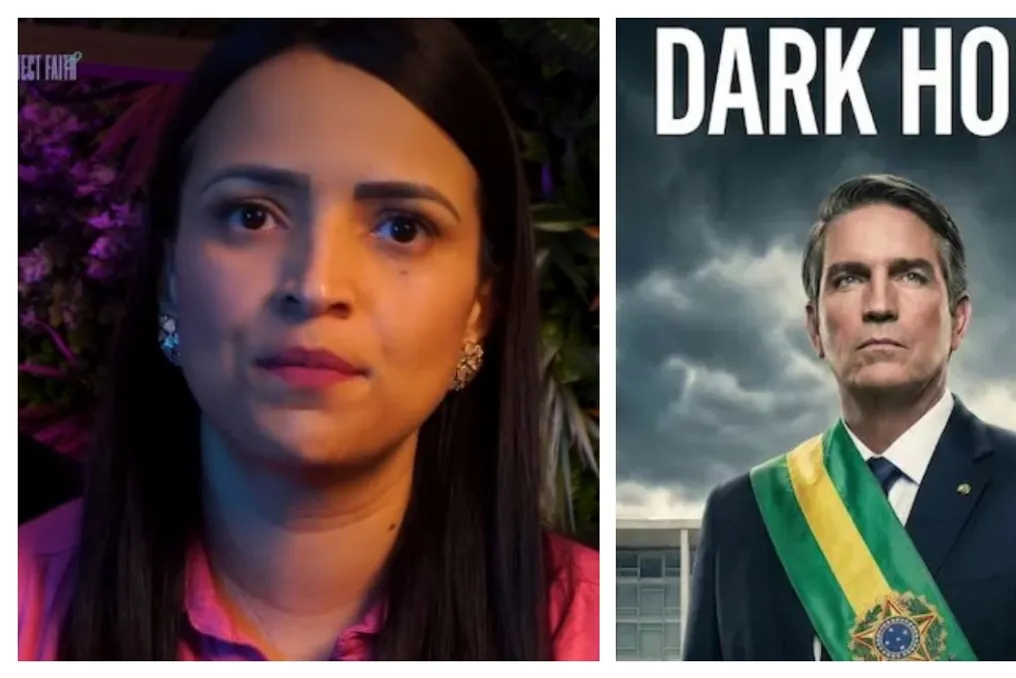
The Institute Conhecer Brasil (ICB) and the National Academy of Culture (ANC), entities managed by Karina Ferreira da Gama, owner of Go UP Entertainment (the producer of the film 'Dark Horse' about former President Jair Bolsonaro), accumulate a total of R$184.76 million from contracts, sponsorships, and amendments using public funds, according to the report.
Of this total amount, transparency documents and records indicate that at least R$133.18 million has been effectively disbursed. The difference corresponds to contractual installments whose payment has not yet been fully confirmed and amendments that have not reached the beneficiary entity.
The application of amendments directed to these institutions and a Wi-Fi contract signed by ICB with the City of São Paulo are being investigated for possible diversion of resources intended for cinematic production. It is important to note that the mere existence of these transfers and contracts does not constitute, by itself, the financing of the film.
Wi-Fi accounts for the largest share of resources
The largest agreement identified was established in June 2024 between ICB and the City of São Paulo, valued at R$108 million, intended for the installation and operation of five thousand free Wi-Fi points in areas of the capital. This contract had a subsequent amendment of R$49.18 million, raising the total cost to R$157.18 million.
According to the City Hall, the institute had received R$113.9 million until May 2026. Despite this, approximately 3,200 points were installed, falling short of the initially planned 5,000. A report from the São Paulo Civil Police signals suspicions that part of the program's resources may have been diverted to cover costs of 'Dark Horse', using third-party companies and other entities linked to Karina.
During the investigation phase, experts estimated that about R$43 million represented the services actually rendered, while R$69 million was transferred to ICB. The police question the R$26 million discrepancy. After Minister Flávio Dino of the Supreme Federal Court (STF) ordered the suspension of public payments to entities linked to Karina, the City Hall suspended the transfers and requested a review of the determination or a deadline for replacing the institute, citing the risk of service interruption.
In a previous communication to g1, the municipal administration assured that the film did not receive municipal funds and that it had not detected irregularities in the formalization or execution of the partnership. It was reported that the program remains active, with 3,200 points installed and over 760 million accesses recorded. The City Hall also announced that the Municipal Comptroller General is monitoring the investigations and initiated a procedure in May 2026, which is ongoing.
Other municipal contracts total R$7.15 million
Besides the Wi-Fi project, the analysis revealed R$7.15 million in other municipal partnerships and contracts with ICB. Although the documents prove these amounts, the report awaits information from the City Hall regarding the amount actually paid and the status of accountability.
These amounts include R$2.5 million for the IDE Literary Meeting, held in 2018; R$500 thousand for Rumos da Inovação na Educação do Futuro Agora (RIEFA) in 2023; R$800 thousand for the 2024 edition, already with an amendment; R$750 thousand for the 2025 edition; and R$100 thousand for a technological immersion project. There is also a sponsorship of R$2.5 million from São Paulo Negócios for Tech Friday Santa Ifigênia, contracted in 2025.
Regarding the IDE Literary Meeting, a publication in the Official Gazette of October 2020 shows the approval of the accountability with reservations. The report requested an updated position from the City Hall on this process.
Sesi transferred R$11.98 million and filed recovery actions
The National Council of Sesi confirmed to g1 that it transferred R$11.98 million to ICB through sponsorship contracts signed between 2017 and 2019. Audits conducted by the Federal Comptroller General (CGU) pointed out failures in supervision and project execution. In the case of Fórmula Truck Kids, the CGU calculated an overbilling of R$270 thousand on the R$350 thousand transferred to the institute. In two events held in Pará, an overpricing of R$1.31 million was identified. Furthermore, problems were noted in proving expenses and counterparts in other ventures.
According to Sesi, in 2023, nine lawsuits were filed to recover amounts considered refundable. These lawsuits cover approximately 70% of the original value of the sponsorships granted to ICB. The council explained that the issues raised related to formal aspects of the accountability and the adherence of the values used. Sesi also mentioned that it reformed its sponsorship policy and improved its control and oversight mechanisms.
Mario Frias' Amendments
ICB received R$2 million in amendments from federal deputy Mario Frias (PL-SP), released through the Ministries of Science, Technology and Innovation and Sport. One million reais was allocated to the educational project Jovem Empreendedor 4.0, and the other million was destined for the Lutando Pela Vida project, which was registered as in execution in the federal registry.
In the educational project, the CGU found that the institute made a payment of R$300 thousand for video lessons that were only made available after the agreement ended and had a low access rate. In response to g1, the Ministry of Science confirmed having rejected the accountability and ordered the full return of the transferred resources, after identifying the absence of proof of the target audience and the non-execution of the object.
The investigation also identified a transfer of R$750 thousand to Go Up, carried out by a company with family ties to a project supplier. The Federal Police is investigating whether the contracts used in executing the amendment served to divert funds intended for education for the benefit of the film's production. Frias denied any irregularity in the investigations, classifying the Federal Police's operation as a 'smokescreen'. The deputy and the Ministry of Sport were contacted for this story but have not yet responded.
Steam Maker received R$5 million in the DF
The survey also covers R$5 million transferred by the Federal District Research Support Foundation (FAPDF) to ICB for the Steam Maker project, an educational initiative focused on digital transformation in basic public school networks. The foundation was contacted to clarify the project's execution and the status of the accountability, but provided no response.
State amendments and unreleased funds
ICB received R$100 thousand from a state amendment by Valéria Bolsonaro (PL), intended for equipment purchase. The transparency report classifies this amendment as from 2023 and indicates the State Secretariat of Culture, Economy and Creative Industries of São Paulo as responsible for the transfer.
ANC received R$200 thousand from an amendment by Gil Diniz (PL) for the documentary series Heróis Nacionais, according to confirmation from the State Secretariat of Culture. This department stated that the amendment is mandatory and was executed according to legislation, without the Executive Branch interfering in the project's merit. Additionally, R$1 million from Marcos Pollon and R$150 thousand from Bia Kicis were identified in amendments for the same series.
These amounts are part of the sum of the intended resources, but not those proven to be paid. The State Secretariat of Culture informed that the analyzed federal amendments were neither executed nor released to ANC due to the lack of proof of the work's copyrights. In a note, Pollon declared ignorance of Karina and never having contacted her. He reported requesting the cancellation of the amendment in March 2026, and upon refusal, redirecting it to the Hospital de Amor de Barretos. According to the deputy, none of his amendment's funds were sent to ANC or used to finance 'Dark Horse'. The fund remains without budgetary destination and has not been returned. Valéria Bolsonaro, Gil Diniz, and Bia Kicis were contacted but did not respond.
Control bodies
The State Court of Accounts of São Paulo reported that there is no specific process open regarding the accountability of the transfers made to ANC. The Court added that the accounts for the 2025 fiscal year were submitted in 2026 and are undergoing routine technical analysis.
The Federal Court of Accounts declared that it had not found a specific process regarding the amendments destined for ANC. However, it informed that it is conducting an audit on possible irregularities in the use of federal public resources, tax incentives, tax benefits, and parliamentary amendments in the production of 'Dark Horse', with no forecast for a final deliberation.
The CGU stated that it would not comment on the existence or non-existence of ongoing investigations.