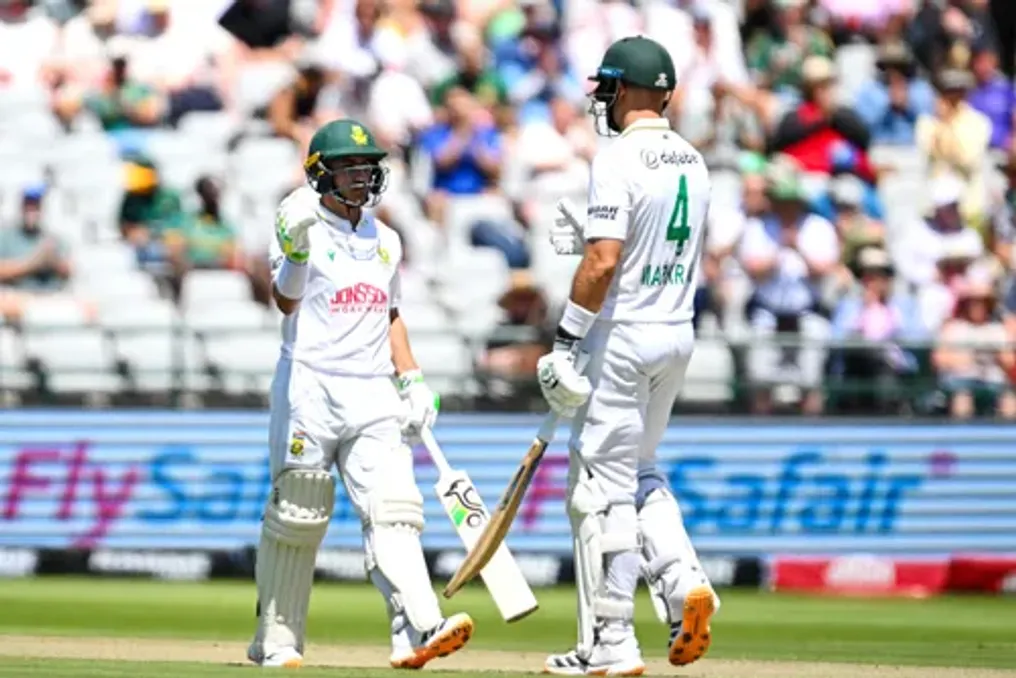
The batting lineup of the Proteas team was on the verge of completely overwhelming Australia during the first day of the third Test at Newlands Stadium, but then lost the initiative to their opponents due to a series of inaccurate shots. Although the final score of 329 runs looks solid on paper, the main story of this incarnation, as well as the broader narrative of the entire Test series, is a disappointing pattern of soft exits and unrealized potential.
From time to time, the top and middle order batters of South Africa put in significant effort to settle in at the crease, only to lose their wickets precisely when the opportunity for absolute dominance arises.
During the Tuesday lunch break, active scoring was expected over the next two sessions on the calmest pitch at Newlands on the first day. The first session looked like paradise for the batters, and Pat Cummins' strange decision to start with bowling was deemed the biggest mistake in Australian cricket since the sandpaper scandal in 2018.
A brilliant performance by Marcus Ackermann and Aiden Markram before lunch provided Proteas with a fine start that could have crushed Australia. There were individual successful shots and a degree of luck, but this is Test cricket after all.
Nevertheless, before lunch, former Proteas captains Graeme Smith and Shaun Pollock called for some calmness, perhaps even restraint, after Proteas began playing very aggressively, scoring more than five runs per over.
The main reason was that this match resembled a familiar plot. And, as it turned out, it was another repetition of the Proteas batters' performance that made us all quote the French dictionary...
Both opening batters fell, despite having opportunities for big, weighty scores. Ackermann's haste against Nathan Lyon, when he came onto the field but was easily dismissed for only five runs before reaching a century milestone, illustrated the lack of ruthless determination that continues to plague this batting line.
Of course, this is only Ackermann's second Test, but he behaved as if the Australian attack was just another home game where little was at stake. And that is normal; players should play freely and express themselves, but losing one's wicket in such a manner was a crime.
Experienced Markram is a wonderful player and a person who tends to perform at the right moment, such as his magnificent century against the Australians in the Cricket World Cup. But, I fear that one day he might not be considered one of the true greats of Proteas.
For a player with his silky ability, he loses his wicket too easily. This is why his majestic batting ability and average of 35.65 in Tests do not quite correlate.
Travis Head helped him when he tried to hit Mitchell Starc over the keeper's head through the covers, as if it were an International T20 match. Then Starc made a miraculous catch on the boundary when he tried to grab the ball in the air.
Similarly, David Beddingham worked hard for a well-constructed half-century, but then gave away his wicket to a short ball from Mitchell Starc when he needed a big achievement to silence the skeptics. Perhaps he needs to silence his inner critic to become the true Test batter his talent demands.
And what happened to Vian Mulder's batting? It seems he scored all his runs during a marathon three hundred in Zimbabwe, where he generously allowed Brian Lara's record to be broken. I think we can all agree that this was probably the best decision because his shot selection since has been rather poor.
When captain Temba Bavuma misjudged Lyon's trajectory and was dismissed for a duck, the middle order resistance quickly collapsed, until Marco Jansen (unsurprisingly) and Ryan Rickelton organized a rescue counterattack.
This was a theme throughout their journey to the WTC Final: someone contributed to the score after several batting struggles, usually Bavuma and Jansen, before the bowlers saved them.
It is simply unfair to expect Bavuma to carry the burden of scoring alone every time the team takes the field in Test cricket. The captain has constantly been the team's pillar, but the top six cannot function effectively when senior batters repeatedly squander promising starts.
Test cricket at the highest level demands a ruthless instinct. When you have an attacking opposition lineup under the pressure of the Cape Town sun, you must not offer them a lifeline. You must completely knock them out of the competition.
Leaving behind at least 100-200 runs due to reckless shot selection not only gives Australia a chance but also creates unnecessary pressure on the Proteas attack to save the team again.
Reaching 40, 50, or 70 is just a ticket in; the real work begins after that. Until the batters take personal responsibility for turning promising starts into big scores, Proteas will continue to leave the door open for the elite opponent to walk back in.