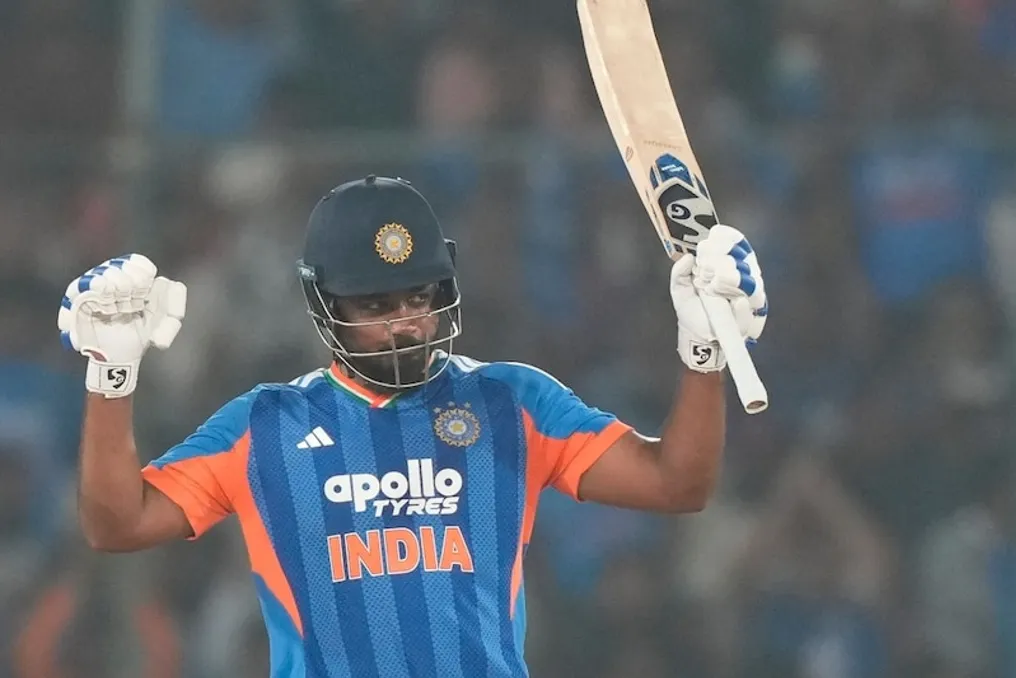
Abhishek Sharma and other players demonstrate a new level of aggressive play in Indian T20
Read more
Aaj Tak
www.aajtak.in

Abhishek Sharma and other players demonstrate a new level of aggressive play in Indian T20

Abhishek Sharma made a splash by scoring one hundred runs in just 30 balls against Afghanistan on September 17. A month later, playing against New Zealand, he once again demonstrated the speed of the Indian T20 balance, reaching a century in 35 balls. Such feats were memorable for years previously, but now Indian batsmen are achieving such breakthroughs one after another, causing old records to quickly become obsolete. This is the new level of Indian T20 balance, where setting records gives way to their constant surpassing.

When Abhishek Sharma and Vaibhav Suryavanshi walked onto the field in Wellington, the New Zealand players had time to devise a strategy, but they were not given a chance to implement it. These two scored 133 runs in just 7.1 overs. Abhishek's innings was so powerful that any bowler facing him looked helpless.

Abhishek was approaching the breaking point of his own record for the fastest century, which stood at 30 balls and is among the fastest centuries between full member teams. This time, he completed his century in 35 balls. On the other hand, Vaibhav Suryavanshi also showed his fearless batting, demonstrating that for him, the ability to send the ball outside the boundary matters more than age.

The impact of their play was reflected not only on the scoreboard but also on the mindset of the opponents. Bowlers stopped following their plans and started thinking about what the batsman would do on the next ball.

The true picture of this fierce attack was revealed in the statements of Indian captain Shreyas Iyer. After Abhishek and Vaibhav were dismissed, Sandeep Samson and Shreyas Iyer came out onto the field. They were able to assess the pitch condition and the movement of the ball. Iyer stated after the match that when he and Samson came to bat, the ball 'simulated' (had a movement that could cause problems for batsmen). He wondered how Abhishek and Vaibhav managed to score so easily if the ball behaved like that?

This is the specialty of Indian batting. Where other batsmen cautiously try to play the ball, Indian T20 specialists strive to find the boundary even with such a ball. They force the bowler to play on their terms, understanding the bowler's strength and plan.

Statistics from international T20 matches between India and New Zealand this year also illustrate this difference. The teams met nine times, including the T20 World Cup final, and New Zealand suffered eight defeats. In these matches, Indian batsmen have repeatedly achieved targets that seemed too small for standard T20 strategy.

India reached a target of 199 runs in 13.2 overs against New Zealand. Previously, they had surpassed a target of 209 runs in 15.2 overs and 154 runs in just 10 overs. In the T20 World Cup final, India also scored 255 runs while batting first.

The essence is not just in the large scores and fast run accumulation. The main difference lies in the batting mentality. Even a strong team like New Zealand often advances its innings according to traditional cricket principles. They play considering the line-length of the ball, the size of the field, and the acceptable risk. Indian batsmen try to change this mathematics.

Their goal is not just to take advantage of a bad ball, but also to damage the bowler even with a good ball. When a batsman can constantly hit sixes not only into the deep part of the field but also into the small square boundary, the bowler has fewer safe areas.

The traditional rule of cricket states that the bowler bowls the ball, and the batsman reacts to it. However, batsmen like Abhishek Sharma, Vaibhav Suryavanshi, Sandeep Samson, and Ishan Kishan are trying to change this order. They force the bowler to play defensively from the very beginning.

The problem for the bowler is that if he changes the line, the batsman attacks from a new angle. If he changes the length, there is a risk of sending the ball over the boundary. If he moves the field back, paths open up for singles and doubles. And if he makes even a slight mistake, the ball can go into the stands.

Under such conditions, even a perfect delivery does not guarantee a wicket. The strength of Indian batsmen is that they can spoil even a good over from a bowler. Although this approach involves much risk, when batsmen have so many different shots and such fast bat rotation, opponents' plans can regularly fail.

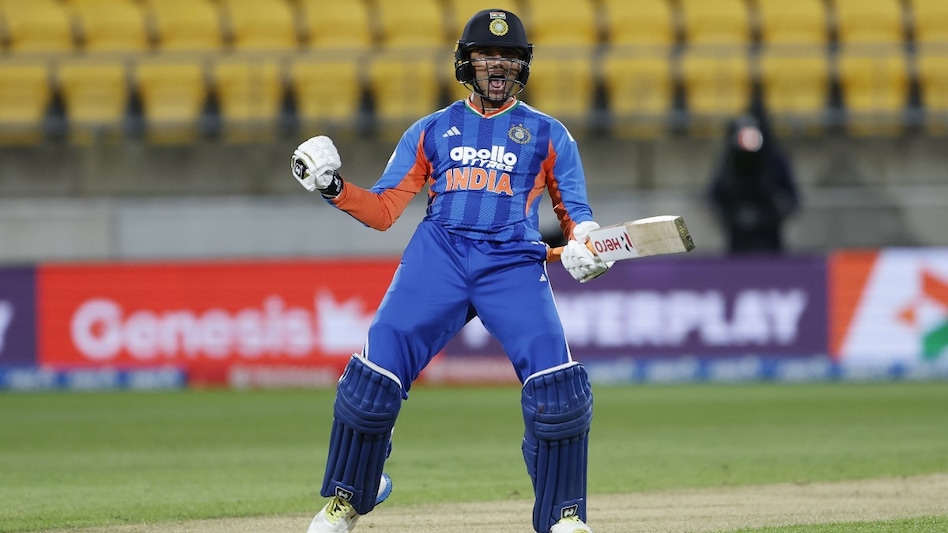
Similar stories

New Zealand Captain Michelle Jenner explains T20 defeat in Wellington due to the difficulty of facing aggressive Indian batsmen
Read more
www.aajtak.in

New Zealand Captain Michelle Jenner explains T20 defeat in Wellington due to the difficulty of facing aggressive Indian batsmen

Following the loss in the third T20 match in Wellington against India, New Zealand captain Michelle Jenner admitted that it is extremely difficult to stop such aggressive players as Abhishek Sharma and Vaibhav Suryavanshi.

In Wellington, the Indian team reached the target score of 199 runs in just 13.2 overs. Abhishek scored 113 runs off 38 balls, while Vaibhav scored 45 runs off 19 balls. Thanks to this, India won by six wickets and gained an undeniable 3-0 advantage in the five-match series.

Jenner noted that he had seen a similar style of play before, for example, during the Indian Premier League (IPL), and now he was facing it in New Zealand. He emphasized that once these batsmen get into rhythm, it becomes very hard to stop them.

Speaking about his team, Jenner pointed out that losing the coin toss again did not favor the team. Nevertheless, the partnership between Daryl Mitchell and Beban Jackson offered hope of reaching a score around 200. In Jenner's opinion, 200 runs would be a good result on this type of pitch.

He highly praised the performance of the Indian bowlers, noting their brilliant work in the final overs and the effective use of yorkers, which made it difficult for the New Zealand batsmen to score runs. Jenner also acknowledged that bowling after the dew sets in becomes challenging.

According to him, the powerplay is a critical part of this format, and India demonstrated how to play in the first six overs.

Jenner also mentioned positive aspects of his team's play. He stated that various batsmen are capable of turning a good start into a large total. Glenn Phillips performed well in the previous match, and Daryl Mitchell scored runs in the current one.

The captain noted that it is a good sign for the team when the opening batsmen can stay on the field and reach a score of around 80 runs. Increased player confidence will contribute to their presence on the field. However, he admitted that scoring runs against India and defending a large total is not easy.

Jenner revealed that New Zealand used various bowling variations against the Indian batsmen. After observing Axar Patel's play in the first innings, he felt there was no significant advantage for spinners on the pitch, whereas fast bowlers received some assistance from the seam. He added that when the Indian batsmen settle in, the bowlers have to change pace. Initially, Michael Bresshaw was tested against two left-handed batsmen, but the Indian players handled the spin well in that over.

After falling behind 3-0 in the series, the task of a comeback fell to New Zealand. Jenner stated that the team needs to further refine its tactics against Indian batsmen. He mentioned the next venue, Eden Park, noting that the ground there is potentially small on all sides. Under such conditions, stopping India's aggressive play could become even more difficult.

India has gained an undeniable advantage by winning three consecutive matches in the five-match series. The fourth T20 will take place on Friday (October 30th), and New Zealand will try to win this match to start their count in the series.

Abhishek Sharma scores 113 runs in T20 match in Wellington against New Zealand
Read more
www.aajtak.in

Abhishek Sharma scores 113 runs in T20 match in Wellington against New Zealand

In the T20 match held on October 27 between India and New Zealand in Wellington, the third match of the five-game series, the Indian team secured a convincing victory by 6 wickets. With this win, India gained a 3-0 advantage in the series.

The Indian team completed the game in just 13.2 overs. The main hero of this match was Indian batsman Abhishek Sharma, who delivered an outstanding performance by scoring 113 runs off 38 balls. This prolific innings marked Abhishek's fourth century in international T20 matches.

In his innings, Abhishek hit 11 sixes and 9 fours. New Zealand started first and scored 198/3 in 20 overs. When the Indian team began their chase, their start was exceptionally strong. Abhishek, along with Vaibhav Suryavanshi, formed a record partnership of 133 runs with the first two batsmen.

Abhishek reached the half-century mark in just 15 balls. Vaibhav also played powerfully, scoring 45 runs off 19 balls. Furthermore, India set a world record for the fastest half-century in T20 international matches, reaching 50 runs in only 2.2 overs (14 balls).

During this match, Abhishek Sharma also set a record in T20 international games by hitting eight sixes off the first ball bowled. For his brilliant performance, Abhishek was named 'Player of the Match'.

In men's T20 cricket statistics, Chris Gayle holds the record for the most centuries (22), followed by Babar Azam (13), Abhishek Sharma (11), Quinton de Kock (10), Virat Kohli (10), and David Warner (10).

Records were also noted for the fastest century in T20I, where Abhishek Sharma (India) demonstrated such a pace against Afghanistan in Delhi in 2026. In the match against New Zealand in Wellington in 2026, he also set a record for the fastest half-century in T20I between two teams.

India becomes the second team in the world in T20 with 2000 sixes thanks to Sanju Samson
Read more
www.aajtak.in

India becomes the second team in the world in T20 with 2000 sixes thanks to Sanju Samson

During the fourth T20 match between India and West Indies, held on October 14 at the Uppal Stadium in Hyderabad, the Indian team achieved a significant result. By becoming part of the club of teams that have surpassed the 2000 sixes barrier in T20 International Cricket, India secured the second spot in the world for this statistic.

The 2000th six for India was hit by batsman Sanju Samson. He managed to strike an impressive shot in the third ball of Roston Chase's over. In this match, India demonstrated an aggressive pace, scoring half a century.

This major milestone was reached by the Indian team in their 297th T20 match. The West Indies team leads this ranking, having accumulated 2026 sixes in 259 matches. Among the top five teams are also New Zealand (1585), Pakistan (1507), and South Africa (1407).

In the same match, Sanju Samson became the sixth Indian batsman to reach the mark of 100 sixes in T20 International Cricket. He finished his innings with 102 sixes. This exclusive club includes stars such as Rohit Sharma (205), Suryakumar Yadav (179), Abhishek Sharma (141*), Hardik Pandya (126), and Virat Kohli (124).

Chasing the impressive target of 247 runs set by West Indies, Samson started the game very aggressively, scoring 56 runs in just 22 balls, using 4 fours and 4 sixes. However, in this match, captain Shreyas Iyer, Abhishek Sharma, and Ishan Kishan were unable to impress with their batting.

Popular