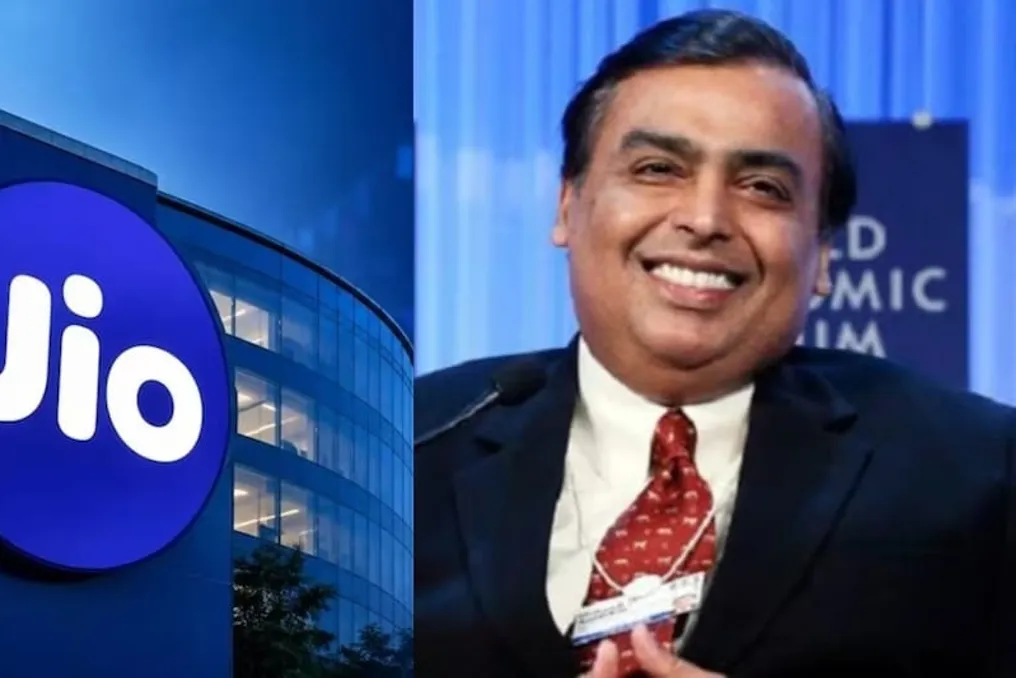
Telecom giant Jio Platforms Ltd. is scheduled to launch on the stock exchange on Wednesday following a record-breaking initial public offering. This debut places Mukesh Ambani’s telecom enterprise against a downward trend affecting large deals in India amidst a challenging market climate.
The company successfully raised $3.1 billion at a price of ₹1,119 per share, with the offering being subscribed over 22 times. This resulted in a market valuation of approximately $107 billion. On Tuesday evening, the shares were trading at a premium of around 22 percent in the gray market, according to data from ipowatch.in and investorgain.com.
Jio’s market entry represents the final step for the highly anticipated IPO of a key asset within Ambani’s conglomerate. This listing offers investors a unique chance to participate in one of the most significant growth narratives globally over the last decade, as Asia’s third wealthiest individual made a major division of Reliance Industries Ltd. public for the first time in nearly two decades.
Leading the deal was Akash Ambani, the patriarch’s eldest son. The company presented Jio, the telecom and financial services division of Reliance, as a comprehensive technology powerhouse. Ultimately, the valuation did not meet some prior expectations, which occurred against a backdrop of declines in Indian stocks and volatility in the global equity market. Nevertheless, the offering proved popular, fostering expectations for a robust debut.
Kranthi Bathini, Director of Equity Strategy at WealthMills Securities, commented that while a strong initial gain seems probable, the real measure of success will be the ability of Akash Ambani and the management team to maintain that upward trajectory over the long term, stating that this sustained value creation will be decisive.
Despite the high investor interest shown during the offering and the signals from the unofficial market, historical trends suggest a potentially difficult start, given that India’s largest listings have often faced initial setbacks. Data compiled by Bloomberg indicates that the four IPOs that raised at least $2 billion this decade experienced a weighted-average drop of 9.9 percent on their first day, with only one, the National Stock Exchange of India Ltd. last month, achieving a gain upon debut.
Looking at the longer-term performance, the outlook is not significantly better. All five of India’s largest preceding IPOs are currently trading below their initial offer prices, highlighting how successful share sales have frequently failed to deliver returns to investors.
Hyundai Motor India Ltd., which previously held the record with its ₹27,900 crore IPO, is currently trading about 6 percent below its offer price. NSE, which raised roughly $2.4 billion last month, has also fallen beneath its offering price. Furthermore, Paytm’s parent company, One97 Communications Ltd., and the state-owned Life Insurance Corporation of India Ltd. are both experiencing declines exceeding 20 percent.
Notable exceptions among India’s largest IPOs include Coal India Ltd., LG Electronics India Ltd., and ICICI Prudential Asset Management Co.
Should Jio’s gray-market premium persist into Wednesday, it would position Jio as India’s second most valuable publicly listed entity after its parent, Reliance Industries Ltd., thereby moving rival Bharti Airtel Ltd. into the third spot.
Nomura issued a buy rating for Jio, citing its market dominance and the potential for a significant increase in free cash flow. Analysts, including Bineet Banka, projected a target price of ₹1,340, suggesting an approximate 20 percent upside from the IPO price.
Part of the positive sentiment stems from the exceptional demand for the offering. According to data from BSE Ltd., Jio’s IPO was completely subscribed within 100 minutes of opening, attracting over $78 billion in bids and nearly 14 million applications.
Geojit Investments Ltd. noted that at ₹1,119 per share, the company is valued at roughly 15 times the fiscal 2026 enterprise value to Ebitda on a post-issue basis, indicating a premium compared to industry peers. Geojit attributed this premium to Jio’s market leadership, enhanced monetization capabilities, and strong cash generation. The firm added that cloud computing, AI, enterprise solutions, entertainment, digital platforms, and fixed broadband could contribute further revenue streams in the medium to long term.
However, risks remain, according to Religare Broking Ltd. These include Jio’s reliance on telecommunication licenses and spectrum, where delays in approvals, failure to renew licenses, or issues securing extra spectrum could negatively impact the business.