Review of 10 Popular Gen Z Slang Terms and Their Meanings
Read more
Aaj Tak
www.aajtak.in

Review of 10 Popular Gen Z Slang Terms and Their Meanings

If you have children aged 15 to 24 at home, and their conversations using new English slang expressions confuse you, you are not alone. These young people, born between 1997 and 2012, actively use new slang and abbreviations in communication.

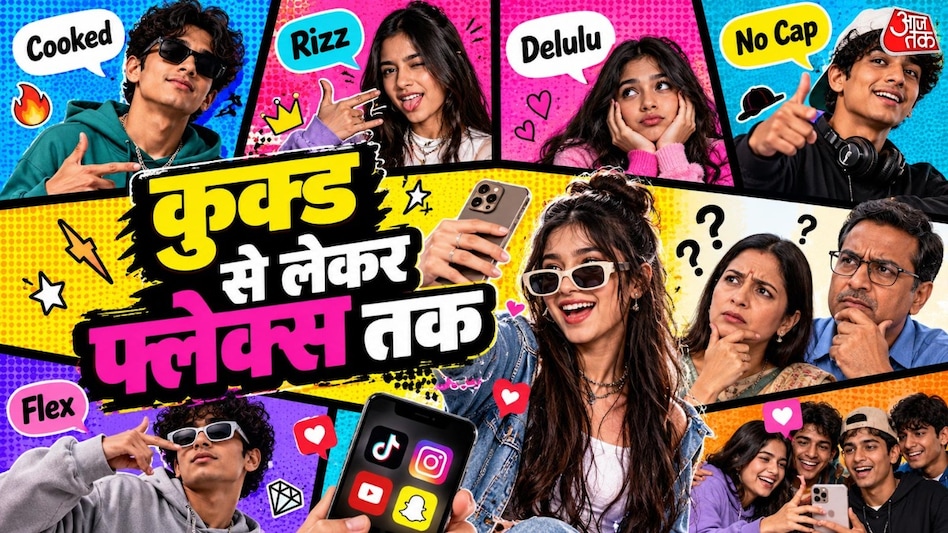
These terms are not insults or incorrect words; rather, they are a unique coded language that has emerged due to the internet and social media. In the era of Instagram Reels, knowing the meaning of ten words such as 'Cooked', 'Rizz', 'Delulu', 'No Cap', 'Aura Points', 'Ghosting', 'Main Character Energy', 'Sus', 'Flex', and 'Bet' becomes necessary to understand youth communication.

1. Cooked means being in serious trouble. If a child says 'I am cooked', it is not related to cooking; it directly indicates that they have gotten into big trouble, messed up work, or made a mistake.

2. Rizz refers to charm or personal magic. This term originates from the word 'charisma' and is used when someone talks about a friend who possesses this quality, implying that this person is capable of quickly influencing others through their behavior and speech.

3. Delulu is an abbreviation of 'delusional' and means being in delusion or illusion. Friends might call someone 'Delulu' if they harbor hopes whose realization is extremely unlikely, i.e., building castles in the air.

4. No Cap is used to denote absolute truth, equivalent to phrases like 'I swear' or 'truth'. If young people state: 'This pizza was very tasty, no cap', it means they are speaking completely honestly.

5. Aura Points is an imaginary rating system for respect or style. When a young person does something smart or cool, they are awarded '+1000 Aura Points'; conversely, points are deducted for foolishness.

6. Ghosting means suddenly ending communication without explanation. If a child reports that their friend 'ghosted' them, it means that this friend unexpectedly stopped replying to messages and answering calls without any reason.

7. Main Character Energy describes the state of a person who behaves with complete confidence at an event, as if they are the main character of that place.

8. Sus is an abbreviation of 'suspicious' and means suspicion. If something or someone raises the slightest doubt, children immediately say: 'This matter seems a bit sus'.

9. Flex is demonstrative behavior. Young people use this term when showing off a new item on social media, such as a watch or phone, or demonstrating an achievement.

10. Bet is used to express agreement or confirm an arrangement. If you suggest going out for dinner with a child in the evening, and they simply reply 'Bet', it means 'agreed, we will definitely go'.

Knowing these ten expressions will help parents understand youth jargon, and communicating with children will stop seeming incomprehensible.
Similar stories

The Meaning of Popular Slang Expressions of Generation Z
Read more
www.aajtak.in

The Meaning of Popular Slang Expressions of Generation Z

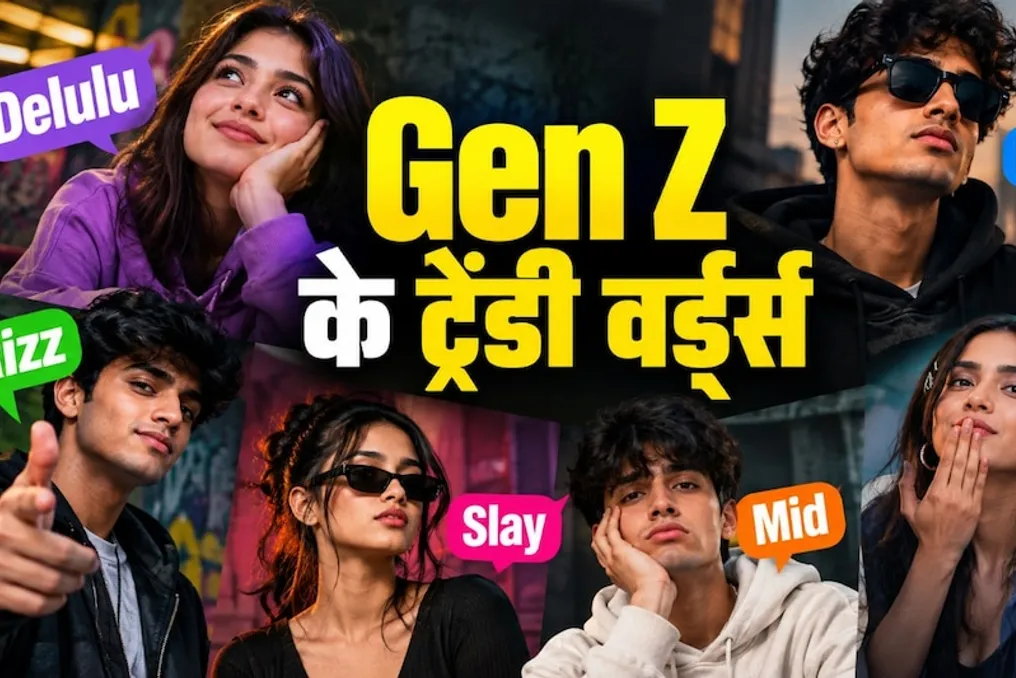
Currently, when browsing social media, words appear whose meanings are not understood by everyone. For example, someone might call their favorite movie 'mid,' while someone's magnificent appearance might be described as 'slay' or 'at.' These terms have become very common in the communication of the young generation, known as Gen Z.

These words are used not only in chats and comments but are also part of memes, reels, and everyday conversations between friends. If you want to better understand the language of Gen Z, familiarize yourself with the simple meanings and rules for using these seven popular words.

When a person harbors hopes whose realization is extremely unlikely, or dwells in their own fantasies, they are jokingly called 'Delulu.' This term originates from the word 'Delusional.' For instance, if someone believes that their favorite celebrity will marry them someday, friends might say: 'You are so Delulu!'

The expression 'No Cap' means that what is said is true, without any lies or exaggeration; simply put, it means 'truth.' Example: 'This was the best movie of my life, No Cap!'

'Rizz' denotes the art of attracting someone through one's manner, style, or confidence. This term is especially applied in the context of flirting or trying to make an impression. For example: 'He impressed everyone in just two minutes of conversation, he has amazing Rizz!'

The word 'Slay' is used when someone demonstrates outstanding results in their appearance, style, or work. It is a popular way of giving praise. For example: 'You are absolutely shining in this outfit today!'

If something seems neither very good nor very bad, but just average, it is called 'Mid.' This is often applied to movies, songs, fashion, or any trends. For example: 'Everyone praised this series, but I found it Mid.'

When someone performs brilliantly in a dance, performance, or any other activity, they are said to have 'Ate.' This is a way to express admiration. Sometimes the phrase 'Left no crumbs' is added to this, meaning they left no shortcomings. For example: 'He danced on stage so well, he really Ate!'

Understanding these Gen Z words is not difficult; it is just important to know in which situations they should be used. It is not necessary to include every trendy term in your speech. Among friends, their use can be amusing, but it is important to consider the listener in an office or any formal setting. Ultimately, the purpose of language is to convey a thought. Although trendy words can make your conversation more fun, the most important thing is to use the right word at the right time.

Popular