How table tennis helps build connections between people outside of the game
Read more
CGTN
cgtn.com

How table tennis helps build connections between people outside of the game

Table tennis has played an important role in establishing relations between China and the USA. At the VII International Charity Tennis Tournament, the friendship forged during matches continues even after the game ends.

Every rally presents a new challenge, and every match offers an opportunity to learn something, contributing to the formation of bonds. It is the simple pleasure of the game, competition, and shared experience that encourages people to return to the table.

CGTN correspondent Wang Tao shows how a small ball unites people across borders.

Similar stories

India vs New Zealand match at Eden Park expected to sell out stadium capacity
Read more
www.aajtak.in

India vs New Zealand match at Eden Park expected to sell out stadium capacity

It is anticipated that around 40,000 spectators will attend the fourth T20 International match between India and New Zealand, scheduled for Friday, at Eden Park Stadium. Consequently, this venue in Auckland is set to witness the highest attendance in the history of international cricket among the three major venues.

The Indian team has already taken an unassailable lead in the five-match series by winning the first three games, all of which were played with the stadium fully occupied. In the third T20, held in Wellington on Tuesday, India secured a convincing victory over New Zealand by six wickets, thanks to the strong performances of Abhishek Sharma and young batsman Vaibha Suryavanshi.

The two batsmen formed a partnership of 133 runs for the first wicket, and India reached the target of 199 runs in just 13.2 overs. Abhishek demonstrated explosive batting, scoring 113 runs off 38 balls, including nine fours and 11 sixes. His performance helped break numerous records and put the New Zealand players in a defensive position.

New Zealand Cricket (NZC) stated that over 40,000 fans are expected at Eden Park on Friday evening, and all tickets for the fourth T20 International between India and New Zealand are sold out. This match is also set to break the attendance record for bilateral series in New Zealand. Previously, this record belonged to the match between the Blackcaps and White Ferns against India at Eden Park in 2019, which was attended by 36,523 spectators.

Prior to this, the highest number of spectators at Eden Park was recorded during only two international cricket matches. The first instance occurred during the ODI World Cup semi-final in 2015, when New Zealand defeated South Africa and advanced to the final, thanks to Grant Elliott's memorable six; this match drew about 41,000 people. The second instance was in 1982, when an ODI match between New Zealand and Australia, featuring players such as Richard Hadlee, John Wright, and Martin Crowe, allegedly had an attendance of 42,000 spectators, and New Zealand won the match by 46 runs.

According to NZC, more than 126,000 tickets have been sold for the India tour of New Zealand, of which 71,000 tickets were purchased exclusively for the T20 International series.

Glenn Crichton, New Zealand's Chief Marketing and Commercial Officer, noted that the demand for match tickets was significantly higher than expected. He emphasized that a fully packed Eden Park stadium is an experience in itself, and breaking the attendance record for a bilateral series demonstrates the huge enthusiasm of fans for this series. Crichton expressed hope that Friday evening will be unforgettable due to the participation of stars, the amazing atmosphere, and exciting cricket, referencing Elliott's six in the 2015 World Cup semi-final, and suggesting that fans might once again enjoy such a spectacle at Eden Park.

Clumsy failures of Proteas batters lead to comparisons with the French language
Read more
iol.co.za

Clumsy failures of Proteas batters lead to comparisons with the French language

The batting lineup of the Proteas team was on the verge of completely overwhelming Australia during the first day of the third Test at Newlands Stadium, but then lost the initiative to their opponents due to a series of inaccurate shots. Although the final score of 329 runs looks solid on paper, the main story of this incarnation, as well as the broader narrative of the entire Test series, is a disappointing pattern of soft exits and unrealized potential.

From time to time, the top and middle order batters of South Africa put in significant effort to settle in at the crease, only to lose their wickets precisely when the opportunity for absolute dominance arises.

During the Tuesday lunch break, active scoring was expected over the next two sessions on the calmest pitch at Newlands on the first day. The first session looked like paradise for the batters, and Pat Cummins' strange decision to start with bowling was deemed the biggest mistake in Australian cricket since the sandpaper scandal in 2018.

A brilliant performance by Marcus Ackermann and Aiden Markram before lunch provided Proteas with a fine start that could have crushed Australia. There were individual successful shots and a degree of luck, but this is Test cricket after all.

Nevertheless, before lunch, former Proteas captains Graeme Smith and Shaun Pollock called for some calmness, perhaps even restraint, after Proteas began playing very aggressively, scoring more than five runs per over.

The main reason was that this match resembled a familiar plot. And, as it turned out, it was another repetition of the Proteas batters' performance that made us all quote the French dictionary...

Both opening batters fell, despite having opportunities for big, weighty scores. Ackermann's haste against Nathan Lyon, when he came onto the field but was easily dismissed for only five runs before reaching a century milestone, illustrated the lack of ruthless determination that continues to plague this batting line.

Of course, this is only Ackermann's second Test, but he behaved as if the Australian attack was just another home game where little was at stake. And that is normal; players should play freely and express themselves, but losing one's wicket in such a manner was a crime.

Experienced Markram is a wonderful player and a person who tends to perform at the right moment, such as his magnificent century against the Australians in the Cricket World Cup. But, I fear that one day he might not be considered one of the true greats of Proteas.

For a player with his silky ability, he loses his wicket too easily. This is why his majestic batting ability and average of 35.65 in Tests do not quite correlate.

Travis Head helped him when he tried to hit Mitchell Starc over the keeper's head through the covers, as if it were an International T20 match. Then Starc made a miraculous catch on the boundary when he tried to grab the ball in the air.

Similarly, David Beddingham worked hard for a well-constructed half-century, but then gave away his wicket to a short ball from Mitchell Starc when he needed a big achievement to silence the skeptics. Perhaps he needs to silence his inner critic to become the true Test batter his talent demands.

And what happened to Vian Mulder's batting? It seems he scored all his runs during a marathon three hundred in Zimbabwe, where he generously allowed Brian Lara's record to be broken. I think we can all agree that this was probably the best decision because his shot selection since has been rather poor.

When captain Temba Bavuma misjudged Lyon's trajectory and was dismissed for a duck, the middle order resistance quickly collapsed, until Marco Jansen (unsurprisingly) and Ryan Rickelton organized a rescue counterattack.

This was a theme throughout their journey to the WTC Final: someone contributed to the score after several batting struggles, usually Bavuma and Jansen, before the bowlers saved them.

It is simply unfair to expect Bavuma to carry the burden of scoring alone every time the team takes the field in Test cricket. The captain has constantly been the team's pillar, but the top six cannot function effectively when senior batters repeatedly squander promising starts.

Test cricket at the highest level demands a ruthless instinct. When you have an attacking opposition lineup under the pressure of the Cape Town sun, you must not offer them a lifeline. You must completely knock them out of the competition.

Leaving behind at least 100-200 runs due to reckless shot selection not only gives Australia a chance but also creates unnecessary pressure on the Proteas attack to save the team again.

Reaching 40, 50, or 70 is just a ticket in; the real work begins after that. Until the batters take personal responsibility for turning promising starts into big scores, Proteas will continue to leave the door open for the elite opponent to walk back in.

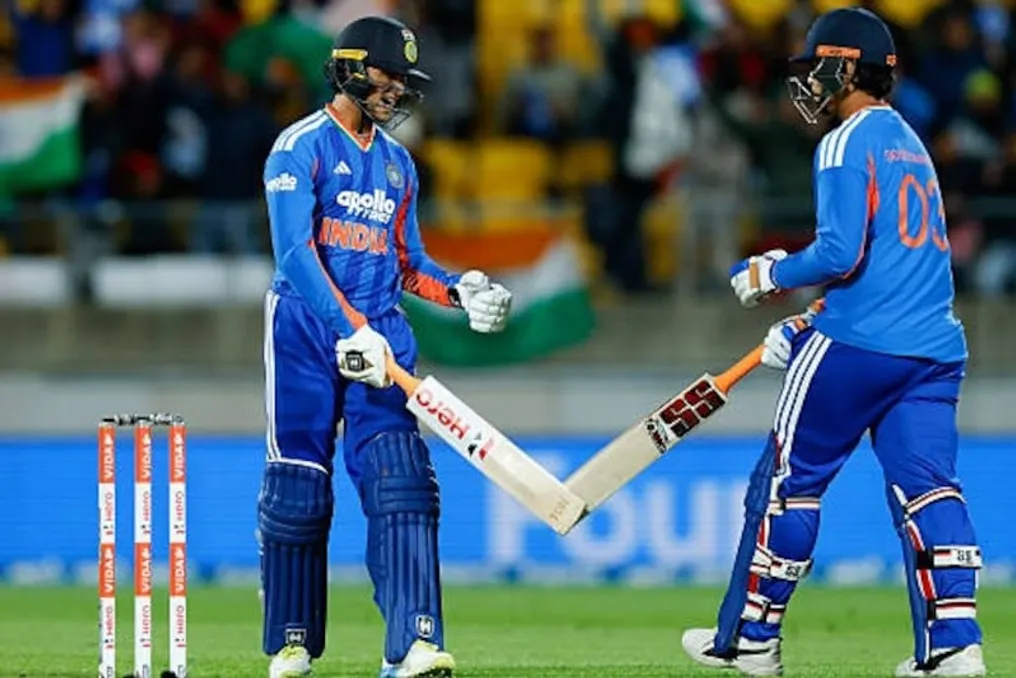
Abhishek Sharma and other players demonstrate a new level of aggressive play in Indian T20
Read more
www.aajtak.in

Abhishek Sharma and other players demonstrate a new level of aggressive play in Indian T20

Abhishek Sharma made a splash by scoring one hundred runs in just 30 balls against Afghanistan on September 17. A month later, playing against New Zealand, he once again demonstrated the speed of the Indian T20 balance, reaching a century in 35 balls. Such feats were memorable for years previously, but now Indian batsmen are achieving such breakthroughs one after another, causing old records to quickly become obsolete. This is the new level of Indian T20 balance, where setting records gives way to their constant surpassing.

When Abhishek Sharma and Vaibhav Suryavanshi walked onto the field in Wellington, the New Zealand players had time to devise a strategy, but they were not given a chance to implement it. These two scored 133 runs in just 7.1 overs. Abhishek's innings was so powerful that any bowler facing him looked helpless.

Abhishek was approaching the breaking point of his own record for the fastest century, which stood at 30 balls and is among the fastest centuries between full member teams. This time, he completed his century in 35 balls. On the other hand, Vaibhav Suryavanshi also showed his fearless batting, demonstrating that for him, the ability to send the ball outside the boundary matters more than age.

The impact of their play was reflected not only on the scoreboard but also on the mindset of the opponents. Bowlers stopped following their plans and started thinking about what the batsman would do on the next ball.

The true picture of this fierce attack was revealed in the statements of Indian captain Shreyas Iyer. After Abhishek and Vaibhav were dismissed, Sandeep Samson and Shreyas Iyer came out onto the field. They were able to assess the pitch condition and the movement of the ball. Iyer stated after the match that when he and Samson came to bat, the ball 'simulated' (had a movement that could cause problems for batsmen). He wondered how Abhishek and Vaibhav managed to score so easily if the ball behaved like that?

This is the specialty of Indian batting. Where other batsmen cautiously try to play the ball, Indian T20 specialists strive to find the boundary even with such a ball. They force the bowler to play on their terms, understanding the bowler's strength and plan.

Statistics from international T20 matches between India and New Zealand this year also illustrate this difference. The teams met nine times, including the T20 World Cup final, and New Zealand suffered eight defeats. In these matches, Indian batsmen have repeatedly achieved targets that seemed too small for standard T20 strategy.

India reached a target of 199 runs in 13.2 overs against New Zealand. Previously, they had surpassed a target of 209 runs in 15.2 overs and 154 runs in just 10 overs. In the T20 World Cup final, India also scored 255 runs while batting first.

The essence is not just in the large scores and fast run accumulation. The main difference lies in the batting mentality. Even a strong team like New Zealand often advances its innings according to traditional cricket principles. They play considering the line-length of the ball, the size of the field, and the acceptable risk. Indian batsmen try to change this mathematics.

Their goal is not just to take advantage of a bad ball, but also to damage the bowler even with a good ball. When a batsman can constantly hit sixes not only into the deep part of the field but also into the small square boundary, the bowler has fewer safe areas.

The traditional rule of cricket states that the bowler bowls the ball, and the batsman reacts to it. However, batsmen like Abhishek Sharma, Vaibhav Suryavanshi, Sandeep Samson, and Ishan Kishan are trying to change this order. They force the bowler to play defensively from the very beginning.

The problem for the bowler is that if he changes the line, the batsman attacks from a new angle. If he changes the length, there is a risk of sending the ball over the boundary. If he moves the field back, paths open up for singles and doubles. And if he makes even a slight mistake, the ball can go into the stands.

Under such conditions, even a perfect delivery does not guarantee a wicket. The strength of Indian batsmen is that they can spoil even a good over from a bowler. Although this approach involves much risk, when batsmen have so many different shots and such fast bat rotation, opponents' plans can regularly fail.

Popular