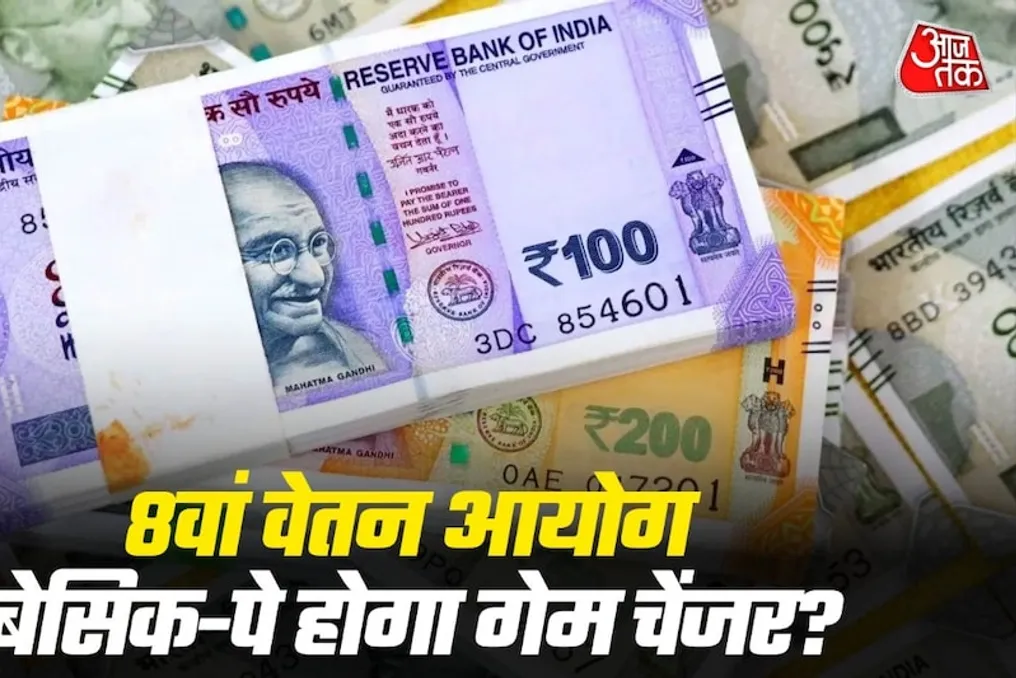
The increase in the basic salary of civil servants affects not only the monthly earnings. The higher the basic salary, the greater its impact on annual increments, Dearness Allowance (DA), House Rent Allowance (HRA), and retirement benefits. This is why the issue of increasing the minimum basic salary and changing the annual increment rate was acutely raised before the 8th Departmental Council.
Union representatives proposed setting the minimum basic salary in the range of ₹69,000 to ₹72,000. However, these proposals have not yet received official approval.
The 8th Departmental Council held consultations with trade unions and other stakeholders on October 22 and 23, 2026, in Mumbai. A previous commission meeting took place on October 8 in Bangalore. Civil servants, pensioners, and trade unions continue to await decisions regarding new salaries, allowances, and pension provisions. In recent months, unions have brought issues such as the fitment factor, minimum basic salary, allowances, pension reforms, leave compensation, and employee morale before the commission. Special attention is being paid to increasing the basic salary, as this can affect an employee's total income throughout their career.
Unions presented various proposals to the 8th Departmental Council regarding the minimum basic salary and the fitment factor. The National Confederation of Joint Consultative Mechanisms (NC-JCM) on behalf of personnel requested a minimum basic salary of ₹69,000 and a fitment factor of 3.833. The Indian Military Technical Workers Association (BPMS) proposed a minimum basic salary of ₹72,000 and a fitment factor of 4. Both organizations cited rising inflation as the main reason for their demands. Both associations are also pushing for an increase in the current annual increment rate from 3% to 6%, arguing that this will help employees cope with inflation and increase their income. It is important to remember that the amounts of ₹69,000 and ₹72,000 are currently just proposals that the 8th Departmental Council has not finally approved.
The basic salary is the main component of a civil servant's pay, and it does not include Dearness Allowance, House Rent Allowance, or other payments. According to existing rules, the basic salary plays a key role in calculating allowances such as DA and HRA. The impact of the basic salary is felt long-term. Under the 7th Departmental Council, the annual increment is 3%. Consequently, if an employee's starting basic salary is higher, their annual increment may also be larger. This means that the higher the initial basic salary, the more positive the impact it will have on future salary.
The benefit of the basic salary can be illustrated with an example. If two employees start with different basic salaries and are subject to the same increment rate, the employee with the higher basic salary will receive a larger annual increment amount. For instance, at a 3% rate, the annual increment on a basic salary of ₹50,000 will be ₹1,500, whereas on a basic salary of ₹70,000, the same increment will be ₹2,100. Thus, the difference in the initial basic salary leads to differences in the increment amount over time, and this gap will only widen.
The consequences of increasing the basic salary are not limited to monthly remuneration. Since payments such as Dearness Allowance and House Rent Allowance are linked to the basic salary, an increase in the basic salary can lead to an increase in these allowances according to established rules. Furthermore, it may affect certain retirement benefits, including pension, dependent allowance, and leave encashment. The calculation of these payments is done according to relevant service rules and prevailing regulations, so a higher adjusted basic salary may result in an increase in these benefits.
The 8th Departmental Council was formed on November 3, 2025, and its chairman is the distinguished Supreme Court Judge Ranjan Prakash Desai. Members of the commission also include Professor Pulak Ghosh and IAS Pankaj Jain. The commission is required to submit its report within 18 months of its formation. Based on this timeframe, the report is expected to appear around May-June 2027, although this date cannot be considered final. Currently, the commission is reviewing proposals from trade unions and other parties. Precise changes in the minimum basic salary, fitment factor, and annual increment will only become clear after the commission's recommendations and subsequent government approval. Official information related to the 8th Departmental Council can be found on the website 8cpc.gov.in.