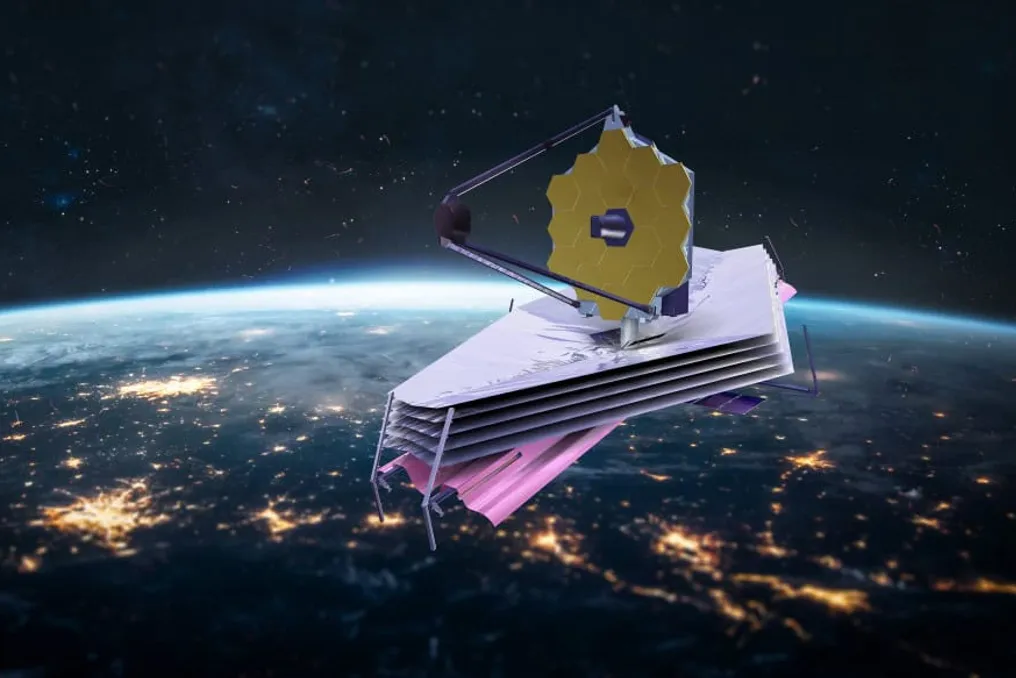
James Webb Telescope Discovers Ring Galaxy That May Have Formed from a Rare Collision
Read more
Olhar Digital
olhardigital.com.br

James Webb Telescope Discovers Ring Galaxy That May Have Formed from a Rare Collision

The James Webb Space Telescope has identified the most distant ring galaxy ever observed. This galaxy, named GS18660, represents a view that existed approximately 2.1 billion years after the Big Bang and is presumed to have formed as a result of two galaxies colliding in the early Universe.

The structure attracts attention due to the presence of a ring of newborn stars. According to a study published on September 8th in the journal Astronomy & Astrophysics, various pieces of evidence suggest that a smaller galaxy might have passed through the center of GS18660, triggering the formation of this ring.

However, this hypothesis has not been definitively confirmed. Researchers consider a collision the most likely explanation but acknowledge the need to study other possible scenarios.

GS18660 was selected for observation because previous images from the Hubble Space Telescope showed an elongated structure. Initially, researchers were not specifically looking for a ring galaxy.

It was only through more detailed observations by James Webb using the NIRSpec instrument that the circular structure became apparent. Scientists were able to study the galaxy's shape in three dimensions, track the movement of hot gas, analyze its chemical composition, and investigate its star formation history.

The data obtained also helped estimate the time of the presumed collision. According to the team's calculations, this event could have occurred between 17 and 42 million years before the observed period.

Researchers also believe that between 10% and 20% of the stellar mass in the ring region formed in the last tens of millions of years. This strengthens the probability that the impact triggered an intense episode of star formation.

The interpretation is based on a combination of the galaxy's characteristics, including the ring, the presence of a satellite, and a gas bridge between the objects. Another possible reason is that an internal structure, resembling a stellar bridge, could have directed gas and stars into specific areas, forming the ring without the involvement of an external galaxy.

GS18660 itself possesses a bridge-like structure extending from north to south. It is currently unclear whether this is a real stellar structure or also a result of galactic interaction.

This discovery may also help astronomers understand the frequency of such structures in the past. Previous estimates suggested that collision-formed ring galaxies were as rare in the early Universe as they are now, appearing roughly one in ten thousand galaxies.

If the origin of GS18660 is confirmed as a collision, this estimate may need revision, indicating that such an event was more common in the early stages of cosmic history.

Regardless of the final explanation, this object provides an opportunity to study how galaxies developed complex structures when the Universe was only a few billion years old.
Similar stories

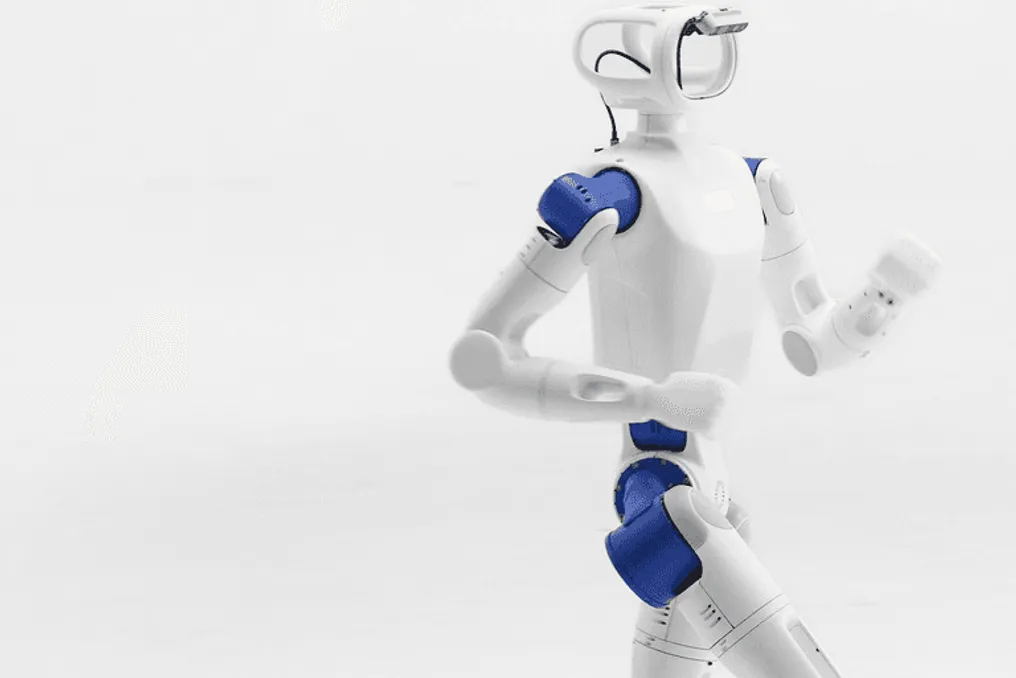
RoboParty releases source code for its humanoid robot RP1, including mechanical design and control software
Read more
pandaily.com

RoboParty releases source code for its humanoid robot RP1, including mechanical design and control software

RoboParty has released the RP1, a humanoid robot positioned as a fully open, fully functional platform. Instead of providing only a Software Development Kit (SDK) or a few Application Programming Interfaces (APIs), the company is publishing materials across the entire development chain: from mechanical and electrical design and proprietary joint modules to firmware, robot models, deployment tools, and training. The description of this project was presented in technical documentation on October 25th.

The RP1 robot stands 135 cm tall. The open version is equipped with 24 active degrees of freedom, while the Professional version offers 30 degrees of freedom, including two in the head and seven in each arm, suitable for more complex manipulation research. The head and hand modules can be replaced for use in various applications such as education, scientific research, data collection, tours, or entertainment. RoboParty demonstrated the robot's ability to walk continuously, track human movements, recover from pushes, and stand up after falls.

The hardware is based on ROMOMO, RoboParty's integrated rotary joint module. According to published specifications, the nominal peak torque ranges from 25 to 160 Newton-meters when powered by 48V and using CAN-FD communication. These modules combine inner rotor motors with planetary gearboxes, allowing for the sacrifice of low rotor inertia for fast response, stiffness, overload resistance, and reduced cost. RP1 uses an off-axis hip joint and a parallel ankle, where two motors jointly control pitch and roll, and the hollow cable routing attachment simplifies joint disassembly.

On the GitHub platform, the RP1 overview repository contains links to subprojects dedicated to mechanical source files, electronics, testing and assembly procedures, ROMOMO joint firmware, and host tools, as well as the RP Hand dexterity with SDKs in C++, Python, and ROS 2, full machine testing, and controller application. The repository lists mechanical CAD models, schematics, PCB layouts, Gerber files, material specifications, and assembly documentation for the hardware, while URDF, MJCF, and mesh models are available for simulation. The original article notes that the exact scope of each release should be checked in individual repositories.

Regarding software, the embedded stack connects motors, inertial sensors, and the battery management system through a unified device interface, enabling control at a frequency of 500 Hz and policy updates at 50 Hz. An open-source motion remapping tool called hhtools maps human movements onto the robot while respecting joint limits and ground contact. Within the basic development platform, RoboParty's PartyOS opens parts of the base motion layer, including hhtools, MimicLite, and UFO—a recovery project for disturbances and falls. Higher levels for intent representation and agent skill orchestration remain under research.

RoboParty has opened applications for the RP1 beta program, intended for developers and teams with real projects ready to report issues and provide feedback on this platform.

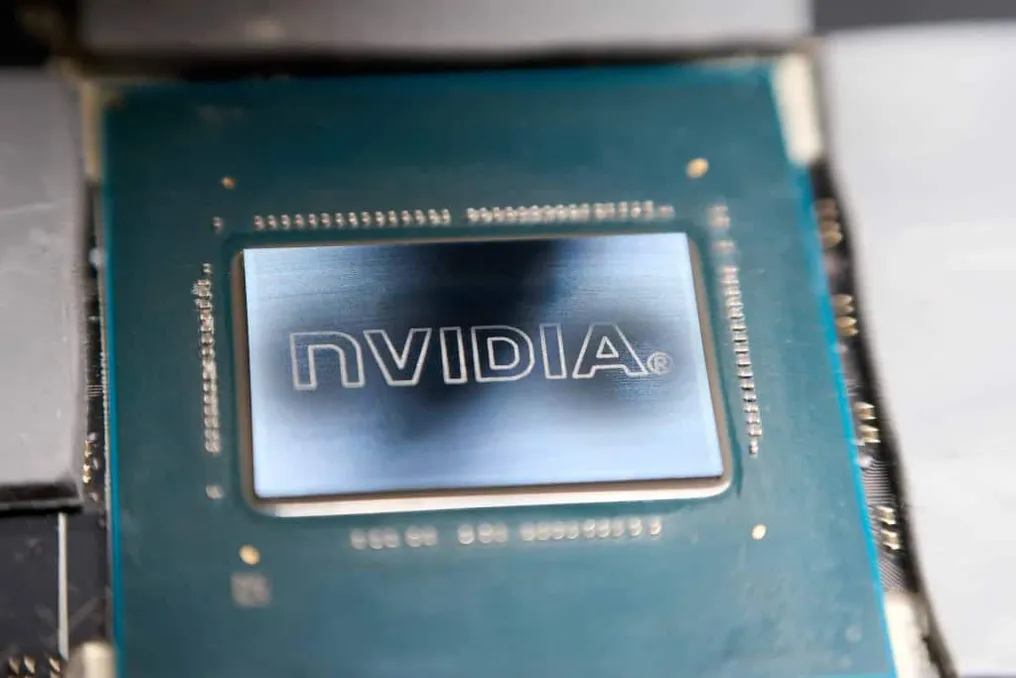
OpenAI seeks alternatives to Nvidia and considers Google AI chips
Read more
olhardigital.com.br

OpenAI seeks alternatives to Nvidia and considers Google AI chips

OpenAI, the developer of ChatGPT, is planning to acquire artificial intelligence (AI) chips produced by Google, as reported by The Information. This potential purchase could increase the utilization of processors created by the major search company in the context of the competition for AI infrastructure.

According to the report, OpenAI has already been using Google's AI chip rental services since 2025. This new move would signal an advancement in the existing commercial partnership, although details such as the transaction cost, the volume of processors, or the purchase timeline have not yet been disclosed.

When contacted by Reuters, Google did not provide statements on the matter, and OpenAI itself opted not to comment on the issue.

A possible acquisition of Google chips by OpenAI demonstrates that rivalry in the field of AI does not preclude commercial agreements between corporations that compete in the same market. Google, which creates its own AI models and competes with OpenAI in products and services in this sector, also offers its processors to meet the infrastructure demands of other companies that require computational power to train and run models.

However, the information released so far does not detail the terms of a potential acquisition, nor whether OpenAI's intention is to replace part of its current equipment or simply diversify its processing options.

Popular