
Lava-covered exoplanet retains atmosphere, challenging scientific expectations
Read more
Olhar Digital
olhardigital.com.br

Lava-covered exoplanet retains atmosphere, challenging scientific expectations

The planet, completely covered in molten rock, calls into question astronomers' predictions. Exoplanet TOI-561 b, located approximately 280 light-years from Earth, appears to sustain a significant atmosphere despite the intense stellar radiation, which traditional models suggested should have caused gas loss billions of years ago.

Observations conducted with the James Webb Space Telescope show that the planet reflects about 75% of the starlight it receives. One possible reason for this phenomenon is the presence of bright clouds formed by evaporated minerals, which act as natural sunscreen.

These findings were published in The Astronomical Journal and contribute to deepening a previously made discovery: this extremely hot rocky world apparently possesses a substantial atmosphere.

To understand the exoplanet's behavior, the team used James Webb to observe it for 37 hours, tracking nearly four full orbits around its star. Scientists analyzed changes in the planet's luminosity and thermal emission over this period. The data showed that the perpetually dark side is not hot enough on its own to explain the temperature difference observed on the illuminated side.

The conclusion is that TOI-561 b reflects approximately three-quarters of the light it receives. To explain this result, researchers compared the observations with computer simulations of the planet's climate. The models suggest that clouds composed of silicate minerals, such as silicon dioxide and magnesium silicate, may form in the atmosphere. These particles would reflect some of the stellar radiation before it reaches the surface, thereby reducing heating.

This effect is analogous to the function of planetary sunscreen. Furthermore, the atmosphere appears to transport some heat from the illuminated side to the dark side, contributing to the lowering of the temperature on the star-facing side. However, the exact composition of these clouds has not yet been directly confirmed; this is an explanation proposed by the models for the observed data.

The existence of a significant atmosphere is particularly intriguing because TOI-561 b is subjected to intense stellar radiation. Under such conditions, the gases of a relatively small rocky planet should have escaped into space over time. One hypothesis is that the exoplanet initially possessed an exceptionally large reservoir of gases. Another possibility is that its interior continues to replenish the atmosphere.

Researchers speculate that the surface of TOI-561 b may be covered by a global ocean of molten rock. This material could serve as a giant volcanic source, continuously releasing gases and compensating for some losses to space. Interaction between the interior and the atmosphere is also possible: while gases escape from the molten region to feed the outer layer, some of them might return to the planet's interior. Such dynamics could explain how the atmosphere is preserved for billions of years in such an extreme environment, although the exact mechanism is still being studied.

Scientists do not yet know which gases predominate in the atmosphere of TOI-561 b. One version suggests a dense layer of carbon dioxide, similar to Venus's atmosphere but under much hotter conditions. Another hypothesis relates to sulfur dioxide, a gas associated with the volcanic activity of Io, one of Jupiter's moons. The team plans to conduct new observations of the planet using James Webb at longer wavelengths. The resulting data will help determine the chemical composition of the atmosphere and clarify how the exoplanet retains its gases despite prolonged exposure to stellar radiation.

Although the conditions on TOI-561 b are incompatible with life as we know it, understanding its functioning can assist astronomers in studying how atmospheres form, evolve, and survive on rocky worlds vastly different from Earth.

Similar stories

Critical vulnerability in data compression system threatens websites and could allow remote code execution by hackers
Read more
olhardigital.com.br

Critical vulnerability in data compression system threatens websites and could allow remote code execution by hackers

A critical vulnerability in the data compression system is forcing technology companies to release security updates to prevent attacks that could compromise servers and applications. This vulnerability, named HTTP2Shell, affects Brotli—a technology developed by Google and used in various elements of internet infrastructure.

This breach is classified as very serious, with a score of 9.2 on a ten-point scale. It is capable of causing memory corruption, data leakage, service outages, and, under certain circumstances, remote code execution. The latter scenario allows an attacker to execute commands within the vulnerable system.

The issue, identified under the code CVE-2026-111497, is also known as Node2Shell and Broccoli2Shell. Among the software potentially at risk are Node.js, .NET applications, and Python packages using vulnerable versions of the Brotli decoder.

According to TechRadar, many companies and projects have already begun distributing fixes. However, at the time of publication, there was no confirmation that this vulnerability was being exploited in real-world malicious attacks.

The problem has prompted various projects to release security updates. Google updated the Brotli library on October 21st, releasing versions 1.0.10, 1.1.1, and 1.2.1. On the same day, Node.js also released patches. The vulnerability affects the 22.x, 24.x, and 26.x runtime lines used for running JavaScript code outside of browsers.

Over the weekend, Microsoft published an emergency update for .NET. The company warned that successful exploitation could lead to privilege escalation in vulnerable systems. Additionally, Python packages using the decoder received fixes on October 23rd.

TechRadar provided a list of patched versions but emphasized that having these versions does not mean that all systems using these technologies are vulnerable. The risk depends on the installed versions, the libraries used, and how each application processes data. It is also important to remember that some programs contain their own copy of the decoder, so administrators must check dependencies and update the components actually in use.

This race to fix HTTP2Shell draws attention to a broader issue: maintaining the security of digital infrastructure, which relies on numerous components, libraries, and servers that are not always updated regularly.

A recent warning concerning PHP—another widely used technology for building websites—showed how this problem can be exacerbated if maintenance personnel do not apply security patches. Although PHP vulnerabilities differ from HTTP2Shell, both cases illustrate the difficulties of securing systems dependent on software components maintained by different organizations.

According to CNET, the PHP Foundation itself, a non-profit organization supporting the language's security and development, operates with only one full-time employee and about 14 part-time staff, in addition to council volunteers. The organization's CEO, Elizabeth Barron, told Reuters that the demand for security changes in PHP code has increased due to the expansion of threats identified by artificial intelligence (AI), without a corresponding increase in staff.

Awareness among website owners is also a barrier. A study cited by CNET and conducted among 121 small business owners who maintain their own website showed that 45% had never heard of PHP, and 71% did not know whether their site used the technology.

Responsibility for applying fixes varies depending on the infrastructure. Some managed hosting services perform updates for clients, while owners of their own servers must act independently. For regular website visitors, updating a browser or changing passwords will not eliminate a server vulnerability at another organization; protection primarily depends on timely component updates and appropriate security measures taken by application administrators.

The main recommendation is to install available updates for affected components. After patching, processes may need to be restarted and container images rebuilt to ensure that services stop using vulnerable versions.

If an immediate patch cannot be applied, temporary measures exist to reduce risk. For Python applications, a temporary solution is to remove vulnerable Brotli packages and optional dependencies that use them. Administrators can also configure proxies, load balancers, or web application firewalls to block specific requests with Brotli-packed bodies. However, this measure does not provide complete protection for applications receiving malicious responses from other servers and attempting to unpack them. For Node.js, there is no full alternative to updating.

The nickname HTTP2Shell refers to another recent vulnerability known as PHP2Shell, which affected PHP, a language widely used in web development and applications. Both vulnerabilities share a worrying common aspect: under certain conditions, they can pave the way for remote code execution. This makes patching particularly important for organizations running internet-facing systems.

Nevertheless, the vulnerabilities themselves are different and affect different components. Fixing PHP2Shell does not automatically protect the environment from HTTP2Shell, just as updating Brotli does not solve specific PHP issues. In the case of HTTP2Shell, TechRadar mentioned public proof-of-concepts but did not indicate confirmed real-world exploitation. Despite this, the availability of fixes and the potential severity of the problem make checking affected systems a priority. The article 'Falha crítica ameaça sites e pode permitir que hackers executem códigos remotamente' first appeared in Olhar Digital.

Is it possible to bring unknown organisms from Mars to Earth?
Read more
olhardigital.com.br

Is it possible to bring unknown organisms from Mars to Earth?

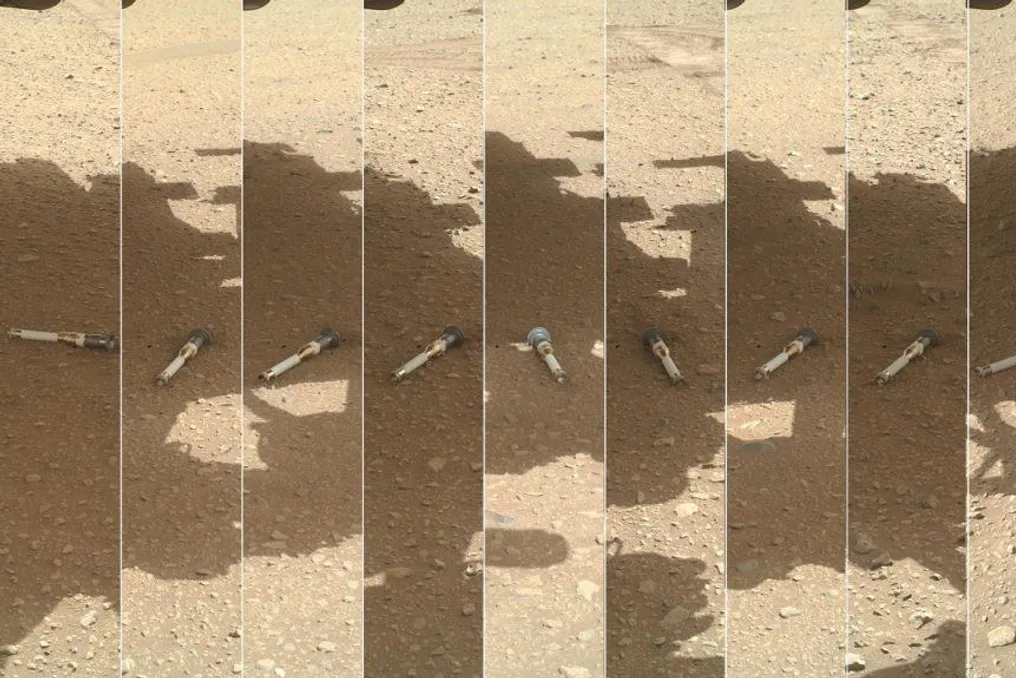
The search for signs of life on Mars partially depends on analyses that can only be conducted with high accuracy on Earth. Samples collected by the NASA rover Perseverance are stored in tubes on the surface of the Red Planet. However, their return involves technological difficulties, high costs, and strict protocols to prevent contamination of the material and protect the Earth's biosphere.

The initial plan of the Mars Sample Return mission, developed by NASA in collaboration with the European Space Agency (ESA), involved collecting the tubes left by Perseverance and delivering them to a lander. Alternatively, two helicopters equipped with robotic manipulators could retrieve samples directly from the surface. A small rocket would launch a capsule containing the material into Martian orbit, from where a European spacecraft would capture and transport it to Earth. The delivery was initially planned for 2033.

Nevertheless, the project has faced technical problems, delays, and rising costs. Due to these obstacles, NASA suspended the original mission architecture and began evaluating more economical options, including proposals from the private sector. As a result, the return schedule has been revised and now depends on determining a new strategy.

While the United States reviews its plans, China is developing the Tianwen-3 mission, which aims to bring Martian material to Earth by 2031. The China National Space Administration (CNSA) intends to collect and return samples using its own technologies. If schedules are met, the country could deliver material from Mars earlier than the American-European mission.

Concerns about sample return are not limited to the possibility of discovering signs of life. Scientists must also ensure that the material is not contaminated during transport and that its arrival on Earth does not pose biological risks.

The planetary protection policy of the Committee on Space Research (COSPAR) establishes international guidelines for reducing contamination between Earth and other celestial bodies. One of the issues is so-called forward contamination, which occurs when terrestrial organisms are transferred to extraterrestrial environments. The reverse process, known as back contamination, involves the possibility that extraterrestrial material could introduce organisms or biological agents to Earth.

In the case of Mars, the hypothesis of microorganisms capable of surviving the journey and causing consequences for the Earth's biosphere must be considered in safety protocols, but there is no evidence of Martian life in the samples. Biological risk should not be confused with a confirmed threat to human health.

In an interview with Olhar Digital, astrobiologist and professor of geobiology at the Institute of Geosciences of the University of São Paulo (USP), Douglas Galante, stated that he considers the risk of any Martian organism posing a biological threat to Earth to be very low. In his opinion, there is no reason to panic, although the possibility of ecological consequences requires a scientifically rigorous approach.

Poland to host Patriot missile maintenance center under agreement with the US
Read more
noticiasaominuto.com

Poland to host Patriot missile maintenance center under agreement with the US

Polish authorities announced today that the country will host a maintenance center for Patriot missiles, which are of American design, as part of an agreement with the United States.

State Secretary for Defense Magdalena Sobkowiak stated in a social media post that this is a 'historic decision,' emphasizing that Poland has secured the PAC-3 missile maintenance center for Patriot systems, surpassing offers from Germany, the Netherlands, and Norway.

She noted that success was not guaranteed and was the result of months of negotiations and the diligent work of the entire team.

The created infrastructure is intended to accelerate the maintenance process for anti-aircraft missiles, which previously had to be sent to the US for inspections and repairs. It is expected that centralizing these tasks in Poland will reduce waiting times for European armed forces.

Popular