The Ateneu University Center (UniAteneu) has restructured the curriculum matrix for its six undergraduate courses in Information Technology (IT). Furthermore, laboratories dedicated to Robotics and Innovation have been inaugurated, yielding notable results, such as an alumnus leading a company operating in Brazil and the United States, and a group of students and graduates who developed an Artificial Intelligence (AI) focused on self-knowledge.
The IT programs were reformed to keep pace with the progress of AI. Currently, the institution offers three bachelor's degrees in Computer Engineering, Computer Science, and Software Engineering, along with three technological undergraduate courses: Systems Analysis and Development (ADS), Computer Networks, and Information Technology Management. All these courses aim to provide high-level training aligned with the demands of the Information Technology market.
The most noticeable change occurs at the beginning of the academic journey: the 'Artificial Intelligence Engineering' discipline has been incorporated into all six courses starting in the first semester. According to the coordination, the objective is for the student to complete the first period with the capacity to manage AI projects, allowing them to seek internships, provide services, or get a job early in the course.
Professor Mr. Sandro Costa Mesquita, coordinator of UniAteneu's IT courses, clarified that AI is no longer a topic reserved for the end of the course or research. He stated that today it functions as a starting point. By learning from the first semester how AI is created, trained, evaluated, and implemented, the student views the rest of the content from another perspective and can already add value to the market. This constitutes the formation of an AI manager, someone who understands the capabilities and limitations of the technology and how to integrate it into real processes.
Labs for cutting-edge disciplines
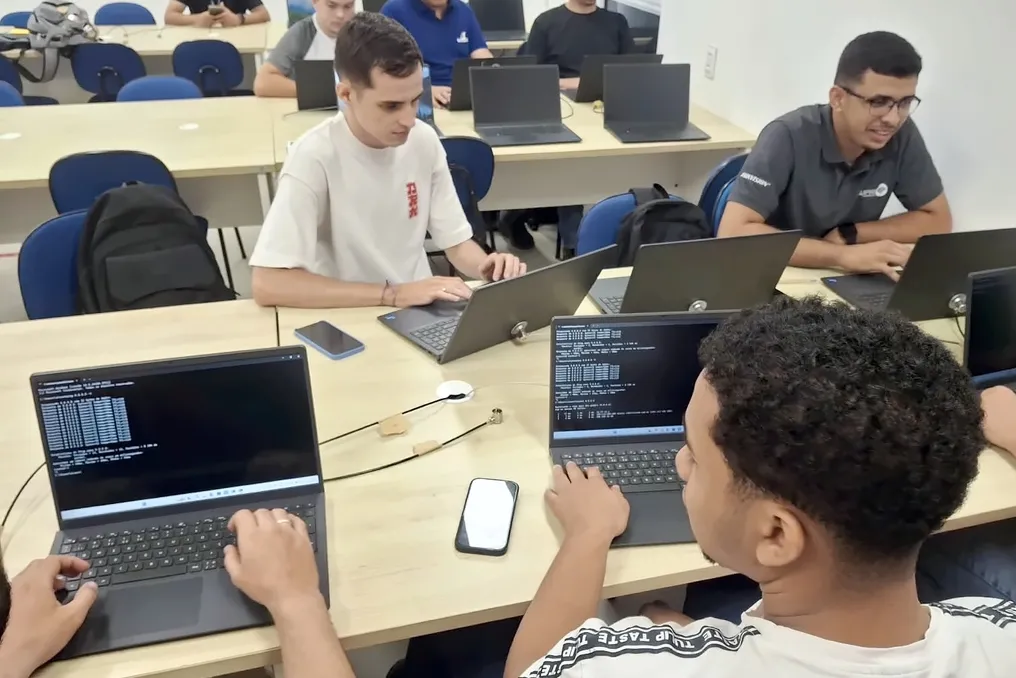
The intention is for the student not to limit themselves to studying these subjects only theoretically, but also to build and test solutions throughout their undergraduate studies. To support this new curriculum matrix, UniAteneu invested in campus infrastructure, building two Robotics labs, two more Informatics labs, and an innovation room. These spaces support subjects such as 'Artificial Intelligence', 'Machine Learning', 'Deep Learning', 'Computer Vision', 'Internet of Things', 'Quantum Computing', and 'Robotics'. As mentioned by Professor Mr. Sandro Mesquita, the purpose is for the student to develop and test solutions in projects that replicate demands from companies and the public sector.
One of the results highlighted by the institution is the success of graduates in entrepreneurship. Luccas Lima, an alumnus of UniAteneu's ADS Course, is the CEO and founder of Netup, a technology company that combines systems, Artificial Intelligence, data, and automation for corporations. Netup is headquartered in São Paulo and operates in Florida, United States, and recently participated in the Siará Tech Summit 2026, held in Fortaleza this October.
AI that asks questions instead of giving answers
Another project involving the academic community of Ateneu University Center is SophChat, an Artificial Intelligence designed for human development, combining knowledge, experts, and technology. Unlike conventional assistants, this model was not designed to provide ready-made answers; it guides interaction through questioning, following a methodology inspired by the Socratic method. This allows the user themselves to discover the origin of an insecurity, indecision, or discomfort they cannot name.
Davy Barros is the originator of this initiative. His premise is that contemporary society simultaneously lives in the age of information and the age of disconnection. SophChat emerges as a hub for human development, uniting technology, knowledge, and experts to help a person understand their identity and purpose.
The behavioral logic of the model is supervised by Wesley Bohry, an expert in DISC and Enneagram since 1990 and creator of the DeHu Super Humans method. The technical team responsible for the model's training and development consists of three generations of UniAteneu: Professor Mr. Sandro Mesquita, alumnus Luccas Lima, and Rodrigo Mesquita, a Software Engineering student. The coordinator of UniAteneu's IT courses emphasized that SophChat exemplifies what the new curriculum seeks to generate. He highlighted that it is not a common chatbot, but rather a model with specific behavioral logic, curated by an expert and trained to formulate the correct question instead of offering the most probable answer. The participation of an undergraduate student in this project, alongside an entrepreneurial graduate, demonstrates that the AI training offered transcends the classroom and materializes in real products used by real people.
Training connected to the market
The commitment of UniAteneu's IT courses is to train professionals who do not need to wait until graduation to start their activities. This curriculum reform follows a trend observed in the Ceará market itself. Fortaleza has become a hub for events and innovation initiatives, and UniAteneu encourages the participation of faculty and students in these environments, whether as mentors, exhibitors, or participants.
For the coordination, the combination of an updated curriculum, the availability of laboratories, and contact with the innovation ecosystem is what enables the student to enter the market prepared to act early. Professor Mr. Sandro Mesquita reiterated that, with the use of AI resources in the first semester, labs for solution creation, and an environment rich in nearby events and companies, the student is able to undertake entrepreneurship, research, or be hired long before receiving the diploma. The examples of Netup and SophChat represent the beginning of what is expected to be seen more frequently.
About UniAteneu
The Career Support Nucleus (NAC) is the sector responsible for guiding and monitoring students throughout their academic and professional journey. Ateneu University Center strengthens its presence in higher education in Ceará through quality academic training linked to the changes and needs of the job market. The institution maintains strategic collaborations with various companies and organizations, preparing professionals capable of different areas, which increases the chances of access to internships and job vacancies for students and alumni.
An important differentiator of the institution is the Career Support Nucleus (NAC), which assists in planning and developing students' academic and professional trajectories. Additionally, UniAteneu provides an educational experience that unites theoretical knowledge with practical experience, using modern and well-equipped laboratories, under the supervision of qualified and experienced professors in their respective fields. As a result of this focus on academic excellence and employability, UniAteneu trains new professionals in Information Technology every semester, ready to operate with technical competence, responsibility, and strategic vision in private companies, public agencies, and civil society entities, thus contributing to the advancement of the job market and society.