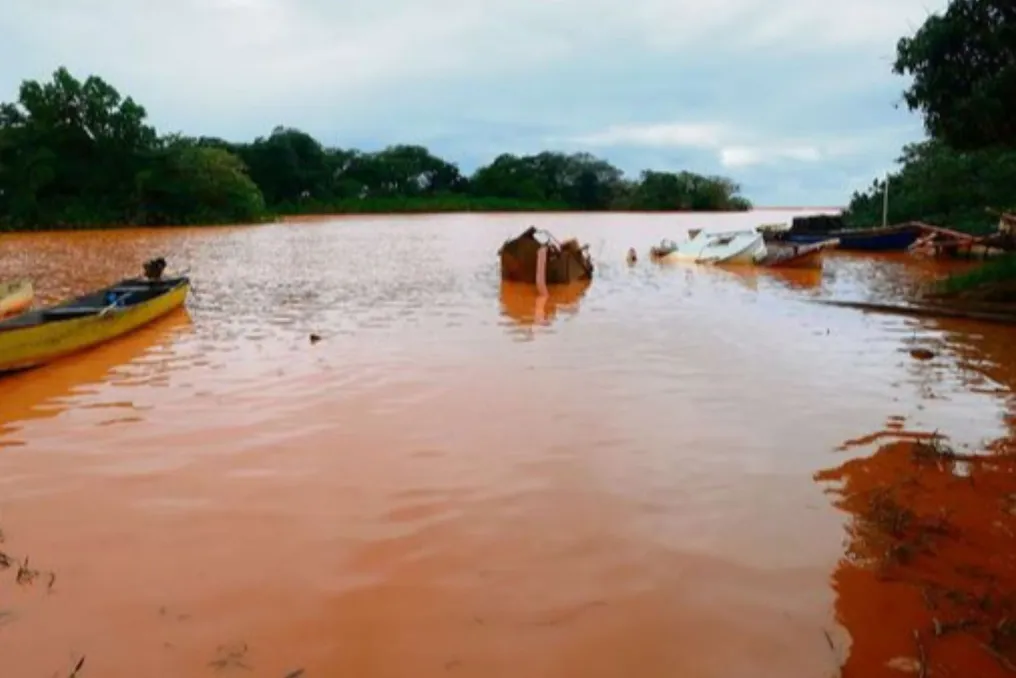
After a period of ten years, the federal government issued a decree that reestablishes guidelines and authorizes fishing activities in the marine zone adjacent to the mouth of the Doce River, covering the area between Aracruz and Linhares, in the state of Espírito Santo.
Experts consulted by g1 indicated that this release was based on a technical opinion issued by the National Health Surveillance Agency (Anvisa). This opinion confirmed the safety of consuming fishery products from the region, based on monitoring data collected by the Federal University of Espírito Santo (Ufes).
With the publication of Interministerial Decree MPA/MMA No. 75, the norms that previously regulated fishing before the ban were resumed. It is important to note that this measure does not introduce new rules, but rather reestablishes those that already existed, covering aspects such as types of fishing, permitted equipment, species eligible for capture, and closed seasons, the time when fishing is suspended to protect animal reproduction.
The geographical extent covered by the aforementioned decree extends from Barra do Riacho, in Aracruz, to Degredo/Ipiranguinha, in Linhares, encompassing a maritime strip with a depth of up to 20 meters.
Additionally, the regulation establishes the need for continuous monitoring of fishing activity and determines that any decisions regarding the opening, suspension, or closure of fishing must consider updated scientific information, reports, and data.
g1 attempted to obtain clarification on the decision and the studies supporting it from the Ministries of Fisheries and Aquaculture, Environment and Climate Change, and Health, but received no response until the latest update of the story. The Federal Public Ministry (MPF) was also notified and awaits its position.
Water quality analysis by the Ministry of Health
In response to questions about water quality, the Ministry of Health informed g1 that, in collaboration with the Brazilian Agency for SUS Management Support (AgSUS), it coordinates the Special Program for the Health of the Doce River (PES Rio Doce). This program aims to recover the health of communities affected by the rupture of the Fundão dam.
It was stated in an official note that water monitoring is conducted by AgSUS, while Funasa and contracted laboratories perform the analyses. The results obtained are sent to municipal and state surveillance bodies, which are responsible, together with other competent entities, for implementing the necessary actions. Studies aimed at evaluating health effects will be developed by the Doce River Health Research Network, under the coordination of Fiocruz.
In an assessment conducted in July, all water sources in the municipalities of Colatina and Baixo Guandu showed levels within potable parameters. The recorded indices were 90% in Linhares, 87% in Sooretama, 73% in Aracruz, 67% in São Mateus, and 50% in Marilândia. The monitored supply sources included piped water, artesian wells, and family cisterns.
Fishing ban in 2016
In February 2016, the Federal Court of Espírito Santo granted an injunction imposing an indefinite ban on any type of fishing at the mouth of the Doce River, except that intended for scientific research. At that time, the determination resulted from a request made by the Federal Public Ministry (MPF), which had pointed out the absence of conclusive studies regarding the contamination of fish, mollusks, and crustaceans residing in the area, following the arrival of waste from the Fundão dam, which ruptured in November 2015. The central concern involved both the potential health risks to those who consumed the fishery products and the environmental impacts on the marine ecosystem.