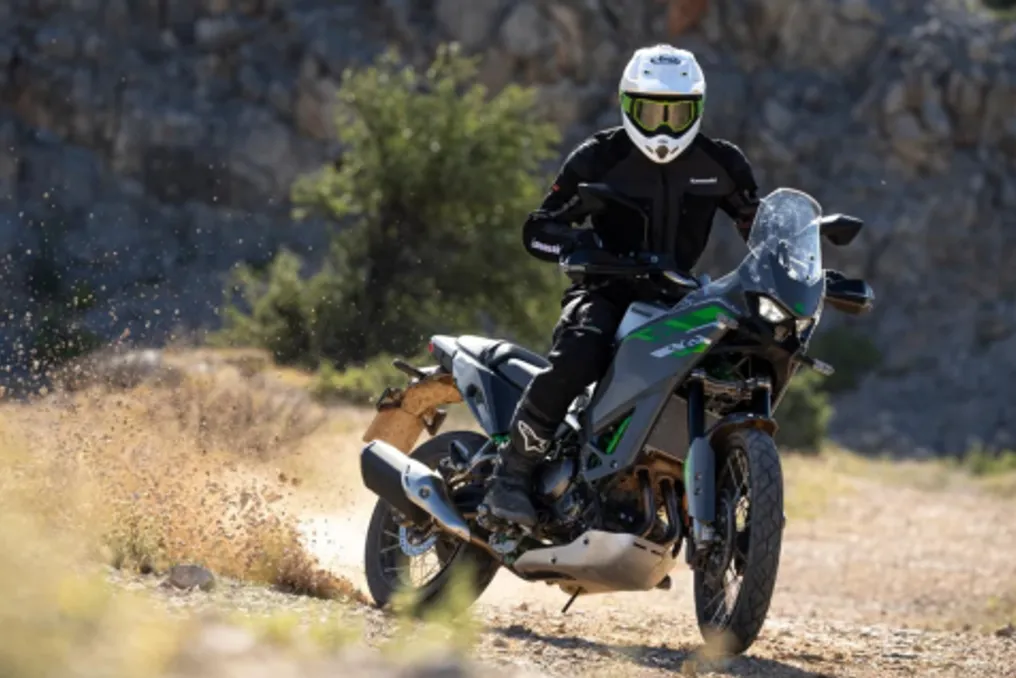
Kawasaki has introduced the KLE 650 motorcycle, which becomes the new member of the Japanese manufacturer's trail bike line. This model is available in two configurations: KLE 650 ABS and KLE 650 SE ABS, elevating the engine level of the KLE line, which currently features the 500 version.
This launch corroborates speculations made by international media following the teaser released shortly after the debut of the KLE 500 SE Smartride 2027, indicating the arrival of a larger displacement trail bike within the same vehicle family.
The disclosed specifications come from Kawasaki North American material, which classifies both versions as the 2027 line and confirms their availability in US stores starting in February.
Technical Details and Engine
The engine is a 649 cc parallel twin equipped with liquid cooling, dual overhead camshafts, and eight valves. It is based on the medium-displacement platform used by Kawasaki in other models, such as the Ninja 650 and Versys 650.
Although power, torque, and weight have not been disclosed by the manufacturer, motorcycles with the same parallel twin engine generate approximately 69 hp and 6.5 kgf·m.
The most significant technical change lies in the electronic throttle, which features 38 mm butterfly bodies. The absence of a cable between the grip and the engine allows the electronic control unit to manage air and fuel, enabling features such as cruise control and traction control. According to Kawasaki, the intake and exhaust tuning focuses on delivering torque below 4,000 rpm, with an increase in power above 6,000 rpm.
The KTRC traction control system presents two modes: Mode 1, less intrusive, preserves more traction when exiting curves; and Mode 2, designed for wet surfaces, cobblestones, and gravel, cuts power earlier upon detecting slippage.
The clutch is assisted and slipping, which reduces the effort required on the lever and restricts rear wheel lock during sudden braking. Cruise control is standard on both versions.
Chassis and Suspension Features
The chassis is constructed from high-strength steel trellis and weighs 16.9 kg. The engine functions as a structural component, as the swingarm is fixed by a bolted plate on the rear of the engine, eliminating the need for extra crossbars. The steel swingarm is 0.5 kg lighter than that of the KLE 500, offering greater vertical rigidity.
Kawasaki itself states that the wheelbase, caster, and trail have been optimized to offer greater stability on asphalt compared to the KLE 500. This implies that the larger bike is more geared towards road use than maximum off-road performance of the family.
In terms of suspension, the front inverted fork measures 43 mm and offers 211 mm of travel. The rear Uni-Trak monoshock provides 196 mm of travel, featuring continuous preload adjustment to accommodate passengers and luggage.
The braking systems include two 300 mm discs in the front, with 27 mm two-piston calipers, and a 230 mm disc at the rear. Although ABS can be disabled for use on sandy terrain, it is programmed to automatically reactivate upon each ignition.
Wheels, Ergonomics, and Finishes
The spoked wheels use aluminum rims and steel spokes, measuring 21 inches in the front and 17 in the rear. Only the SE version has tubeless-ready wheels; on the standard version, a puncture in the tread would require removing the wheel and changing the inner tube.
The seat height of the KLE 650 is 869 mm, very close to the 870 mm of the KLE 500. This height is considered high for the segment, but Kawasaki offers low seats as an accessory for shorter riders. Other available accessories include an engine protector, top box, side panniers, and heated grips.
The fuel tank holds 15.9 liters and has a narrow shape, designed so the rider can slide their body forward on uneven terrain. The windscreen offers three positions, with options of 27 mm or 55 mm more than the standard setting. The handlebars are a fat bar type, made of steel on the basic version and D.I.D. aluminum on the SE. The footpegs have tool-free removable rubber, exposing metal teeth for standing riding off-road.
The rear subframe was designed to support two side panniers and a top box simultaneously. Furthermore, the raised exhaust was positioned to allow the use of symmetrical panniers without compromising the angle of inclination.
Differences Between Standard and SE Versions
The distinctions between the two versions go beyond the instrument panel. The standard version uses a 5-inch LCD display, while the SE is equipped with a similar-sized color TFT that alternates between light and dark backgrounds according to ambient lighting. The SE version also offers two screen layouts and point-to-point navigation when connected to the Rideology app, a feature that requires a paid license and varies by country. Both versions display notifications from the mobile phone.
The SE version additionally includes quickshifter, tubeless wheels, aluminum handlebars, reinforced metal handguards, a USB-C port, and a 106 mm taller windscreen. The skid plate also differs: the standard version receives a plastic piece, justified by Kawasaki due to its lower weight, while the SE version features an aluminum protector, which offers greater protection to the side and bottom of the engine. In practice, this latter option represents the most economical solution in the entry version.
The values and dates mentioned refer exclusively to the United States market, and direct conversion should not be used as a parameter due to tax, shipping, and trade policy issues. There is no information about the arrival of the KLE 650 in Brazil.
While the KLE 500 was confirmed for the Brazilian market during the Interlagos Festival 2026, the larger version, revealed this Tuesday, has no confirmation regarding its arrival or the versions that will be offered locally.