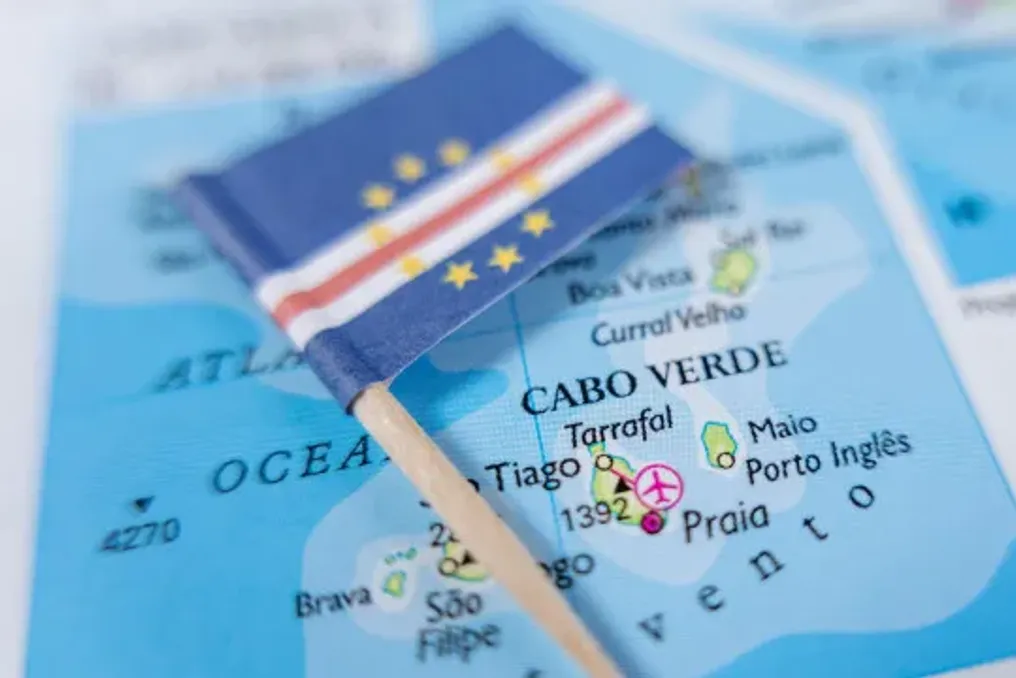
The government of Cabo Verde has announced its intention to provide electricity to the entire population of the country by 2028. The Minister of Coordination of Special Projects and Fund Access stated that the goal is to connect households that currently lack electricity access, as well as to legalize illegal connections.
José Carlos Moniz voiced this objective during a panel discussion on energy at the II Forum for Investment in Portuguese-Speaking Africa, held on Sal Island. Currently, electricity coverage in the country stands at 97%, and it is expected that the remaining 3% will be connected.
This task is enshrined in the National Pact under Mission 300 (M 300). This mission provides for structured partnership with the African Development Bank (AfDB) and the International Finance Corporation (IFC) to expand electricity access across the African continent.
With the support of these two financial institutions, 35 countries have already defined their pacts with plans to expand power grids. These plans are based on public policy reforms and attracting state, private financing, as well as funds from development institutions.
Cabo Verde also forecasts reaching 70% renewable energy sources by 2031 and 100% by 2040, estimating the necessary investment volume at $520 million by 2031, including $295 million in private capital.
Guinea-Bissau presented its pact, where electricity access covers 40% of the population, while basic healthcare and education services remain without power. The Guinea-Bissau document indicates achieving universal electricity access by 2030 under an ideal scenario, requiring $700 million in investments, of which $280 million is private capital.
Pedro Coutinho, founder and CEO of Source Energy, which handles renewable energy projects, noted that national pacts help investors understand each country's goals and work 'based on this ambition.' He told Lusa that his company is studying the markets of Cabo Verde and Guinea-Bissau.
Coutinho considers technical assistance from the IFC and AfDB important because it allows 'participation in everything that has already been conceived, that has already been developed. This greatly helps minimize project development time.' He emphasized that for developing countries, it is crucial 'not to depend on oil-producing countries.'
He added that natural resources such as sun or wind do not require transportation, are not subject to rising oil prices or logistical corridors, and thanks to technological progress 'can be compensated by batteries.' Coutinho argued that 'independence' from logistics chains and oil producers is 'an important part of the future of these countries.'
The Forum for Investment in Portuguese-Speaking Africa, which began on Monday and concludes today on Sal Island, is organized by the IFC, a World Bank Group member specializing in the private sector. According to updated IFC data, over the past five years, this organization has mobilized about $1.2 billion (approximately one billion euros) in 10 projects in Portuguese-speaking African countries.