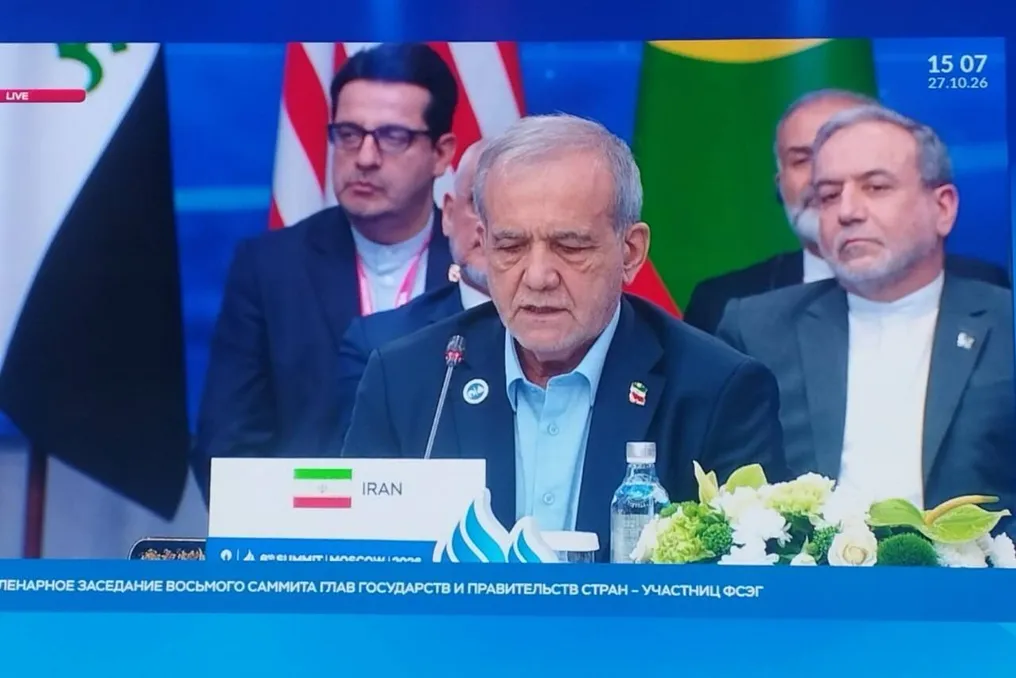
Iranian President Pezeshkian calls for enhanced gas cooperation, condemns US sanctions and military aggression
Read more
Tehran Times
www.tehrantimes.com

Iranian President Pezeshkian calls for enhanced gas cooperation, condemns US sanctions and military aggression

Iranian President Masoud Pezeshkian called on major natural gas producers to strengthen strategic and technical cooperation to ensure global energy security. He warned that unilateral US sanctions and military intervention in the Persian Gulf destabilize energy markets and threaten global economic growth.

Speaking at the eighth Gas Exporting Countries Forum (GECF) summit in Moscow on Tuesday, Pezeshkian noted that geopolitical tensions and unilateral measures have exposed the global energy market to serious risks. He emphasized the need for coordinated action from gas-producing countries to maintain market stability, expand trade, and strengthen investments across the entire natural gas value chain.

The Iranian President condemned military aggression by the US and Israel against Iran, stating that attacks on the country's energy infrastructure and disruptions to energy supplies jeopardize global energy security and the broader economy.

Furthermore, the Iranian president sharply denounced 'economic coercion by the US,' including unilateral sanctions, maritime and air blockades of Iran, as well as pressure on other countries to comply with these restrictions. He urged major energy suppliers to condemn and effectively counter such measures, arguing that US military intervention in the Persian Gulf had consequences far beyond the region, disrupting energy pricing, supply, and transportation.

Iran's Readiness to Expand Its Role in Global Gas Markets

Pezeshkian stated that Iran, as the founder of GECF and possessing the world's second-largest proven natural gas reserves, is ready to play a more active role in multilateral energy diplomacy, technological cooperation, and investment in gas infrastructure. Despite years of unilateral sanctions, he asserted that Iran has developed its domestic capabilities and maintained its status as the world's third-largest natural gas producer, citing the country's annual production capacity at 280 billion cubic meters.

According to Pezeshkian, natural gas accounts for about 70 percent of Iran's energy balance, and the national gas transmission network covers approximately 95 percent of the population. He invited foreign investors, especially from GECF member states, to consider opportunities in Iran's oil and gas industry, infrastructure development, and gas trade, referencing the country's strategic location along major energy corridors and potential for mutually beneficial cooperation.

Call for GECF to Turn Potential into Joint Projects

The President described GECF as an important platform for multilateral diplomacy, experience exchange, and closer coordination among gas-producing countries. He insisted on the effective implementation of the forum's charter, long-term strategy, and summit declarations. Pezeshkian noted that cooperation should focus on two main areas: strategic management and governance, as well as technical and engineering operations.

At the strategic level, he highlighted the importance of stabilizing markets and increasing natural gas trade regionally and internationally. Regarding the technical aspect, he called for joint investments across the entire gas value chain—from extraction and processing to transportation and consumption. The necessity of modernizing technological capabilities, increasing productivity, and reducing the environmental impact of gas production and use was also emphasized. Existing capacities, in his view, should be transformed into practical projects and common economic interests, while cooperation must align with long-term supply and demand trends.

Pezeshkian further called for intensified efforts to expand regional and global gas markets, maximize the value of natural gas resources, and combat energy poverty.

Regional Cooperation and Multilateralism

This summit takes place amid Iran's and Russia's desire to deepen cooperation in energy and other fields. Speaking to reporters upon arrival in Moscow on Monday, Pezeshkian stated that relations between the two countries have gone beyond signing memoranda of understanding; both sides are working to implement their comprehensive strategic agreement in economic, scientific, cultural, defense, and political areas.

He labeled unilateralism and the use of pressure to advance national interests as serious obstacles to international cooperation, noting that Iran, Russia, and other countries are working to strengthen multilateralism.

Parallel to the summit, Pezeshkian met with the Emir of Qatar, Sheikh Tamim bin Hamad Al Thani. The leaders discussed bilateral relations and stressed the need to expand political and economic interaction, particularly in the fields of energy, trade, and coordination among natural gas exporting countries.

The Iranian ambassador to Moscow, Kazem Jalali, stated that Iran and Russia possess significant potential to form a fairer global energy architecture. In an article published by the Russian information agency TASS, Jalali argued that the future of the global gas market should be based on pluralism, diversified supply sources, and respect for the sovereignty of energy suppliers.

The GECF summit brings together major gas-producing countries to discuss energy cooperation and the future of global gas markets. Pezeshkian concluded that constructive interaction between member and observer states can strengthen supply and demand security, support fair valuation of natural gas, and enhance its role in the global energy balance while considering environmental aspects.
Similar stories

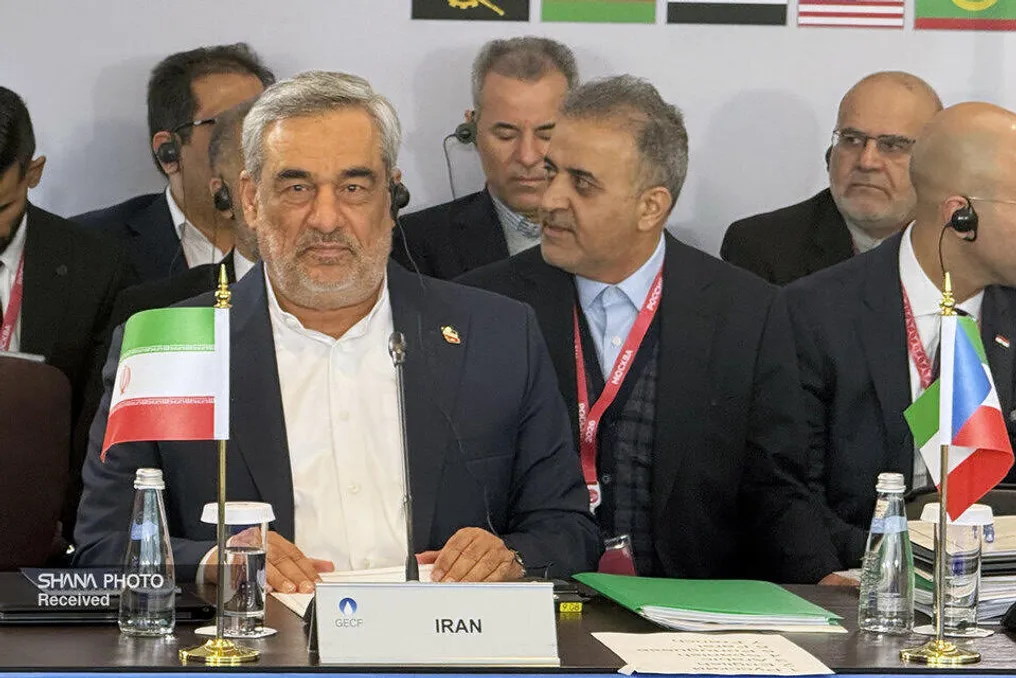
Iran calls on gas exporters to strengthen cooperation to ensure energy security
Read more
www.tehrantimes.com

Iran calls on gas exporters to strengthen cooperation to ensure energy security

At the 28th meeting of the Gas Exporting Countries Forum (GECF) in Moscow, the current Iranian Minister of Oil, Hamid Bovard, presented a broad strategic vision linking global energy security with regional stability, peace, critical infrastructure protection, and respect for national sovereignty.

On the occasion of the Forum's 25th anniversary, Bovard noted that the world's energy system is undergoing one of the most complex periods of geopolitical, economic, and technological transformation. He thanked Russia for hosting the meeting and expressed condolences to those who died in the recent war launched by the United States and the Zionist regime against Iran, including Ayatollah Khamenei, civilians, schoolchildren in Minabe, and athletes from Lamerd.

Bovard asserted that the recent energy crisis, caused by the imposed war, demonstrated that energy security extends beyond purely economic or technical issues. It is inextricably linked to peace, regional stability, infrastructure safety, and adherence to national sovereignty. He emphasized that the consequences of aggression can extend beyond the region, affecting global energy supply, economic growth, and development.

He criticized US military intervention in areas such as the Persian Gulf, as well as unilateral economic sanctions, stating that they not only target the legitimate rights and interests of Iran but also undermine trust, investment security, and the predictability of global energy markets. In Iran's view, achieving global energy security is impossible without guarantees for energy producers' security, respect for their sovereignty, sustainable investments, and effective international cooperation.

Bovard stated that GECF should become an even more important platform for convergence of views, dialogue, and practical cooperation among producing countries. He characterized the Eighth GECF Summit as a valuable opportunity to strengthen this approach and set a new horizon for strategic partnership. Although the Forum was founded in Tehran in 2001 and is entering a new institutional phase, Bovard noted that rapid global changes require members to maintain fundamental principles while restructuring priorities, tools, and cooperation mechanisms.

Iran's strategic goals include flexibility regarding global energy crises, strengthening the role of natural gas in the future energy balance, and expanding investment, management, and technological cooperation. Referring to the COVID-19 crisis in 2020 and geopolitical events of 2026, Bovard warned that global energy markets have become more vulnerable to unpredictable shocks. He called on GECF to enhance its capacity for early risk detection, crisis scenario analysis, and coordinated action.

He called for a review of the Forum's long-term strategy with an emphasis on strengthening the natural gas value chain. Natural gas, he said, will remain a key pillar of global energy security and economic development due to its reliability, abundance, operational flexibility, industrial application, and additional role in renewable energy development. According to the GECF Global Gas Outlook, global gas demand will increase by 31% by 2055, exceeding 5,400 billion cubic meters, and its share in the global energy balance will increase from approximately 23% to 26%.

Bovard proposed that the Secretariat, with the participation of members, develop a roadmap to increase the share of natural gas in the global energy balance to an ambitious 30%. This roadmap should be based on economic studies, long-term demand assessment, investment requirements, and environmental considerations. He also recommended that members adopt a coordinated approach, based on technical realities and common interests, to climate norms and mechanisms that could impose unbalanced restrictions on energy trade and investment, including the potential impact of the EU's Carbon Border Adjustment Mechanism.

He particularly stressed that vast underground reserves alone do not guarantee energy security. Converting gas resources into energy security requires timely investments, access to technologies, infrastructure development, and sustainable demand. The GECF forecast estimates that about $11.6 trillion in capital expenditures for extraction and $735 billion for transportation—over $12 trillion in total—will be needed to meet global needs by 2055. This necessitates creating a stable and predictable environment with appropriate financing mechanisms.

Bovard indicated that cooperation among members can focus on three areas: firstly, joint financing and investment mechanisms for gas projects using national, regional, and international financial institutions; secondly, technological cooperation, knowledge transfer, training, and joint projects at the extraction, transportation, and processing stages, where Iran possesses extensive experience; and thirdly, structured dialogue between producers and consumers to enhance demand security, reduce investment risks, and balance the interests of suppliers and consumers. The Secretariat can play a more active role in identifying opportunities, facilitating contacts between specialized institutions, and monitoring practical results.

As the initiator and main founder of GECF, Iran has consistently advocated for multilateral cooperation, mutual respect, and common opportunities for the sustainable development of the gas industry. Bovard reported that the 14th government, under the Seventh Development Plan, prioritizes cooperation with international energy organizations, especially GECF. Iran possesses the second-largest proven gas reserves in the world, along with a strategic geographical position and extensive technical, industrial, and human resources.

Despite decades of sanctions and imposed wars, Iran's annual gas production capacity has reached approximately 300 billion cubic meters, making it one of the world's top three producers. Natural gas accounts for about 70% of Iran's energy balance, and the gas pipeline covers about 95% of the population. Bovard stated that Iran is ready to share this experience through bilateral and multilateral cooperation, and to assist in developing joint projects and strengthening the capacity of GECF members.

He concluded that the future of the gas industry depends not only on reserves and production capacity but also on the quality of cooperation, political stability, and the ability to jointly respond to global challenges. On the occasion of the Forum's 25th anniversary, he believes an opportunity opens to begin a new chapter of effective cooperation, joint investment, and strategic convergence. He expressed confidence that the collective will and capabilities of the Secretariat can further strengthen GECF's role in the global energy dialogue, and hoped that the ministerial meeting and the Eighth Summit would reinforce solidarity and realize the common interests of gas producers and consumers.

Popular