
NGO suggests limiting plug-in hybrid tanks to 15 liters to encourage electric use
Read more
AutoPapo
autopapo.com.br

NGO suggests limiting plug-in hybrid tanks to 15 liters to encourage electric use

The non-governmental organization (NGO) advocates that plug-in hybrid vehicles should have a fuel tank limited to 15 liters. Although these models promise to operate exclusively on electricity in urban environments, reality shows that many owners rarely connect the cars to the electrical grid, resorting to gasoline use.

To promote this change, the European NGO Transport & Environment (T&E) recommends that governments across the continent offer incentives only to models with a maximum tank capacity of 15 liters, given that the current average is 51 liters.

With a smaller tank volume, a driver who chooses not to recharge the battery would have to refuel 57 times a year, compared to the 17 times currently recorded. The total fuel cost would remain unchanged; the strategy aims for the inconvenience of going to the gas station to motivate the driver to use electric charging.

This proposal is based on consumption data collected directly by the vehicles themselves and compiled by the European Environment Agency. According to T&E, plug-in hybrids registered in 2024 emitted an average of 145 grams of CO2 per kilometer during actual use, a value almost six times higher than the 24 g/km established in official homologation.

This discrepancy occurs because official standards assume that these cars will travel more than 80% of the distance in electric mode, when in reality, this proportion was only 27%. As a result, they emitted only 14% less than combustion and conventional hybrid cars, contradicting the official promise of an 83% reduction.

Large capacity tanks intensify this problem. In Europe, Chinese manufacturers such as BYD and Chery, which owns the Omoda and Jaecoo brands, dominate sales in this segment with models offering over 1,000 km of total range, thanks to tanks close to 70 liters.

The 15-liter limit is associated with other requirements proposed by T&E. By 2030, the NGO wants there to be a minimum real electric range of 200 km, support for fast charging exceeding 100 kW, and an electric motor with a power at least three times greater than that of the combustion engine.

With 15 liters and a consumption of 14.9 km/l when the battery is discharged, the vehicle could travel approximately 220 km using only fuel, which is comparable to the distance traveled in electric mode.

It is important to note that this measure is a recommendation from the NGO and not a regulation from the European Union. However, the debate is relevant to Brazil, given that Chinese plug-in hybrids are among the best-selling electrified vehicles in the country.
Similar stories

Government restores rules and allows fishing at the mouth of the Doce River after ten years
Read more
g1.globo.com

Government restores rules and allows fishing at the mouth of the Doce River after ten years

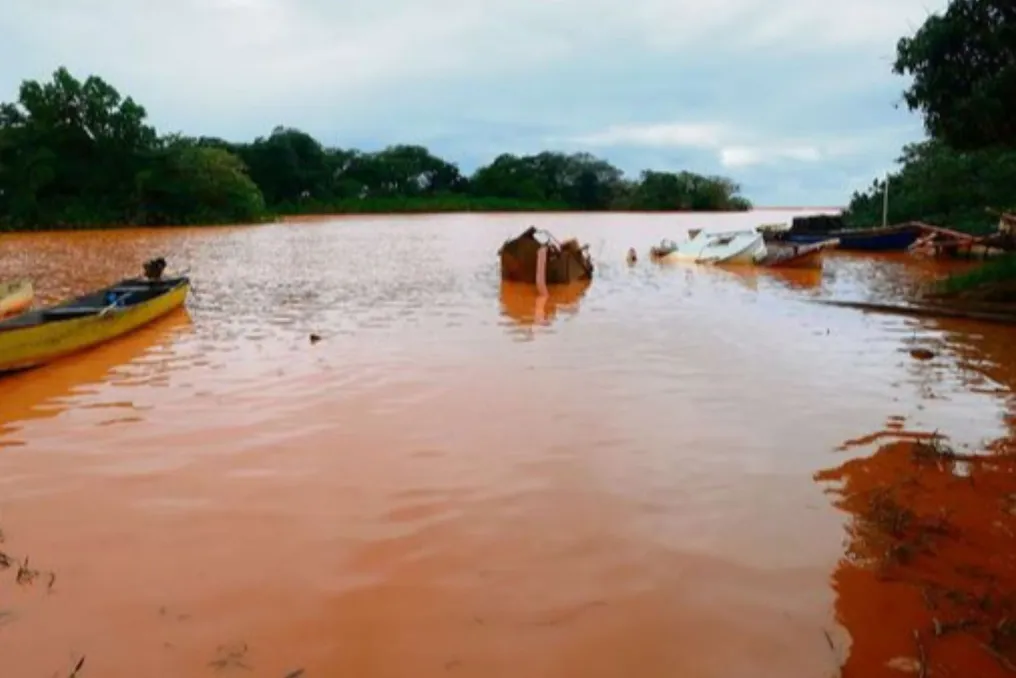
After a period of ten years, the federal government issued a decree that reestablishes guidelines and authorizes fishing activities in the marine zone adjacent to the mouth of the Doce River, covering the area between Aracruz and Linhares, in the state of Espírito Santo.

Experts consulted by g1 indicated that this release was based on a technical opinion issued by the National Health Surveillance Agency (Anvisa). This opinion confirmed the safety of consuming fishery products from the region, based on monitoring data collected by the Federal University of Espírito Santo (Ufes).

With the publication of Interministerial Decree MPA/MMA No. 75, the norms that previously regulated fishing before the ban were resumed. It is important to note that this measure does not introduce new rules, but rather reestablishes those that already existed, covering aspects such as types of fishing, permitted equipment, species eligible for capture, and closed seasons, the time when fishing is suspended to protect animal reproduction.

The geographical extent covered by the aforementioned decree extends from Barra do Riacho, in Aracruz, to Degredo/Ipiranguinha, in Linhares, encompassing a maritime strip with a depth of up to 20 meters.

Additionally, the regulation establishes the need for continuous monitoring of fishing activity and determines that any decisions regarding the opening, suspension, or closure of fishing must consider updated scientific information, reports, and data.

g1 attempted to obtain clarification on the decision and the studies supporting it from the Ministries of Fisheries and Aquaculture, Environment and Climate Change, and Health, but received no response until the latest update of the story. The Federal Public Ministry (MPF) was also notified and awaits its position.

Water quality analysis by the Ministry of Health

In response to questions about water quality, the Ministry of Health informed g1 that, in collaboration with the Brazilian Agency for SUS Management Support (AgSUS), it coordinates the Special Program for the Health of the Doce River (PES Rio Doce). This program aims to recover the health of communities affected by the rupture of the Fundão dam.

It was stated in an official note that water monitoring is conducted by AgSUS, while Funasa and contracted laboratories perform the analyses. The results obtained are sent to municipal and state surveillance bodies, which are responsible, together with other competent entities, for implementing the necessary actions. Studies aimed at evaluating health effects will be developed by the Doce River Health Research Network, under the coordination of Fiocruz.

In an assessment conducted in July, all water sources in the municipalities of Colatina and Baixo Guandu showed levels within potable parameters. The recorded indices were 90% in Linhares, 87% in Sooretama, 73% in Aracruz, 67% in São Mateus, and 50% in Marilândia. The monitored supply sources included piped water, artesian wells, and family cisterns.

Fishing ban in 2016

In February 2016, the Federal Court of Espírito Santo granted an injunction imposing an indefinite ban on any type of fishing at the mouth of the Doce River, except that intended for scientific research. At that time, the determination resulted from a request made by the Federal Public Ministry (MPF), which had pointed out the absence of conclusive studies regarding the contamination of fish, mollusks, and crustaceans residing in the area, following the arrival of waste from the Fundão dam, which ruptured in November 2015. The central concern involved both the potential health risks to those who consumed the fishery products and the environmental impacts on the marine ecosystem.

Cape Town warns low-income households to conserve water amid falling reservoir levels
Read more
iol.co.za

Cape Town warns low-income households to conserve water amid falling reservoir levels

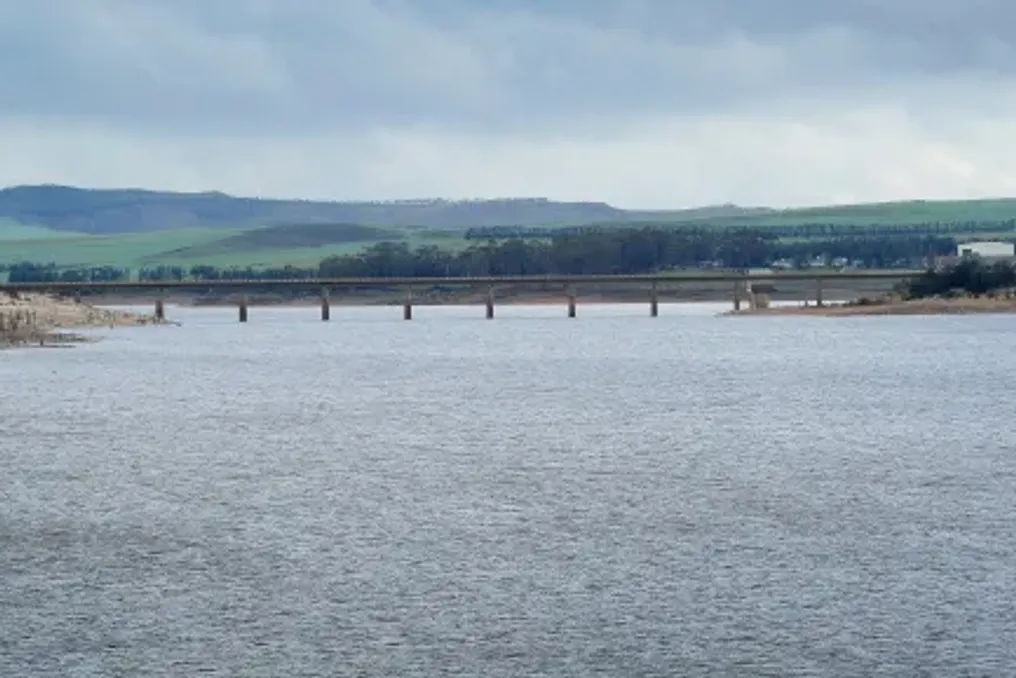
The City of Cape Town has stated that there are currently no city-wide restrictions on water usage; however, registered low-income households consuming over 15,000 liters over two consecutive months may receive a warning before their water supply is restricted.

Zahid Badroodian, a member of the municipal committee for water and sanitation, reported that the City is intensifying efforts to monitor excessive consumption by low-income clients due to the current low reservoir levels. He specified that the City sends warnings via letters and SMS to entities whose consumption exceeds 15,000 liters, as part of proactive water-saving measures for registered low-income residents.

One such message stated: 'Reduce your consumption below this limit next month, or your water supply will be restricted.' These text notifications were sent almost a month after the City began considering imposing water restrictions.

No new city-wide restrictions

Nevertheless, Badroodian emphasized that no water restrictions have been implemented at this time. He added that if restrictions are put in place, residents will be notified of the decision.

Minister of Water and Sanitation Pemmy Majodina reported that modeling is underway to assess potential restrictions in the Western Cape, taking into account the declining reservoir levels and the consideration of restrictions in Cape Town. She noted that continuous monitoring, modeling, stakeholder engagement, and risk assessment will continue to guide decisions and ensure timely response in case of deteriorating hydrological conditions or demand exceeding sustainable levels.

Modeling will determine possible restrictions

Majodina indicated that the decision to impose any restrictions will be made after presenting an annual operational analysis and relevant modeling assessments to stakeholders at the Western Cape Water Supply System Operators Forum. Last Wednesday, the City held an online webinar to provide advisors and the public with an update on the water situation in Cape Town.

On Tuesday, Badroodian stated that the webinar session did not have the authority to make decisions on imposing water restrictions. The real authority to impose restrictions on water users belongs to the Department of Water and Sanitation. During the session, the City announced that they and other users of the Western Cape Water Supply System await final modeling results from the Department of Water and Sanitation, which will determine whether restrictions will be imposed on users.

Badroodian noted that at the end of the rainy season, which concludes in October, the Department of Water and Sanitation annually assesses the Western Cape Water Supply System. He also stressed that to prevent water restrictions, reservoir levels must be at 80% or higher by the end of the rainy season. Other factors considered included current and projected consumption by both urban and agricultural users, as well as seasonal weather forecasts.

According to the City's estimates, consumption in Cape Town should decrease by at least 10% at the household level during the upcoming summer season and in the winter period of next year. Badroodian noted that Cape Town did not receive much rainfall this winter, and given the expectation of a longer, drier, and hotter summer, it is necessary to ensure that the current reservoir level of 73% lasts until next winter. He added that hot weather usually leads to peak water consumption, so the goal is to change this trend and achieve water savings in Cape Town this summer so that reservoir levels can be maintained longer and avoid serious water restrictions later.

Record frog species discovered in Pico da Caledônia
Read more
g1.globo.com

Record frog species discovered in Pico da Caledônia

A rare observation was made in Nova Friburgo, in the Serrana Region of Rio state: the pingo-de-ouro frog (Brachycephalus ephippium) was discovered in Pico da Caledônia. This species is known for its tiny size and bright coloration, and it is one of the most curious representatives of the Atlantic Forest fauna, currently endangered.

The animal's size ranges from twelve millimeters to one centimeter, making it smaller than a 1 real coin and allowing it to be considered the smallest terrestrial amphibian in the world. Despite its miniature size, the pingo-de-ouro plays an important role in maintaining ecosystem balance.

According to data from the State Institute of Environment (Inea), this species serves as an indicator of environmental quality, as its presence is usually associated with well-protected areas. This species is native to the Atlantic Forest and inhabits areas above 600 meters above sea level.

The discovery took place in Pico da Caledônia, in Nova Friburgo, one of the highest points in the state of Rio de Janeiro, which reaches an altitude of 2257 meters. The record was made by the Aventura Animal project in Pico da Caledônia.

Researchers note that this discovery underscores the critical importance of preserving natural areas to ensure the survival of rare species such as the pingo-de-ouro, which are particularly sensitive to changes in the environment.

Popular