
Heavy rains in UAE cause hail and wadi floods
Read more
Khaleej Times
www.khaleejtimes.com

Heavy rains in UAE cause hail and wadi floods

Strong rains fell in parts of the United Arab Emirates on Tuesday, accompanied by hailstorms, as dark clouds gathered over the emirates. This period of unstable weather brought heavy downpours and impressive footage of hail falling onto the ground in both urban areas and the country's open desert landscapes.

In one striking video, a man happily collects hail into a bucket during a powerful storm. He smiles while lifting the ice and records the unusual scene on his phone as the hail strikes the ground with a loud, continuous crackle. As he continues to film and photograph, water begins to accumulate under the bucket, and a heavy flow rushes across the ground. The sound of the rising water grows louder, intensifying the drama of the scene as the storm's force becomes evident.

The flow soon becomes so strong that the man has to run, tightly clutching his kandura, to reach a safe place. The recording shows his delight in collecting the hail, which is quickly replaced by a hurried escape as the rushing water splashes around him.

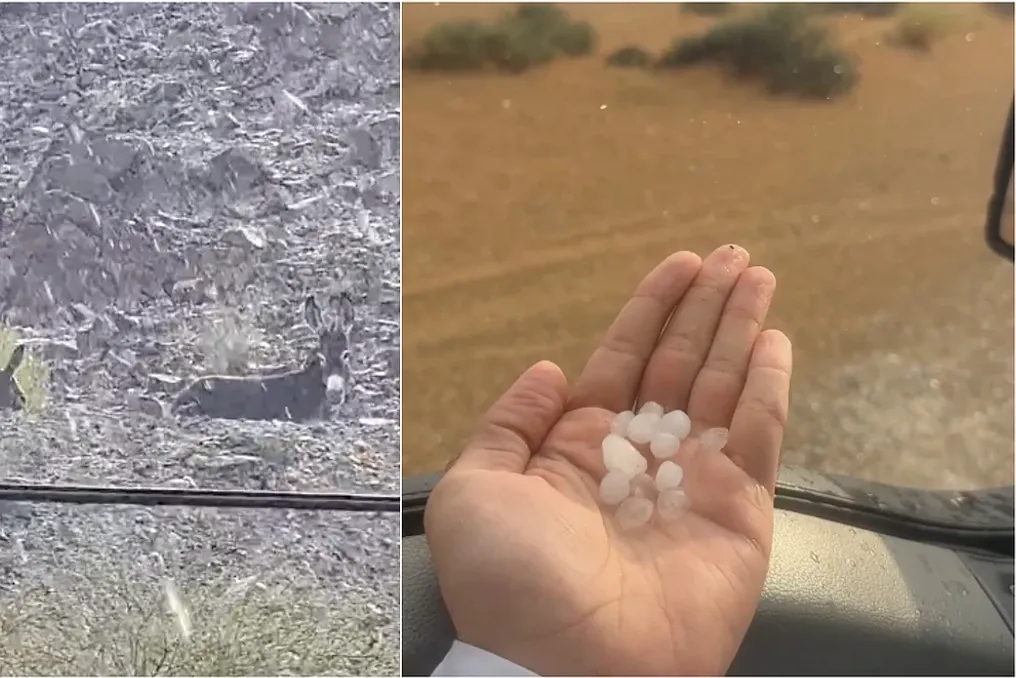
In another video, published by the account storm_ae, a man is seen collecting hail from the ground in Fujairah while new hailstones continue to fall, hitting the desert landscape with a loud, distinct sound. The footage captures the unusual sight of hail accumulating on the sandy terrain while the man holds the ice, and the storm rages around him.

Heavy rains triggered water flows through wadis along Sheikh Khalifa Road towards Fujairah, where powerful currents rush rapidly through rocky beds. A video also shared by storm_ae conveys the dramatic power of the flooding water, which crashes onto the landscape with a deafening roar, sweeping through the wadi at an astonishing speed.

On October 20, the UAE Ministry of Interior issued safety recommendations ahead of expected unstable weather across the country. The Ministry strongly advised residents to remain vigilant, exercise caution, and reduce driving speeds. The public was also advised to stay away from wadis and areas prone to water accumulation, as well as to avoid going out to sea or visiting beaches.

Earlier this year, meteorologist NCM Ahmed Habib told Khaleej Times that the influence of El Niño on the UAE could become more pronounced in autumn, particularly in October and November. Habib noted: 'From autumn, especially in October and November, the effect of El Niño will be felt in our region. Currently, during the summer season, its influence is stronger in East Asia than in West Asia.'

The recent period of unstable weather in the UAE occurs against the backdrop of this phenomenon expected to have a greater impact on regional weather conditions. The National Center of Meteorology (NCM) warned that the UAE may experience above-average rainfall in the coming months, with El Niño expected to persist until early 2027.
Similar stories

Heavy rains and hail turn UAE desert into white sea
Read more
www.khaleejtimes.com

Heavy rains and hail turn UAE desert into white sea

On Tuesday, rain and hail fell over parts of the United Arab Emirates (UAE), leading to a sharp change in the appearance of the sky over Dubai and Sharjah. The arrival of dark clouds was accompanied by a mix of heavy downpours, thunder, and flashes of lightning, transforming familiar streets and desert landscapes into a scene demonstrating the power of nature.

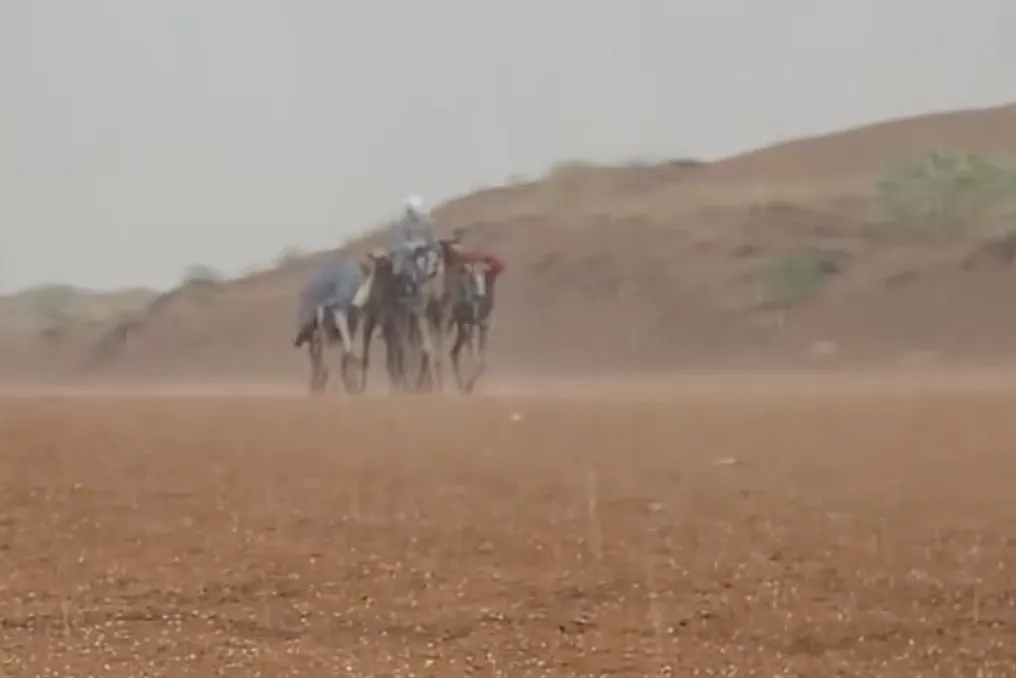
In some areas, hail struck the ground, adding an icy element to the downpour and allowing residents to see a more dramatic side of winter weather in the UAE. A video published by Storm AE shows hailstones falling on camels in Sharjah, scattering across the sandy ground around the animals during the rain.

The camels remain standing as tiny ice balls fall around them, their distinct sound cutting through the noise of the rain. Against the backdrop of the desert, this unusual sight creates a striking picture, reflecting the unexpected contrasts of a rainy day in the UAE.

Another video captures the sound of hail hitting the surface in the Al Hayab area of Dubai, and this constant tapping creates a characteristic sound while the rain continues. This brief shower once again showed the weather instability affecting parts of the UAE.

Hail was also reported in the Al Madam areas of Sharjah, where small ice particles fell onto the sandy landscape, creating an unusual sight against the desert backdrop. Cars continued to move along the highway while the hailstones scattered on the road, and the downpours brought long-awaited relief from the heat.

This winter shower against the UAE desert provided a vivid illustration of the unstable weather affecting the country. In another video posted by Storm Centre, heavy rain streams down the terrain while thunder rumbles overhead and lightning flashes across the sky.

Earlier this year, meteorologist NCM Ahmed Habib told Khaleej Times that the influence of El Niño on the UAE could become more noticeable in autumn, especially in October and November. Habib noted: 'From autumn, especially in October and November, the influence of El Niño will be felt in our region. Currently, during the summer season, its influence is stronger in East Asia than in West Asia.'

The recent series of changeable weather in the UAE occurs against the backdrop of an expected increase in the influence of this phenomenon. The National Center of Meteorology (NCM) warned that the UAE may experience above-average precipitation in the coming months, as El Niño is expected to persist until early 2027.
The peak of the phenomenon is forecast for October and November 2026, when the Niño 3.4 index will reach approximately +3°C, indicating a very strong event. However, El Niño does not guarantee extreme rainfall, thunderstorms, or flooding in the UAE; its impact varies depending on the region and season and depends on other local weather systems.

NCM also refuted viral claims on social media directly linking El Niño to severe flooding and unusually heavy rainfall, strongly urging residents to rely on official weather forecasts and warnings.

Rain and hail hit Fujairah while a camel grazes in Sharjah
Read more
www.khaleejtimes.com

Rain and hail hit Fujairah while a camel grazes in Sharjah

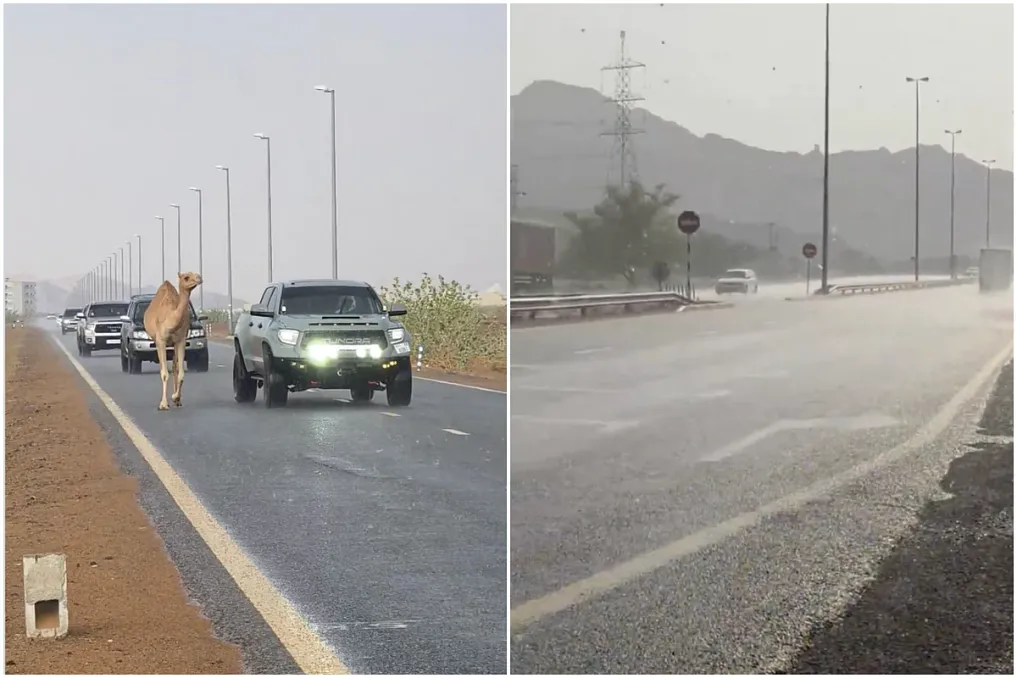
Parts of the United Arab Emirates (UAE) experienced heavy rainfall on Monday, October 19. Hail was observed in Fujairah, while in Sharjah, a camel was seen calmly walking down a wet road.

Video footage published by the Storm Centre demonstrates the fall of hail and rain in Murbad and Masafih, Fujairah, where the downpours brought a welcome change in weather.

In Sharjah, rains passed through the Al Madam and Margam areas. Drivers were not the only ones navigating the wet roads; in one location, a camel was spotted walking along the road in the rain, seemingly enjoying the stroll amidst the downpour.

These scenes occurred after the UAE had forecasted rain in parts of the country for Monday, and the downpours altered weather conditions in several areas.

The National Center of Meteorology (NCM) previously warned that the UAE might see above-average precipitation in the coming months due to the expected persistence of the El Niño climate phenomenon until early 2027.

Recent climate forecasts indicate a 96% probability that El Niño conditions will last until March 2027, with temperatures and rainfall potentially exceeding the average levels in the UAE. This phenomenon is predicted to peak in October and November 2026, when the Niño 3.4 index approaches +3°C, indicating a very strong event.

Nevertheless, El Niño itself does not guarantee extreme rainfall, storms, or flooding in the UAE; its impact depends on the region and season, as well as local weather systems.

NCM also refuted viral claims on social media linking El Niño directly to severe flooding and unusually heavy rainfall, strongly urging residents to rely on official weather forecasts and warnings.

Earlier this year, NCM meteorologist Ahmed Habib told Khaleej Times that the influence of El Niño on the UAE could become more noticeable in autumn, particularly in October and November. Habib noted: 'From autumn, especially in October and November, the influence of El Niño will be felt over our region. Currently, during the summer season, its influence is stronger in East Asia than in West Asia.'

He added that this phenomenon is capable of increasing humidity over the UAE and raising the probability of precipitation, depending on local weather conditions.

Heavy rains and hail hit the Dubai desert in the UAE
Read more
www.khaleejtimes.com

Heavy rains and hail hit the Dubai desert in the UAE

Residents of the UAE are noting a weekend during which some areas of the country experienced rain and hail, indicating a shift in weather towards cooler months.

These precipitation events occurred following a previous forecast of winter clouds approaching in mid-October, with the probability of rain expected to increase after mid-autumn. Increased humidity is also anticipated in the first half of autumn, accompanied by early morning fog formation.

On Sunday, the National Center of Meteorology (NCM) issued orange and yellow warnings for certain areas regarding the formation of convective clouds, informing residents about possible rainfall until 19:00 in the eastern and western zones.

Residents were advised to exercise caution when planning outdoor activities and to follow official instructions. Video footage published by the Storm Centre shows moderate and heavy rains on roads in the eastern region, as well as in Khor Fakkan and Al Ajili, east of Shuqi.

One of the videos also shows goats grazing in the rain against a mountain backdrop, providing relief from the current humid atmosphere. Meanwhile, heavy hail fell in the Margam area of Dubai, covering the light brown sand dunes with a white blanket.

The lowest temperature recorded in the Emirates on that day was 21.2°C, with winds in the Jais mountains in Ras Al Khaimah at 6:15 AM. Amid the ongoing period of rain, residents were advised to observe safety measures while driving and to avoid unnecessary travel, remaining vigilant to ensure the safety of all road users.

Citizens were also urged to use low beam headlights when visibility decreases, and the NCM cautioned the public against spreading rumors, strongly recommending they monitor official sources of information. In such weather conditions, the police typically urge drivers to exercise caution and adhere to variable speed limits indicated on signs and electronic displays.

Authorities emphasized the importance of staying away from dangerous areas, advising residents to avoid valleys, low-lying areas, and flood-prone zones, and not to attempt crossing flooded wadis. Furthermore, it is recommended to stay away from beaches, the sea, and mountainous regions during unstable weather, and to prevent children from playing in standing water.

According to data from the National Center of Meteorology (NCM), the average maximum temperature at the beginning of the autumn season was 39°C and is expected to drop to 26°C. In the middle of the season, around early November, highs of 31°C and lows of 18°C are expected. By the end of the season, temperatures will fall to 25°C, reaching a minimum of 13°C, coinciding with the winter solstice on December 22.

Popular