Explanation on the unnecessity of the "www" prefix in modern website addresses
Read more
Super Abril
super.abril.com.br

Explanation on the unnecessity of the "www" prefix in modern website addresses

The "www" prefix, an abbreviation for World Wide Web, has not disappeared but has lost its mandatory status in website addresses. Previously, it served to categorize the services accessible through the browser, such as portals, blogs, videos, and news sites. Technically, "www" indicated the server responsible for a specific organization's website.

In the early days of the internet, a single domain, like abril.com.br, could have multiple servers for each online service. To manage these services, the practice was established of naming each server according to its function: email servers used "mail.", file transfer servers used "ftp.", and web page servers employed "www.".

Daniel Macêdo Batista, a professor at the Institute of Mathematics, Statistics, and Computer Science (IME) at USP, clarifies that this organizational structure emerged in the early 90s among those responsible for configuring Internet servers. Batista states that adopting distinct names facilitated both access to the services and their maintenance.

However, this nomenclature was merely a convention, not a technical requirement. Even though useful, it was not always necessary, as exemplified by the first website in history, created in Switzerland, which was simply "info.cern.ch." Since this part of the name was never mandatory, websites could be accessed without altering the page functionality. As time went on, it became customary for companies to publish their names without the "www" prefix.

According to Batista, this change occurred due to two main reasons. Firstly, services that were previously provided directly by the organizations themselves, such as chat, email, and file transfer, became obsolete or started being offered by third parties, citing examples like Google Drive, WhatsApp, and Gmail. Secondly, the growing popularity of mobile devices led to a preference for more concise URLs, as typing lengthy names was considered inconvenient on smaller keyboards.

In certain situations, "www" remains present, even if it does not need to be typed. This happens because organizations start announcing their addresses without the prefix, but the website's own configuration implements an automatic redirection to the name containing the prefix, as occurs with wikipedia.org, which automatically redirects to www.wikipedia.org when accessed without "www".

Similar stories

First internet message failed after two letters in 1969 during ARPANET tests
Read more
olhardigital.com.br

First internet message failed after two letters in 1969 during ARPANET tests

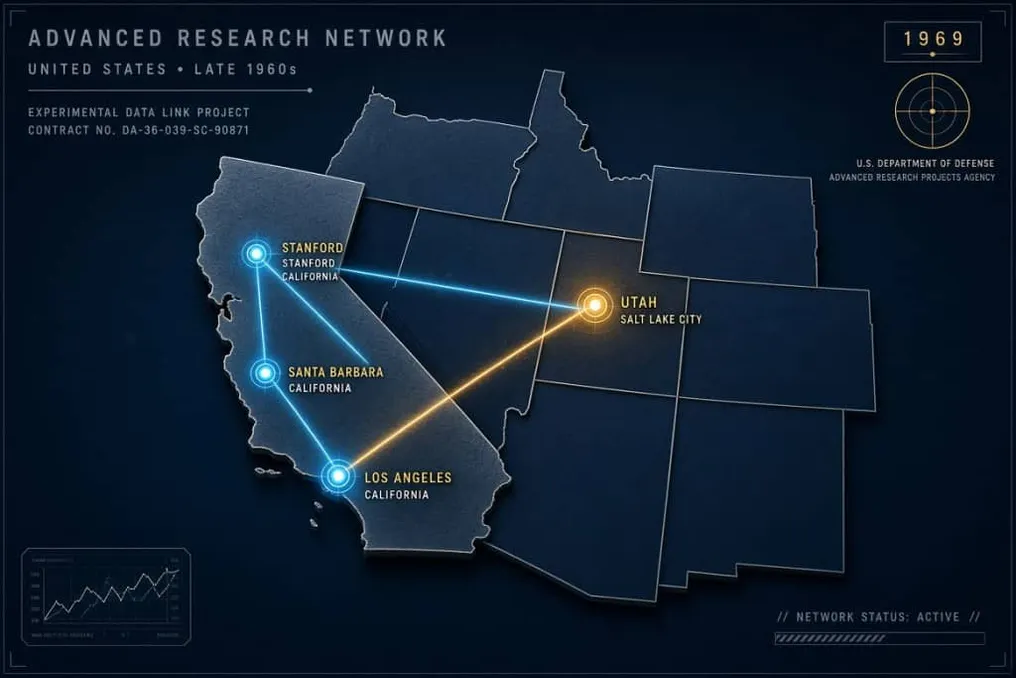
On October 29, 1969, researchers made the first connection between two computers on ARPANET, the experimental network that served as a precursor to the internet. The intended initial message was 'LOGIN,' but the system stopped functioning after transmitting the first two letters, 'LO.'

This event represented a significant milestone in machine communication. However, the modern internet evolved through a complex process that included protocol standardization and the development of new technologies to facilitate network access.

In the late 1960s, the U.S. government implemented ARPANET (Advanced Research Projects Agency Network), an experimental network designed to link computers at research centers. The purpose was to allow scientists to remotely access equipment and share computational resources.

At that time, computers were expensive and bulky equipment. The ability to use these systems remotely allowed researchers from various institutions to share their processing power.

The first transmission occurred between the University of California, Los Angeles (UCLA) and the Stanford Research Institute, which later became known as SRI International. Other connected universities included the University of California, Santa Barbara, and the University of Utah.

Leonard Kleinrock, a researcher at UCLA, was part of the team responsible for this first link. Despite the attempt to send 'LOGIN' being interrupted after the first two letters, ARPANET proved that computers from different institutions could communicate over a common network.

The 1969 connection was just one step in this evolutionary trajectory. A crucial advancement occurred on January 1, 1983, when TCP (Transmission Control Protocol) and IP (Internet Protocol) protocols were adopted as the standard for ARPANET and other computer networks. These protocols defined universal rules for machine communication, and some consider them the true starting point of the internet because TCP/IP helped integrate various networks, whereas ARPANET only enabled the connection.

In 2009, Marc Weber, founding curator of the Computer History Museum's Internet History Program, noted that ARPANET helped dissolve the isolation of groups that used large computers independently, paving the way for a connected environment.

Another important milestone happened in the 1990s when British scientist Tim Berners-Lee developed the World Wide Web (WWW). This system simplified access to online content and boosted its popularity. It is important to note that the Web did not create the connection between computers, but rather made navigating the network more accessible.

The expansion of the network was accompanied by the emergence of various browsers and the proliferation of websites and services, including Internet Explorer, Netscape, Mozilla Firefox, Google Chrome, Opera, and Lynx. Furthermore, communication and social networking services, such as Orkut, Facebook, MSN, and Twitter, increased opportunities for user interaction.

The arrival of the internet in Brazil began in academic contexts. In the late 1980s, Brazilian universities started exchanging information with institutions in the United States, establishing links that aided in introducing the technology to the country. In 1989, the National Network for Education and Research (RNP) was established, an initiative focused on connecting educational and research institutions, being part of the first efforts to structure communication between these centers and expand technological use in academia.

An additional step was taken in 1997, when local connection networks contributed to extending access to other regions of the national territory. These events demonstrate a gradual progression: the internet, initially restricted to communication between research centers, came to possess a broader connection infrastructure, serving as a basis for its dissemination in Brazil.

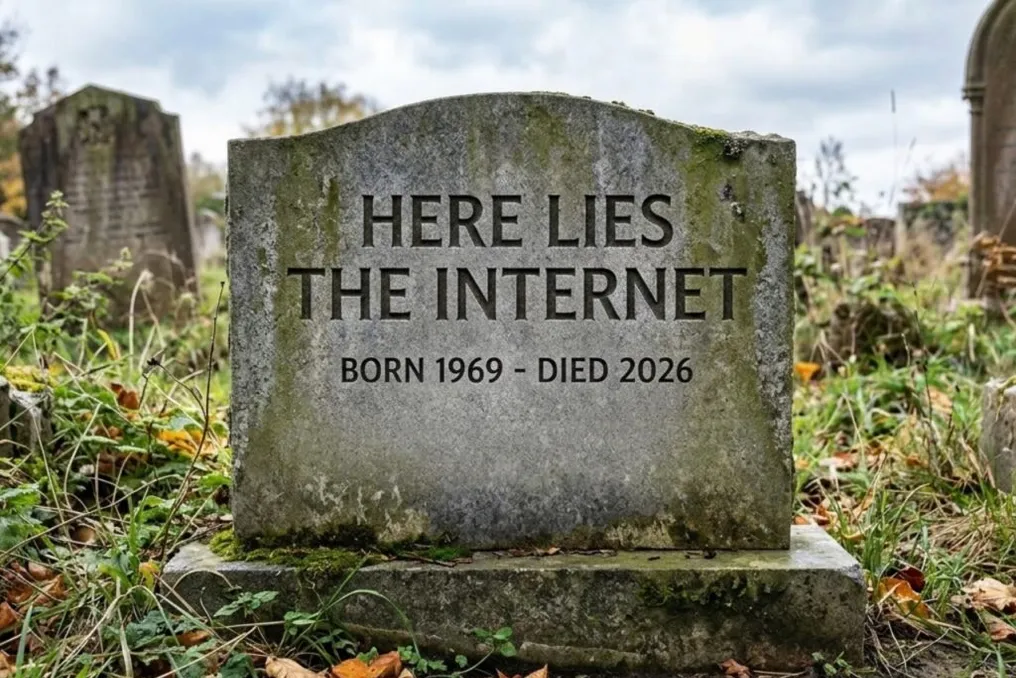
Experts claim internet quality is deteriorating, and it might be time to abandon its current form
Read more
www.2oceansvibe.com

Experts claim internet quality is deteriorating, and it might be time to abandon its current form

The assertion of an 'internet death' is repeated quite often, although previously, in August 2010, Wired published a cover declaring the demise of the Net. As noted in The History of the Web, critics, including Rob Besiczu, pointed out that the graph used for this statement only showed an increase in the internet's share of the total volume, not an actual decline in usage.

However, this time, according to Wired, those who mourn may have grounds, and the problem goes beyond mere traffic. Wired returns to the topic, presenting new material based on the book by journalist and technologist John Vest titled The Internet Will Die, and So Will You. The main complaint is that the positive aspects of the Net no longer outweigh the amount of useless content.

The problem lies not in the infrastructure, as the cables function normally, but in the user experience itself. One expert notes: 'Any rational observer can admit that the current version of the Net—and the social structure woven within it—does not match what people initially expected.'

When searching for a simple cooking instruction, a user might receive a four-thousand-word memoir about someone's grandmother, three automatic videos, and a banner with numerous options. When browsing a feed, the user is offered content designed to hold attention, not the content they were looking for. Cory Doctorow has named this slow decay 'enshittification,' which is an accurate description of the situation.

Furthermore, there is the issue of 'slop.' Thanks to artificial intelligence, machine-generated content has become so cheap that content farms can publish materials faster than a person can type 'I'm not interested.' There is also a fringe theory of a dead internet, suggesting the Net primarily consists of automated accounts communicating with each other. Although the strong version of this theory is considered conspiratorial, evidence supporting a milder version is accumulating.

Wired references a cybersecurity firm's study showing that AI agents now exceed the number of human users, as their traffic has increased by approximately eightyfold by 2025. Bots have stopped being mere guests and have begun taking control of the process.

Another aspect is the business model. Wired notes that Oxford University Press named 'rage bait' word of the year in December after its usage increased by about threefold. This indicates that outrage generates profit, and AI allows scammers to produce it in huge quantities.

John Vest's arguments become particularly interesting. He believes the Net is far more fragile than it appears. His book begins by describing a 2001 railway accident in the Baltimore tunnel that damaged the cables transmitting internet traffic and slowed connections across the US. The problem of 'link rot' is also present.

Wired cites two examples from Vest: approximately one in four links in New York Times articles from 1996 to mid-2019 is no longer working, and a Pew report found that over half of Wikipedia entries contain at least one broken link. Thus, humanity's permanent archive is becoming a strategy of decaying content.

Vest gives a personal example: his teenage anime fan page is still active and filled with spam because he lost access to the account needed to delete it. His university blog lost a year due to an unpaid domain account. Vest's conclusion, according to Wired, is that the concept of permanence is a myth, and useless content tends to outlive monuments.

The reason this should be allowed to happen is that the bloated, ad-saturated, algorithm-driven version of the Net is dying, and no one should try to resuscitate it. Instead, attention should be paid to what is growing in the 'cracks'—newsletters landing in inboxes without algorithmic approval; forums managed by passionate people genuinely interested, for example, in vintage fishing videos; group chats that serve as the last functioning town square in South Africa and have better moderation than most multi-billion dollar platforms.

According to Vest, content also thrives in unnoticed corners: obscure YouTube videos watched by almost no one, and web poetry journals distributed out of love rather than for money. The pattern is simple: meaning is best preserved where there is no financial gain.

A small 'dip' for all this junk won't hurt. It is worth turning off content factories for a few hours and seeing who notices. Most likely, the lights will remain on in the places that truly matter.

In conclusion, for publishers, the decision is to stop writing for the algorithm and start writing for the person on the other side of that algorithm. One must have a unique voice, cover real events, and write in a browser with a specific purpose. If the entire strategy boils down to being one of the links in search results, the inevitable funeral of the internet is guaranteed, and you will be on the guest list.

Popular