The recent Green Hydrogen Summit in Africa, held in Cape Town in September, featured announcements of new projects and funding sources, yet questions remain regarding the future of this fuel type. Green hydrogen has the potential to replace fossil fuels and reduce emissions in hard-to-electrify industries such as shipping and steel production.
African nations are showing interest both in exporting hydrogen and using it to achieve their own national energy transformation goals. Among over 50 countries and the EU that presented hydrogen strategies between 2017 and 2024, eight were African, and the Economic Community of West African States also published a strategy.
A significant part of this interest comes from Europe, which places green hydrogen imported from regions rich in renewable energy at the center of its plans to achieve net-zero emissions. For instance, the RePowerEU 2022 plan sets a target of importing 10 million tonnes of renewable hydrogen annually by 2030.
This has led to accusations of 'green colonialism' and the formation of new exploitation relationships with the continent for European benefit. Nevertheless, several African governments are actively promoting green hydrogen, and African research institutions began studying the potential of this industry long before the EU set its targets.
Alfonso Medinilla, head of the Climate Action and Green Transition department at the European Centre for Development Policy Management, an analytical center in Maastricht and Brussels, noted: 'There is a high degree of state initiative in this matter in African countries.'
The question is what exactly is driving the excitement around green hydrogen in Africa and whether it can bring real benefits to the continent's economies. Hydrogen can be used to power vehicles, industrial processes, and power plants; green hydrogen is produced through the electrolysis of water using renewable energy, whereas hydrogen derived from gas is called grey, and from coal is black.
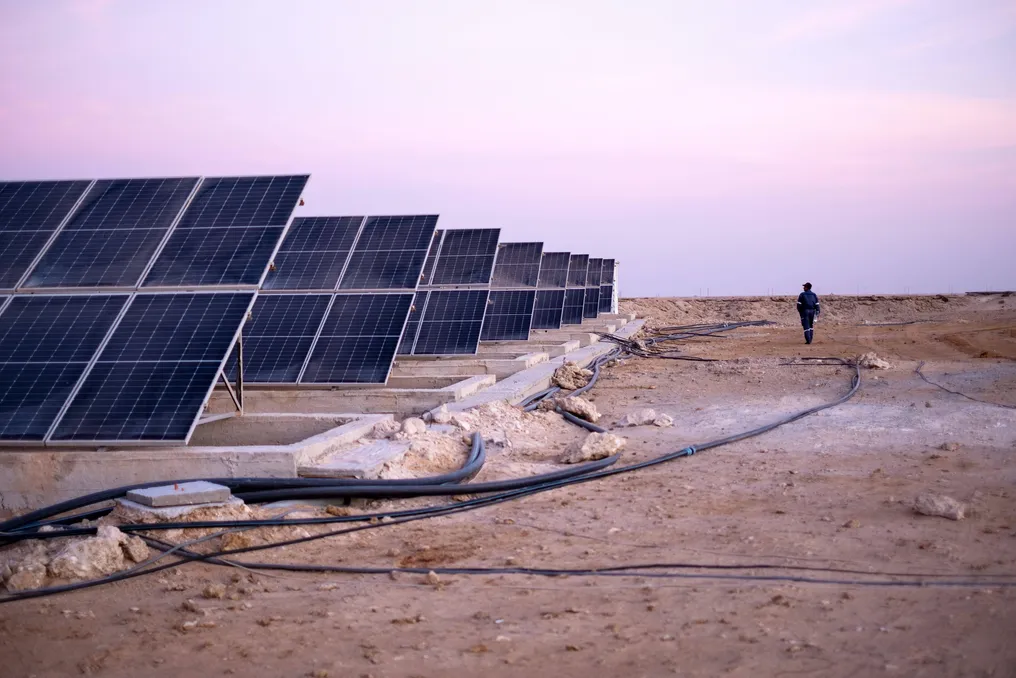
African countries, such as Morocco and Namibia, are ideally suited for green hydrogen production due to abundant solar and wind resources. In particular, North African countries are close to one of the world's largest hydrogen markets—Europe.
According to data from the International Energy Agency, the continent is capable of generating 1000 terawatts (TW) of solar and wind energy, enough to produce over 45 million tonnes of hydrogen per year. According to the African Green Hydrogen Report, published by the German development agency GIZ in 2025, Africa's green hydrogen economy could add up to $150 billion to the continent's GDP by 2050.
Products made using this gas are already being applied in various industrial sectors in Africa, including mining, fertilizer production, and steelmaking processes. However, in 2024, low-carbon hydrogen production accounted for only 0.2% of the 3.1 million tonnes of hydrogen consumed on the continent.
Both African and European representatives express concerns about European investments in green hydrogen in Africa, some of which use the term 'green colonialism.' In a 2023 book released by the research and human rights organization Transnational Institute, Hamza Hamouchene defines this as 'the expansion of colonial relations of plunder and alienation... into the green era of renewable energy, with the accompanying transfer of socio-environmental costs to peripheral countries and communities, prioritizing the energy needs of one region of the world over another.'
Socio-economic issues related to hydrogen production may include land acquisition, water scarcity, desalination consequences, and the orientation of many Europe-backed projects towards export.
Saber Ammar, a researcher at the Transnational Institute, told Dialogue Earth that hydrogen will not bring economic benefits to producing countries. He refers to a report by the International Renewable Energy Agency, which states that 'technical innovations in the development of new electrolyzers and related technologies are concentrated in Europe, North America, and Asia.'
Ammar fears that Tunisia will be forced to import expensive electrolyzers and then export the hydrogen produced with 'low added value.' Tunisia plans to produce 8.3 million tonnes of green hydrogen and its derivatives by 2050, of which 6 million tonnes are intended for export.
Other critics argue that green hydrogen will divert investment from renewable energy generation projects for direct use on the continent. Global Energy Monitor, which tracks international energy infrastructure, found that 61% of all prospective wind and solar generation facilities in Africa are reserved for green hydrogen, primarily for export to Europe.
Meanwhile, about 600 million people in Africa lack access to electricity, and energy shortages remain a barrier to economic development in many African countries. According to the World Bank, among the main potential green hydrogen producers on the continent, Namibia and Mauritania have electricity access rates below 60%.
However, the link between hydrogen production and electricity access is not straightforward. Medinilla from ECDPM notes: 'If green hydrogen production projects were removed, they would not suddenly free up much clean energy into the grid, as these projects are developed with clean energy infrastructure directly linked to them.'
In fact, to qualify as 'green,' the EU requires that green hydrogen be produced from newly created renewable energy sources, not from existing energy capacity.
For some, the narrative of 'green colonialism' is inaccurate. Medinilla argues: 'It is not as simple as saying that Europeans are ordering Africans to produce green hydrogen for them at their own expense.'
He adds: 'Governments want to develop this not because Europeans told them to, but because they see a very clear commercial opportunity in this sector.'
Nevertheless, Joseph Mukendwa, acting head of the Namibia Green Hydrogen Program, told Dialogue Earth: 'These concerns [about green colonialism] cannot be entirely ignored. Considering historical aspects, they reflect legitimate questions about ownership, benefit sharing, land use, environmental protection, and local participation.'
He emphasized the need for greater transparency in how this sector is built. 'The key question is not whether products are exported, but whether Namibians themselves receive tangible benefits from this industry.'
Green hydrogen does look promising for some countries. Derivatives such as 'green' ammonia open opportunities for green industrialization and sustainable agriculture. For example, Kenya is considering producing green fertilizer to reduce dependence on imports. Since countries across the continent rely on fertilizer imports, they risk facing food security challenges during geopolitical tensions, such as the current crisis in the Persian Gulf. Experts believe that with proper planning, such projects can improve food security and bring economic benefits to Kenya.
Furthermore, the export of green hydrogen and its derivatives to high-demand markets like the EU presents an economic opportunity for producing countries. The question arises as to how export revenues can be fairly distributed within countries—a problem not unique to the hydrogen sector.
Producing green fertilizer and exporting hydrogen are just two of several opportunities for African countries in the green hydrogen economy. Medinilla concludes: 'We need to study the issue more deeply and have clearer proposals on how to make these sectors work for African economies and African industrialization.'
He also asks: 'What level of specialization in specific products can African countries realistically pursue, and what industrial policy choices do they need to make to ensure long-term positioning?'
There are concerns that the development of hydrogen in Africa may stall before it can deliver its benefits. An IEA global hydrogen review for 2026 reports that out of 31 projects in Africa's portfolio for 2030, only one has moved from the planning stage to firm construction commitments.
Mukendwa mentioned that the Climate Investment Fund's Industrial Decarbonization Program has formed an illustrative portfolio of 17 green industry projects in Namibia. Building all these projects would require $20 billion, exceeding the country's GDP, demonstrating the complexity of the task.
It remains uncertain whether African green hydrogen projects will be realized and whether they will benefit African economies and societies.
[