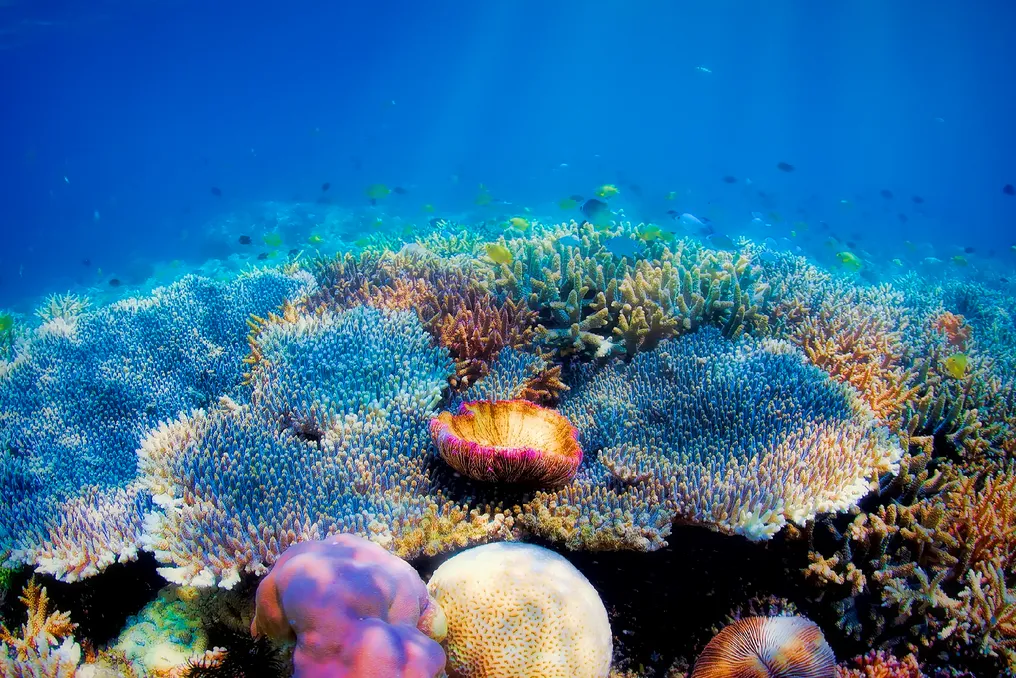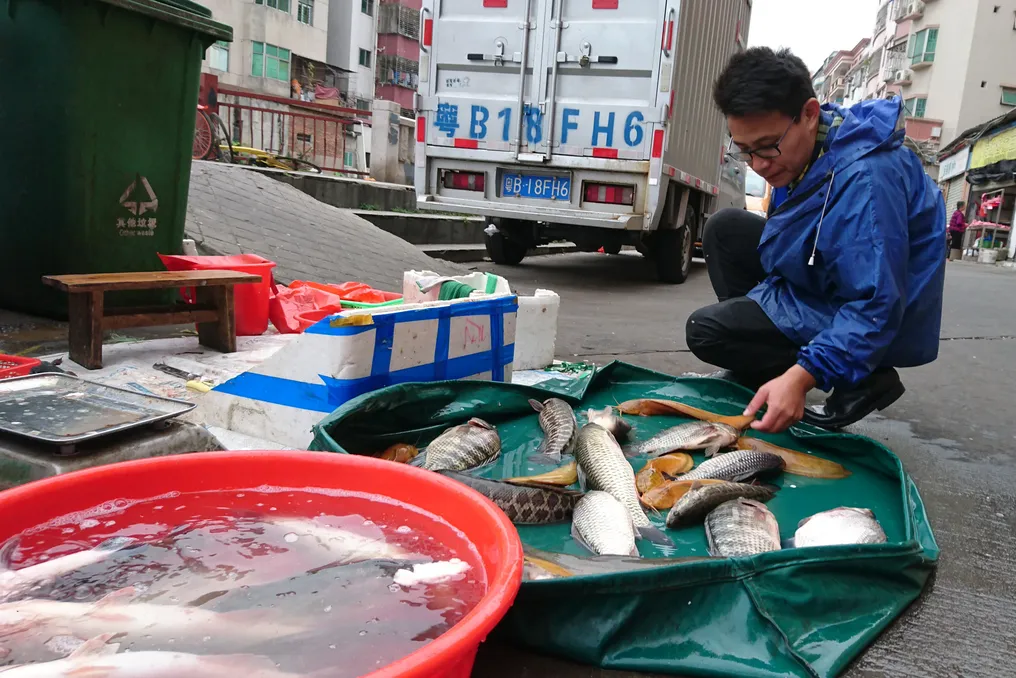
More than ten years ago, Wang Xiaoyun began his work on coral conservation in the waters off Shenzhen, southern China. He became one of the founders of the local group DiveForLove, which organized volunteers to survey reefs, clean up debris, and collect and transplant corals damaged by storms. Protecting the corals off the coast of Shenzhen, a highly urbanized city, is an extremely important task.
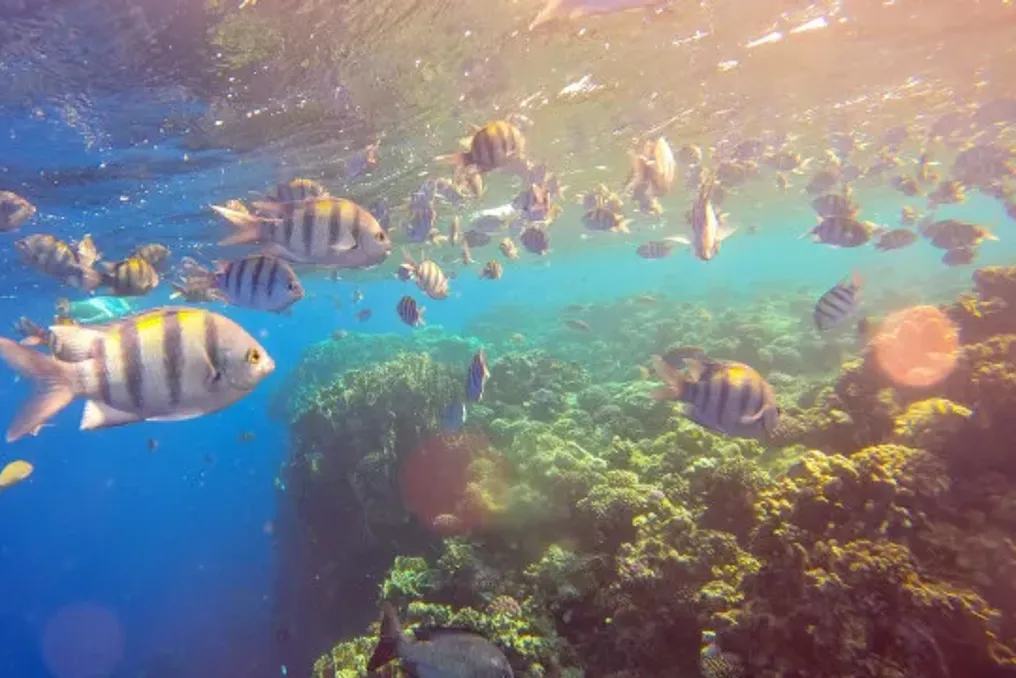
In the 1980s, corals covered about 70% of the Dappen Bay, while by 2000, this figure had dropped below 30%, matching the current coverage level of the bay. Coral bleaching occurs due to thermal stress and oceanic conditions related to weather systems; corals lose color by expelling symbiotic algae. In 2024, Dappen Bay experienced a particularly severe bleaching episode, where, according to Wang, 60% of local corals turned white. Although corals can survive bleaching, prolonged exposure to excessively high temperatures leads to their death, resulting in the disappearance of other species that depend on coral reefs for food and shelter.
A large-scale study published earlier this year, based on 21.1 million observations across more than 36,000 reefs in 124 countries, showed a global decline in hard coral cover. The study noted that the interval between major global bleaching events has shortened to approximately five to six years, which is often insufficient for reef recovery. Furthermore, a new report released this month indicated that about 44% of reef-building coral species are under 'elevated relative risk of extinction.' These species were assessed by marine biologists from around the world and have all been listed as endangered by the International Union for Conservation of Nature.
The ocean is rapidly setting new temperature records, and the current El Niño phase promises to further raise temperatures. Corals face a bleak future marked by bleaching. However, the problem extends beyond the death of marine invertebrates: the loss of corals threatens the livelihoods, food security, and coastal protection of hundreds of millions of people worldwide who depend on their local reefs.
In recent years, Wang's group has shifted its focus from coral restoration to marine environmental education, hoping this will ultimately lead to better ocean protection. He notes that in the context of global climate change, local efforts may seem insignificant, but he urges not to give up, striving to 'sow seeds in people's hearts.'
Near the coast of Kenya, where the Indian Ocean meets the village of Kuruvitu, fisherman Katangangala is also involved in restoring local reefs. For two decades, he has dedicated himself to creating underwater coral nurseries to help connect fragmented corals in a marine reserve. This 30-hectare area was established after the 1996 El Niño event to restore fish populations and protect damaged and degraded reefs.
El Niño is a climate pattern in which surface waters in the eastern-central tropical Pacific Ocean warm significantly above average. This affects rainfall patterns and weather globally, increasing global temperatures during its duration. El Niño is part of a phenomenon called the El Niño-Southern Oscillation (ENSO); the opposite, cooler phase is called La Niña. El Niño events do not occur on a regular schedule but happen, on average, every two to seven years.
Katangangala tells Dialogue Earth that several years ago, before starting coral restoration work, they suffered greatly due to dependence on fishing, but there were no fish. He is glad that thanks to their efforts, fish and corals have returned to the waters. He emphasizes that the ocean is vital for men and women, fishermen and fish traders, as well as children who fish. He knows the risk posed by the high temperatures observed in many places: 'Corals need a warm temperature within 25-30°C. More than that, and the corals will die and bleach.'
Experts point out that while local actions cannot counteract warming waters caused by global greenhouse gas emissions, reducing fishing pressure, cleaning water, and supporting reefs through projects like Katangangala's can help reefs adapt. Activities that improve coral health give them a greater chance of surviving sharp temperature increases.
Juliet Furaha Karisa, an ecologist and conservationist from the Kenyan Institute of Marine and Fisheries Resources, tells Dialogue Earth that Kenya uses protected areas, community-led conservation initiatives, restoration, and other tools to aid its reefs. She notes that government agencies, scientists, conservation organizations, districts, communities, women, and youth are taking strong and increasingly coordinated action. Nevertheless, she stresses that restoration and local management cannot cool the ocean, and Kenya's national efforts must be accompanied by rapid global reductions in greenhouse gas emissions for Kenya's coral reefs to survive in a functional form.
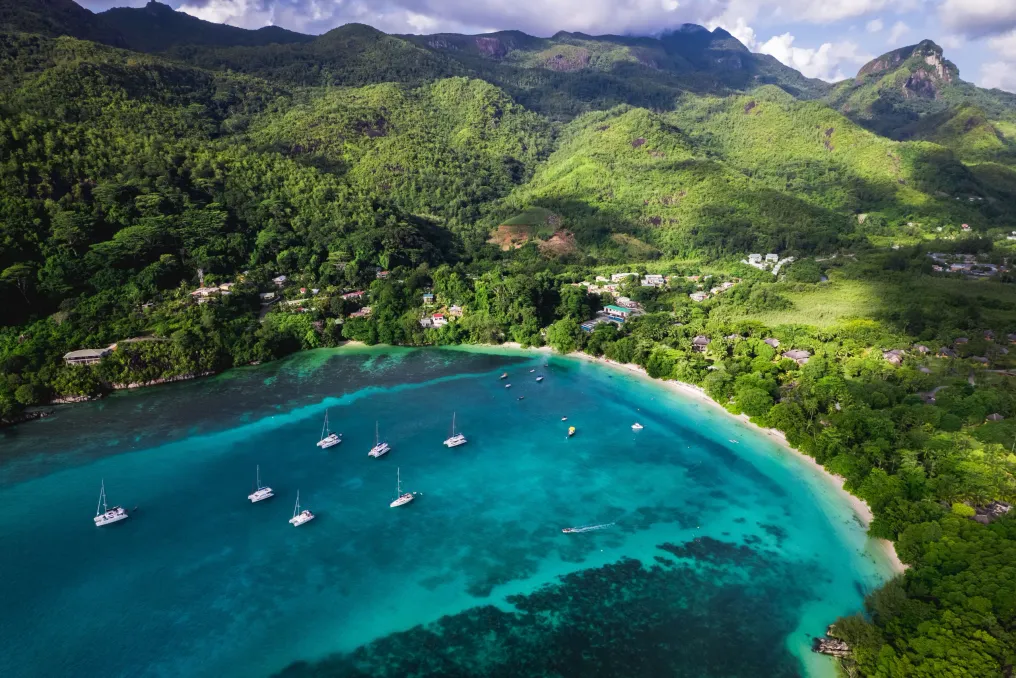
As part of the Coral Triangle, Bali Island in Indonesia plays a key role in coral reef conservation. This region, covering six countries—Indonesia, Malaysia, Philippines, Papua New Guinea, Solomon Islands, and Timor-Leste—is a global center of coral biodiversity, hosting 76% of the world's coral species. More than a third of the region's 350 million inhabitants depend on the ocean.
On Bali, these reefs provide significant income from tourism. Pariama Hutasoit, an Indonesian marine conservationist and chairman of the Coastal and Marine Biodiversity Foundation (Bali Blue Harmony), says that communities are beginning to realize the importance of coral reefs for the sustainability of marine life and for themselves. Fishermen can catch fish more easily and earn additional income from marine tourism.
In one such community is Nusa Penida, located near Bali. This island is known for its impressive diving spots and aggregations of Mola mola (ocean sunfish) and manta rays. In 2010, I Nyoman Karyawan, a resident of Nusa Penida, became concerned that seaweed farming was damaging local reefs to make space for cultivation. He launched a coral planting project. Like many who love and depend on corals, he faced a problem much larger than the local pressure he was trying to mitigate: 'Global warming... yes, the impact is usually felt worldwide. We seem to have to accept it, and it's hard to prevent if it's just us. However, we continue to try to care for them and plant them as well as possible, without stopping. Because these coral reefs are part of a natural chain and the livelihoods of people here.'
This natural chain is under unprecedented pressure. If it breaks, not only the corals will suffer.
In Quintana Roo state, Mexico, coral reefs attract many tourists eager to see reefs, sharks, rays, and turtles. Nadia Rubio-Cisneros, a researcher from the Autonomous University of Nuevo León, Mexico (UANL), based on the island of Cozumel in the state, asserts that reef health is inextricably linked to fishing, tourism, and the well-being of their communities. Nadia also leads the research and education group Sustainable Seas Science and Conservation (MSCC), which works to protect sharks dependent on local habitats.
Caribbean reefs generate billions of dollars annually from tourism and fishing, yet they are among the most degraded in the world. Besides bleaching, they face issues with diseases, massive influxes of brown algae that can cover corals, plastic pollution, damage from overtourism, and massive hotel developments that worsen water quality.
Luis Fernando Amesqua, a diver and resident of the coastal village of Mahaual south of Cozumel, notes: 'Compared to 15 or 25 years ago, the reef is heavily damaged. If you spot a barracuda, a grey ray [southern spiny ray], or a turtle during a dive, it's cause for celebration.' He adds that some long-time workers feel bitter disappointment seeing the coral reefs where they once worked literally disappear in a single month.
Rosa Elisa Rodriguez-Martinez, a reef researcher from the National Autonomous University of Mexico (UNAM), based in Puerto Morelos, 300 km up the coast from Mahaual, states that many species previously common in the Caribbean, such as certain agalactid and porites species, have not been observed for many years or only in 'significantly reduced' numbers.
Many local residents and experts interviewed by Dialogue Earth hope that local efforts can buy time for global emission reductions, which will ultimately limit global warming. However, Rodriguez-Martinez is pessimistic. She fears that given trends in ocean temperature rise, eutrophication, and marine pollution, coral reefs located far from human-impacted coasts and in colder, deeper waters may be the only ones to survive. She suggests that perhaps only after thousands of years could survivors repopulate the seas if conditions become suitable for coral growth again.