South African artist Mari Sibandi shares her thoughts on her evolving creative practice, the role of a mentor, and creating platforms for young creators through the initiative Occupying the Gallery.
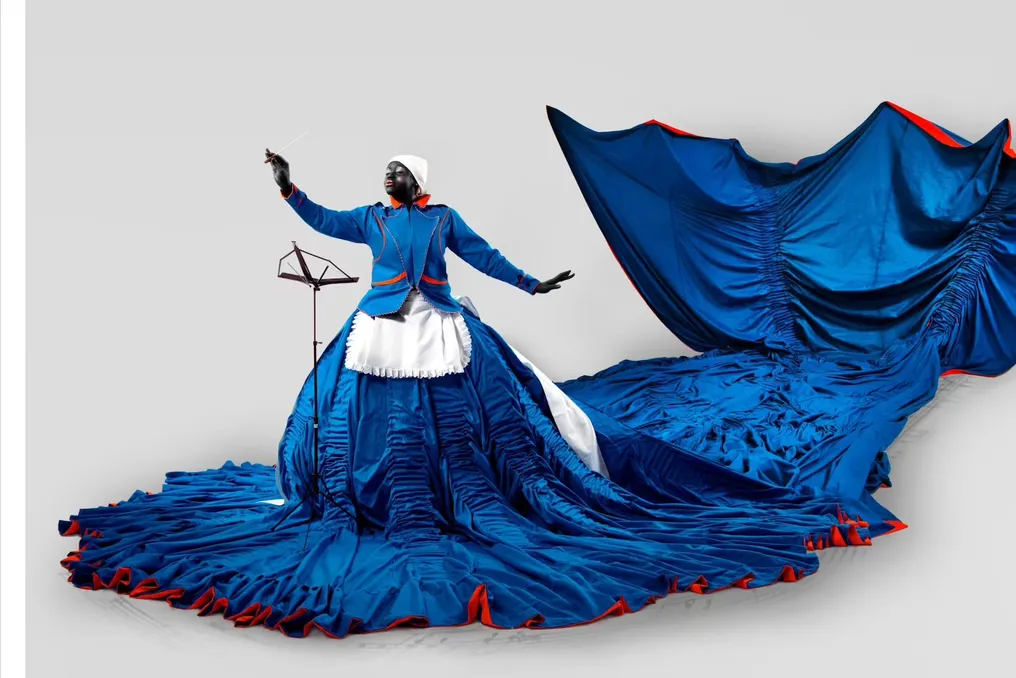
For much of her career, Mari Sibandi has dedicated herself to exploring themes of identity, history, and the experiences of Black women in her work. She is best known for her alter ego, Sophie, who is depicted as a domestic worker. Sibandi uses sculpture, photography, and performance to challenge conventional notions of race, gender, and labor.
However, her artistic approach continues to transform. Recently, she has focused more on the concepts of rest, leisure, and pleasure. Questions arise about what happens when Sophie stops working, and what freedom looks like if it is not defined by struggle or obligation.
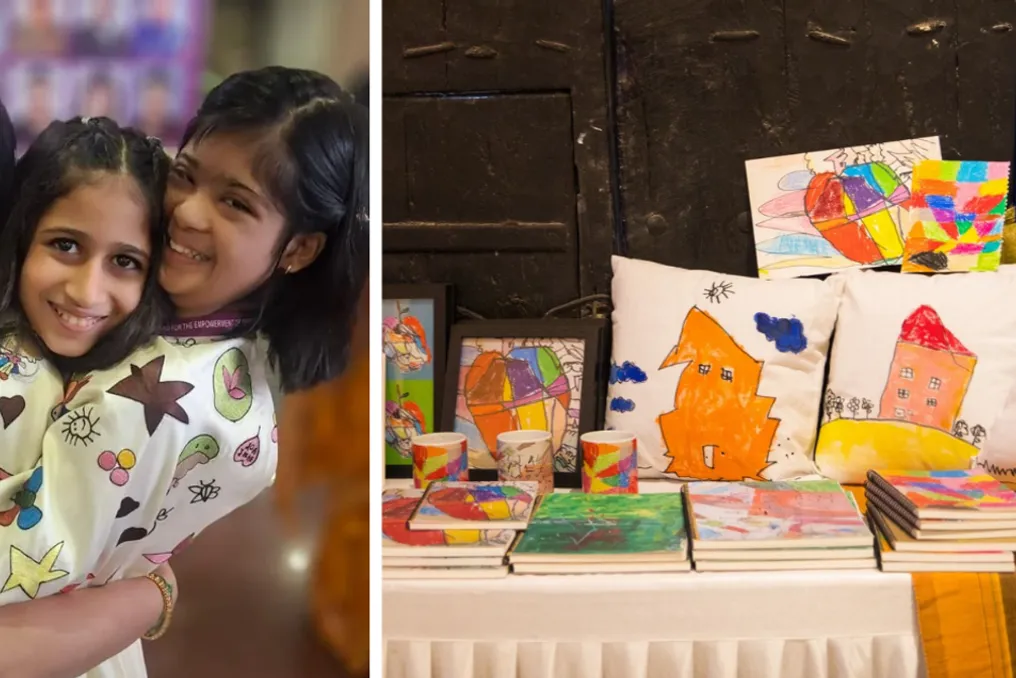
In addition to her own artistic endeavors, Sibandi is interested in supporting other artists. Together with her colleague, South African artist Lawrence Lemaoana, she founded Occupying the Gallery (OTG)—a platform based in Johannesburg. This organization aims to develop artists, provide mentorship, and facilitate creative exchange.
OTG is not focused on exhibitions or commercial outcomes; instead, it involves emerging artists in working relationships with established practitioners, designers, and masters. It is a space where knowledge is transferred through collaboration and experimentation.
One recent project was a residency with Malian artist Abubakar Fofana, whose work focuses on traditional indigo dyeing and the preservation of indigenous African knowledge. As part of this program, Fofana conducted a masterclass at Victoria Yards in Johannesburg on October 24, gathering local creators, denim producers, and fashion specialists.
We spoke with Sibandi to discuss the ideas behind Occupying the Gallery, what support established artists can offer the next generation, and how her own relationship with art has changed over the years.
Lawrence and I have been in the art world long enough to understand how complex navigation can be, especially at the beginning. We aimed to create the space we lacked when we were young. A place where artists can experiment, make mistakes, exchange ideas, and simply engage in art without constantly worrying about creating something to sell.
Sibandi emphasizes the importance of this aspect, stating that not everything an artist creates needs to hang on someone's wall. Occupying the Gallery does not sell artwork; its mission is to build community, support artists, and open doors. Furthermore, they wanted to question who even has the right to occupy these art spaces.
In her view, if a person has the opportunity to gain knowledge, experience, and access, what do they do with it? Do they just keep it to themselves? Sometimes, simply introducing someone to the right person or inviting them to a place they otherwise couldn't access is enough. However, Sibandi believes that mentorship should not be about telling young artists what to do. They must find their own voices, make their own mistakes, and even challenge the opinions of mentors. They should not become small copies.
Lawrence and Abubakar met in New York several years ago and immediately clicked. They met again last year in Berlin during a group exhibition, which is when a deep conversation began. They were interested in Abubakar's commitment to preserving and transmitting ancestral knowledge through natural indigo dyeing. In an era when much indigenous knowledge is lost or ignored, people like Abubakar have dedicated their lives to its maintenance.
For them, it wasn't just an invitation for someone to teach people how to dye fabric. It was connected to the transmission of skills, understanding the origin of materials, and the knowledge they carry. They also invited local denim producers and fashion designers because Sibandi is interested in what happens when these traditional methods meet modern design. That is the most exciting part.
Sibandi believes that the first thing one must do is learn to listen. One cannot simply arrive, take a technique because it seems beautiful, and ignore everything associated with it. Behind these practices lie history, culture, and knowledge. This is why Abubakar's presence is so important: they are not just observing the fabric dyeing process; they are learning from a person who carries this knowledge and understands its origins. For her, cultural exchange must be a dialogue, not an act of extraction. It is necessary to respect the people and history behind what is being studied.
Currently, she is thinking a lot about rest, leisure, and pleasure. For many years, Sophie was associated with domestic labor and the expectations placed on the bodies of Black women. Sophie is her alter ego, the figure of the domestic worker she uses to explore the history and possibilities of Black women. But now she is exploring what happens if she decides she has had enough of all that. What if she just wants to have fun? What if she wants to do nothing? Why must her existence always be tied to labor, struggle, or some responsibility?
She explores these questions through sculpture, photography, printmaking, and humor. She notes that it is quite radical when a body historically expected to serve others decides simply to enjoy itself. Sophie claims her right to leisure, and in her opinion, she has every right to it.
Of course, as one grows older, different questions arise. When she started, her main concern was the histories of domestic labor, identity, and representation, especially through the experiences of women in her family. These stories have not disappeared from her work, but now she is interested not only in their interpretation but also in what comes after. What does true freedom look like? She has also become more playful, enjoying humor, exaggeration, and sometimes creating something absurd. She believes that not everything has to be so serious, even when dealing with serious topics.
Her work remains driven by imagination and curiosity. Sometimes an image comes to mind, and she begins to think about how to realize it in the real world, which naturally involves the complex task of defining the method of realization. She works with various materials and people possessing specialized skills, which implies numerous experiments and problem-solving. She likes that the creative process itself sometimes steers the idea in an unexpected direction. She has learned that one should not control everything too tightly; sometimes the material has its own plans.
She usually starts from an image, as she is a very visual person. She might imagine Sophie in a completely unexpected situation and then ask herself why this image interests her. What does it mean? What is she trying to say? Or perhaps she is trying to say nothing? Sometimes answers don't come immediately, and that is fine. She likes allowing meaning to unfold as the work progresses, as she doesn't feel that one always needs to know where the idea will go before starting the process.
She truly values this. Once a work leaves her studio, it ceases to belong entirely to her in terms of public understanding. People bring their own stories and experiences into it, and sometimes see things she hadn't even considered. And who is she to tell them they are wrong? Although she knows what shaped the work, she does not believe that art should come with instructions dictating what people should think. She likes that the work can have different meanings for different people, as this supports dialogue.
She would probably advise herself to relax a bit. To trust instincts, to make mistakes, to experiment, and not rush to figure everything out. She would also tell herself that being an artist is not just about creating pieces and participating in exhibitions. It is about the people you meet, the relationships you build, and how you utilize the opportunities that arise. Looking at the activities of Occupying the Gallery, she realizes how important this is, and she would advise herself to enjoy it, as it is a long journey.