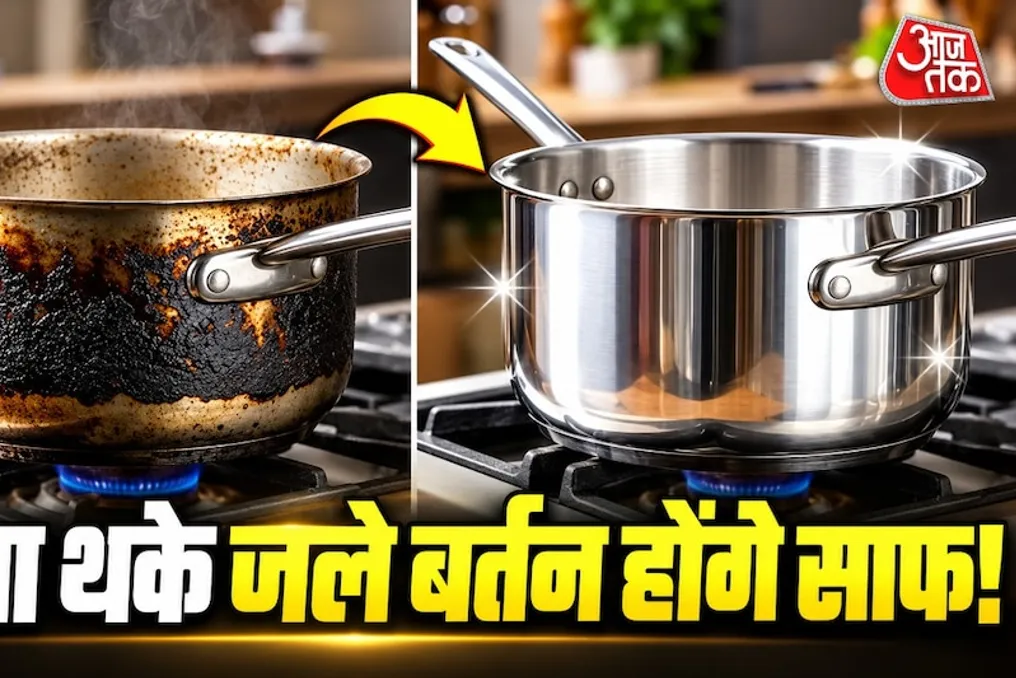
Cooking in the kitchen sometimes results in milk burning onto the bottom, or bean or vegetable dishes sticking to the sides of the cookware. Although carelessness is often the cause, cleaning up such stains afterward can be very difficult. Removing black and brown spots requires significant effort because they are very stubborn and do not always disappear after repeated use of detergent and scrapers. Excessive scrubbing can lead to dulling the shine of the dishware itself.
However, there are simple home methods that allow you to easily detach burnt food without expending much effort or time. It is important to know the correct cleaning technique, especially when dealing with expensive or shiny dishes that require special care.
- Preliminary soaking in soapy solution: If food has stuck to the cookware, you should not start scrubbing immediately. First, allow the cookware to cool completely. Then, fill it with warm water so that the burnt area is submerged. Add a few drops of dish soap and leave it for one hour. If the layer of food is very thick, you can soak the cookware overnight. This will help soften the food. After this, carefully remove the stuck layer using a wooden spoon or silicone spatula, avoiding harsh scrubbing.
- Removing stubborn black stains with baking soda: If a regular soapy solution is not effective, you can use baking soda, which helps loosen the particles of burnt food. Mix three tablespoons of baking soda with a small amount of water to form a thick paste. Apply this paste to the stained area of the cookware and leave it for 20–30 minutes. Then, gently clean with a soft sponge, trying not to exert excessive force. Finally, rinse the cookware thoroughly. The process can be repeated if necessary.
- Heating water and baking soda in the cookware: In cases where the food is so strongly adhered to the bottom that it does not come off after soaking and applying paste, you can try the heating method. Pour water into the cookware so that it covers the stained area, add about two tablespoons of baking soda. Place the cookware on the stove and heat slowly for 5–10 minutes, ensuring the water does not boil too vigorously. After turning off the heat, let the water cool. Then, carefully lift the stuck food using a wooden spoon. The warm water and soda can soften the burnt layer, making it easier to remove. Finally, the cookware should be washed with detergent and water.
- Choosing the right cleaner for old stains: If there are old brown or black marks on the cookware, regular cleaning may not be sufficient. In such situations, it is recommended to use a non-abrasive cleaner chosen according to the surface type. It is especially important to choose a product that will not damage the glossy coating of enameled items. Before using any cleaner, read the instructions on the packaging carefully and perform a test application on an inconspicuous area.
- Caution when using hydrogen peroxide: Some brown and black stains remain on the cookware for a long time. Although some methods involve mixing baking soda with hydrogen peroxide, keep in mind that this is not suitable for all types of cookware. Therefore, before using hydrogen peroxide, always conduct a test on a small area.
How to avoid damaging the shine of the cookware
When cleaning burnt cookware, you must never use steel wool, metal scrapers, or sharp tools, as this will cause scratches. You should also avoid suddenly pouring cold water onto hot cookware; always let it cool down before starting to clean. Furthermore, it is recommended not to cook for long periods over high heat and to wipe the cookware completely dry immediately after use.