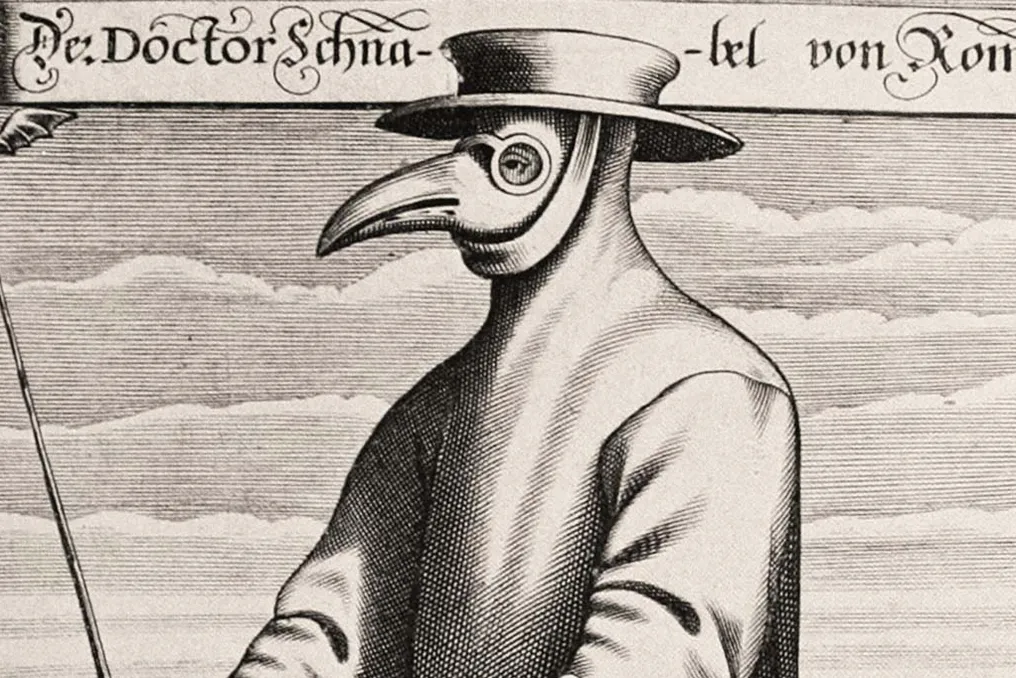
The Black Death impacted virtually every aspect of European society during the 14th century, resulting in the death of one-third to half of the continent's population. In addition to altering ways of life, work, and people's organization, a less noticed effect of this epidemic was the drop in local biodiversity, directly linked to the neglect of agricultural areas.
Contrary to popular perception, medieval agricultural practices in Europe were beneficial for biodiversity. Unlike modern agriculture based on monoculture, peasants mixed various types of crops with forests, heathlands, and lagoons. This combination of ecosystems, known as a mosaic, generated more niches for different plant species to flourish.
This dynamic was altered with the arrival of the Black Death. Due to the bubonic plague epidemic, caused by the bacterium Yersinia pestis, vast expanses of cultivated land were left unused amidst social chaos and the loss of millions of lives. The absence of cultivation that sustained these varied environments led to a decrease in biodiversity, with an estimated drop of about 40% in plant species in these regions.
These findings were obtained from an article published in the journal Ecology Letters, which analyzed over 100 pollen collection sites, totaling approximately 4,600 samples. The study sites ranged from the northern, northwestern, and western regions of France and the southwest of the United Kingdom to the Swiss Alps.
The pollen records were examined to provide data on past biodiversity. Examples include cereals such as wheat, barley, and rye, which constituted an essential part of medieval agriculture; the presence of the pollen of these crops indicates the existence of nearby plantations.
The researchers categorized the pollen data into three groups, depending on the occurrence of cereal pollen: areas where agricultural production increased, areas where it decreased, and areas with no evidence of cereal cultivation. Overall, a decline in biodiversity as a whole was observed, driven by areas that recorded a drop in agricultural production.
Almost 150 years later, in the 16th century, biodiversity began to recover, even surpassing pre-Black Death levels, parallel to the resurgence of population growth and the return of rural activities.
For scientists, the period of the Black Death offers an ideal scenario to study the impacts of human intervention on biodiversity. Besides the bubonic plague, the preceding decades already represented a turbulent time for Europe, marked by the Great Famine, when the cold and humid climate of the early century caused widespread crop losses and unprecedented levels of starvation, between 1315 and 1317.
With the reduction in biodiversity observed during that period, the study strengthens an increasingly accepted hypothesis: that landscape modifications made by humans frequently generate more diverse habitats, called mosaics. This model, in turn, would be responsible for preserving a greater number of species compared to uniform landscapes.
Additionally, this highlights the disparities between land use in the Middle Ages and modern times, and their respective consequences for biodiversity. In the 20th century, global biodiversity suffered a reduction of up to 11%, with human actions, such as changes in land use, pollution, and climate change, being the main drivers of this decrease. In contemporary agriculture, the practice of monoculture is a primary factor in reducing biodiversity.